

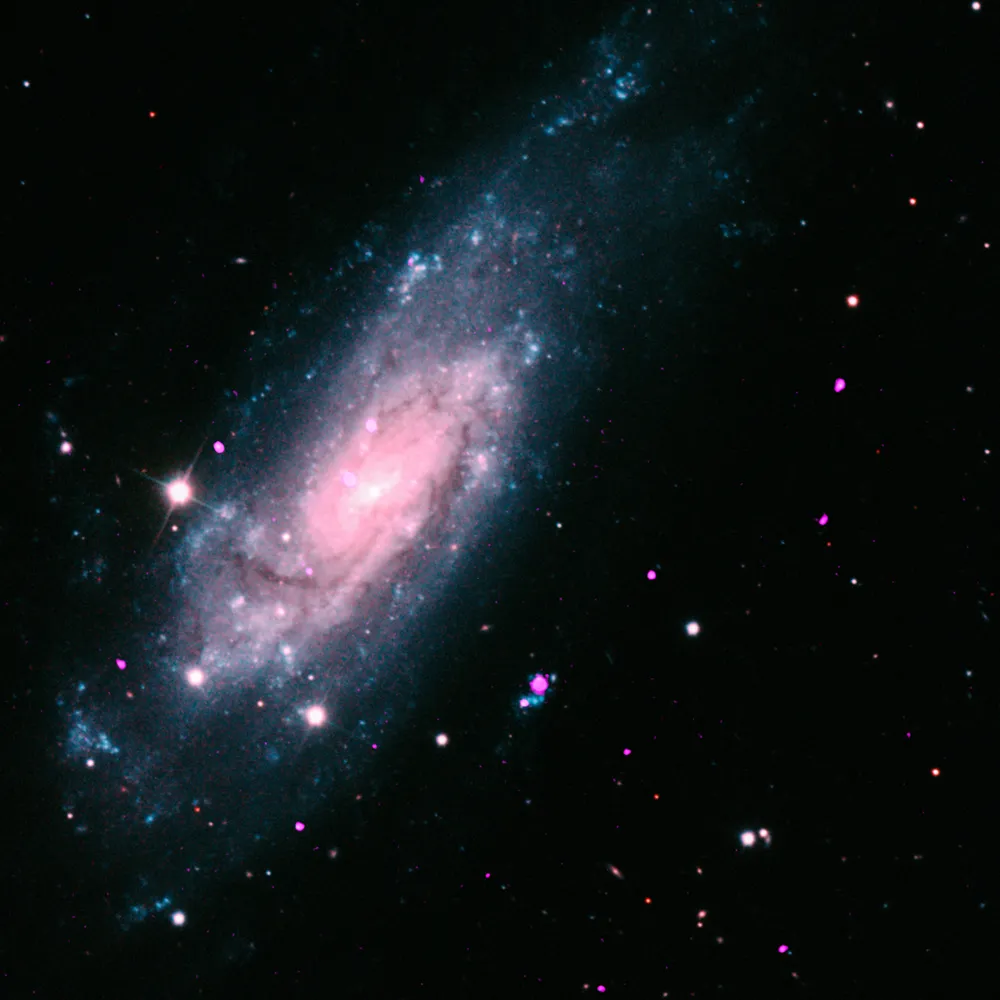
A star can erupt more than once, leaving astronomers to work out which processes keep disturbing it. NASA highlighted new Chandra work on the volatile object AT 2016blu in an image release dated 13 November 2026.
The star lies in the spiral galaxy NGC 4559, roughly thirty million light-years away. Astronomers estimate that its mass is at least thirty-three times the Sun’s. NASA reports that X-ray observations have helped investigate the trigger for its repeated outbursts.
The published image combines X-ray and optical information. Those layers reveal different aspects of the system and its surroundings, so their colours should be understood as part of a scientific composite.
What can an eruption reveal that a quiet star conceals? Following the object across wavelengths and over time provides a way to test explanations. The announcement is a useful entry point to the research, rather than a prediction of the star’s next outburst.



