
Repository of
Forbidden Mysteries
An illustrated archive of forgotten rituals, contested histories, secret manuscripts and the stories humanity carried into the dark.
04 ORIGINAL INVESTIGATIONS
08 ARCHIVAL ILLUSTRATIONS
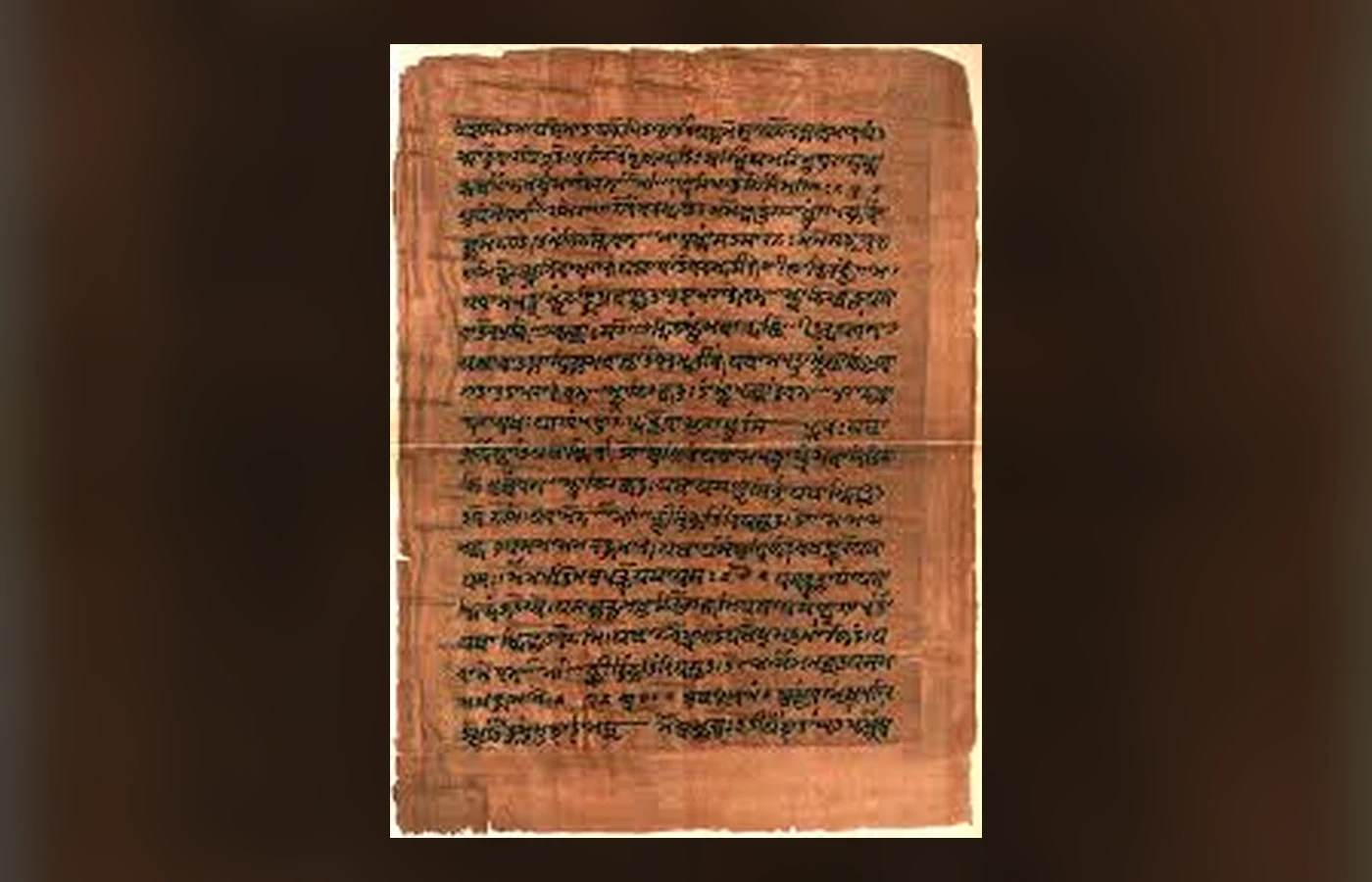
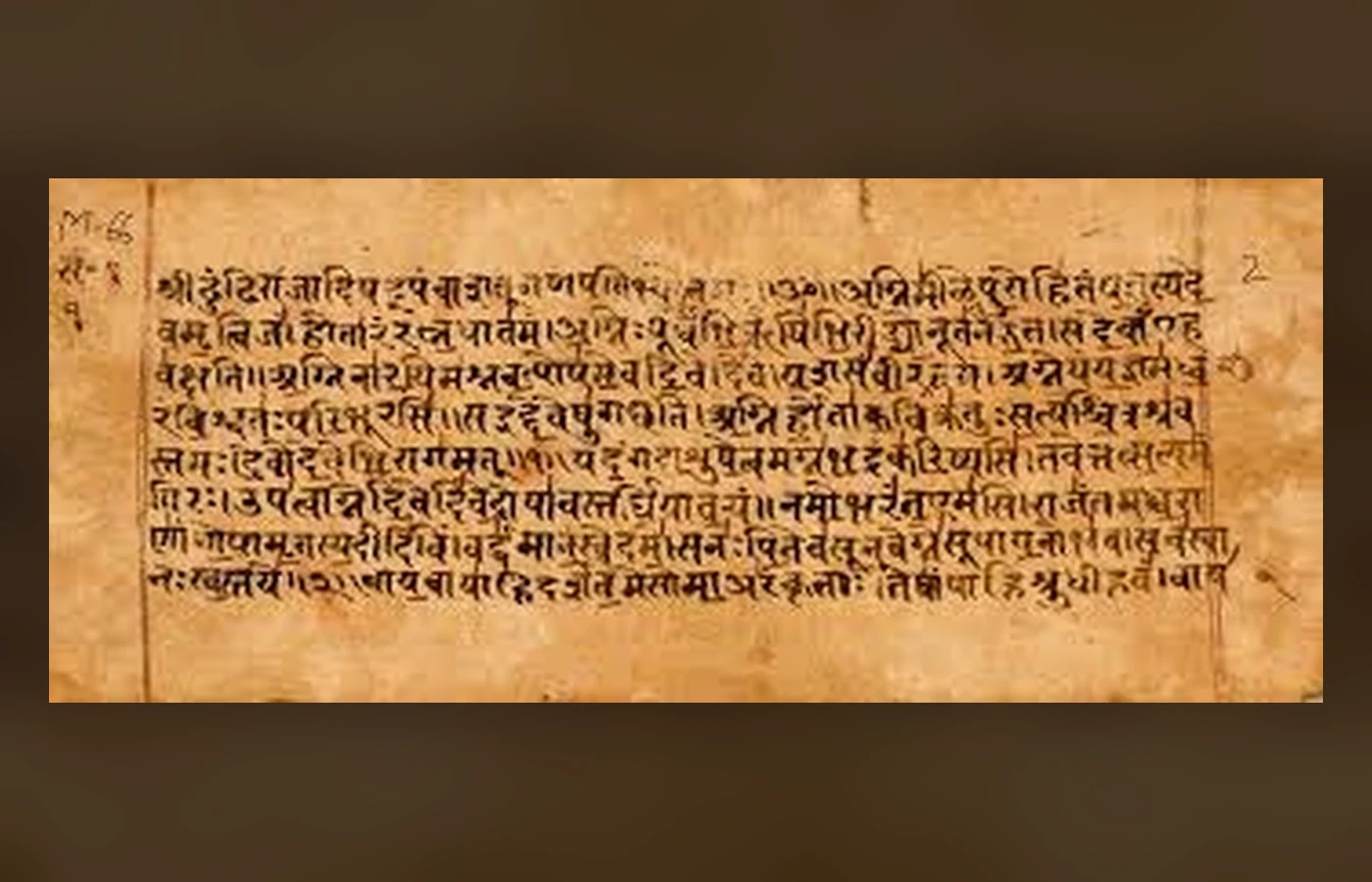
Where history
meets the unknown.EXPLORE THE COLLECTION BELOW
The Shadow Has a History
Long before the modern phrase “black magic” entered popular speech, communities across the world developed stories and practices around protection, misfortune, healing, unseen presences and the boundaries of human power. Some left tablets and manuscripts; others survived through oral tradition. Their histories do not form a single unbroken tradition. Each belongs to a particular place, time and cultural world.
Dark Page approaches these mysteries with curiosity rather than a predetermined verdict. Where an origin is documented, we tell its history; where traditions differ, we let their voices be heard; where a story remains unresolved, the question remains open.
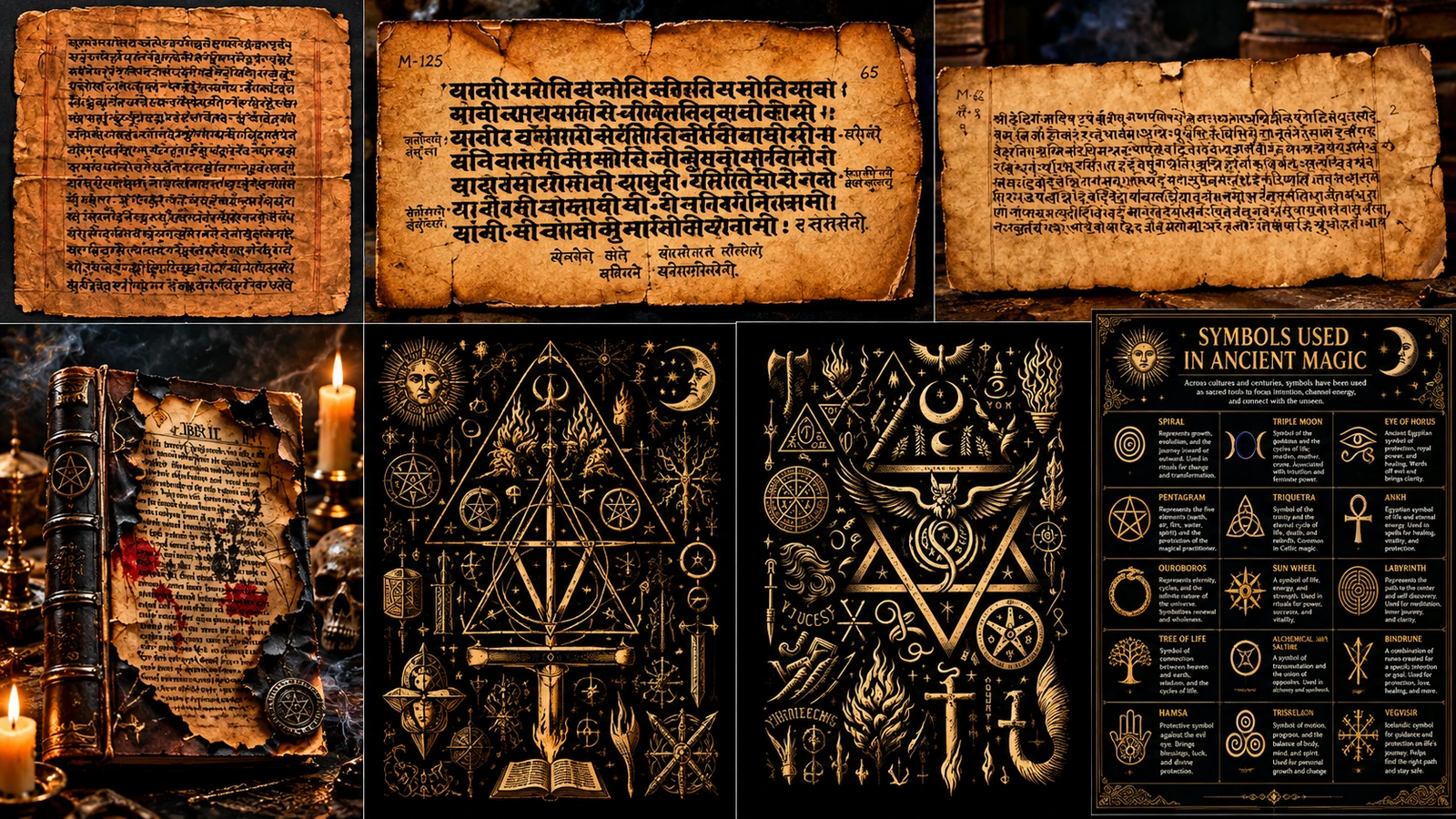
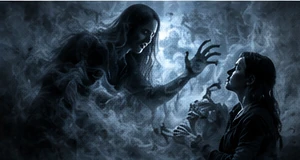
THIRTEEN CHAPTERS / ANCIENT TO MODERN
A History of the Forbidden
CHAPTER 01Before the Forbidden Had a NameMesopotamia, Egypt and the Ancient World
The earliest surviving incantations and protective texts belong to worlds in which medicine, religion, ritual and everyday survival overlapped. Mesopotamian tablets record fears of illness and hostile forces; Egyptian funerary and protective texts reveal a rich language of transformation, safeguarding and passage into the afterlife. The Egyptian Book of the Dead was not a single fixed volume but a collection of funerary compositions assembled in different forms over time. Objects and manuscripts remain our starting points; their interpretation opens wider questions.
CHAPTER 02The Vedic World and the Indian SubcontinentAtharva Veda, Mantra and Tantra
The Atharva Veda preserves hymns and formulas concerned with healing, protection, prosperity, rivalry and the uncertainties of life. Its traditions cannot simply be reduced to the modern label “black magic.” Later tantric traditions developed across multiple religious communities, with diverse philosophies, rituals and aims. In some classificatory traditions, the six actions called shatkarma are associated with pacification (shanti), attraction or influence (vashikarana), fascination (mohana), immobilisation (stambhana), disruption or displacement (uccatana), and destruction (marana). Names, lists and interpretations vary by text and lineage; this archive records them as historical categories, not instructions.
CHAPTER 03Aghori and the Edge of the SacredCremation Grounds, Ash and the Reversal of Fear
Aghori ascetic traditions are frequently portrayed through shocking imagery: cremation grounds, ash and encounters with mortality. Their religious and philosophical contexts are more complex than popular horror narratives suggest. Accounts often explore non-duality, renunciation and the challenge to conventional distinctions of purity and impurity. Dark Page examines the stories alongside the communities and ideas from which they emerged, avoiding the assumption that all practitioners or all tantric traditions are alike.
CHAPTER 04Greece, Rome and the MediterraneanAmulets, Binding Tablets and Hidden Requests
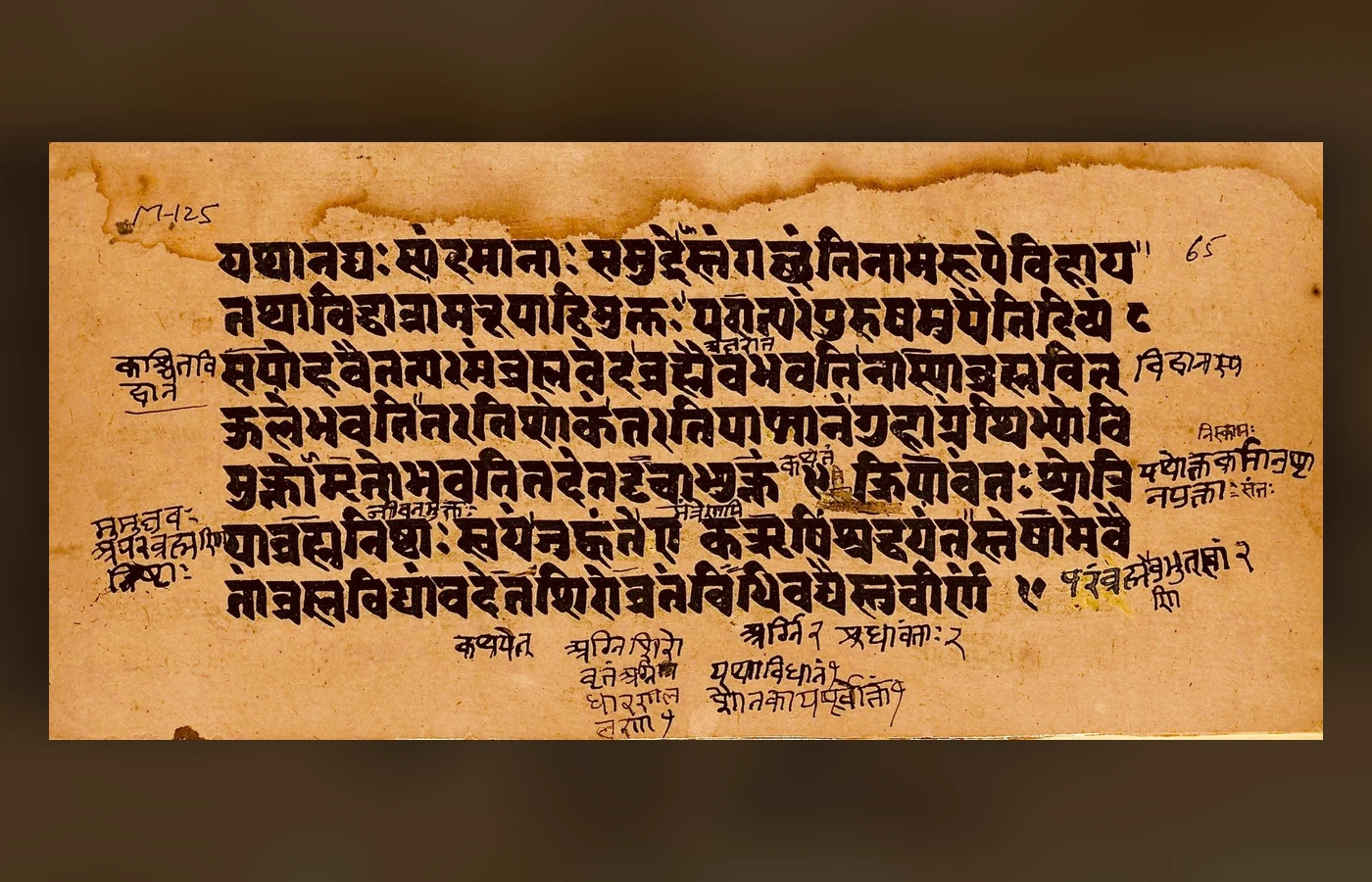
Ancient Mediterranean societies left behind protective charms, inscribed amulets and binding tablets. These objects can reveal the private concerns of people whose voices rarely appear in official histories: rivalry, love, litigation, danger and uncertainty. Their survival tells us what people wrote and did; each artefact still has a story of discovery, translation and interpretation.
CHAPTER 05The Medieval CrossroadsAlchemy, Talismans and the Movement of Manuscripts
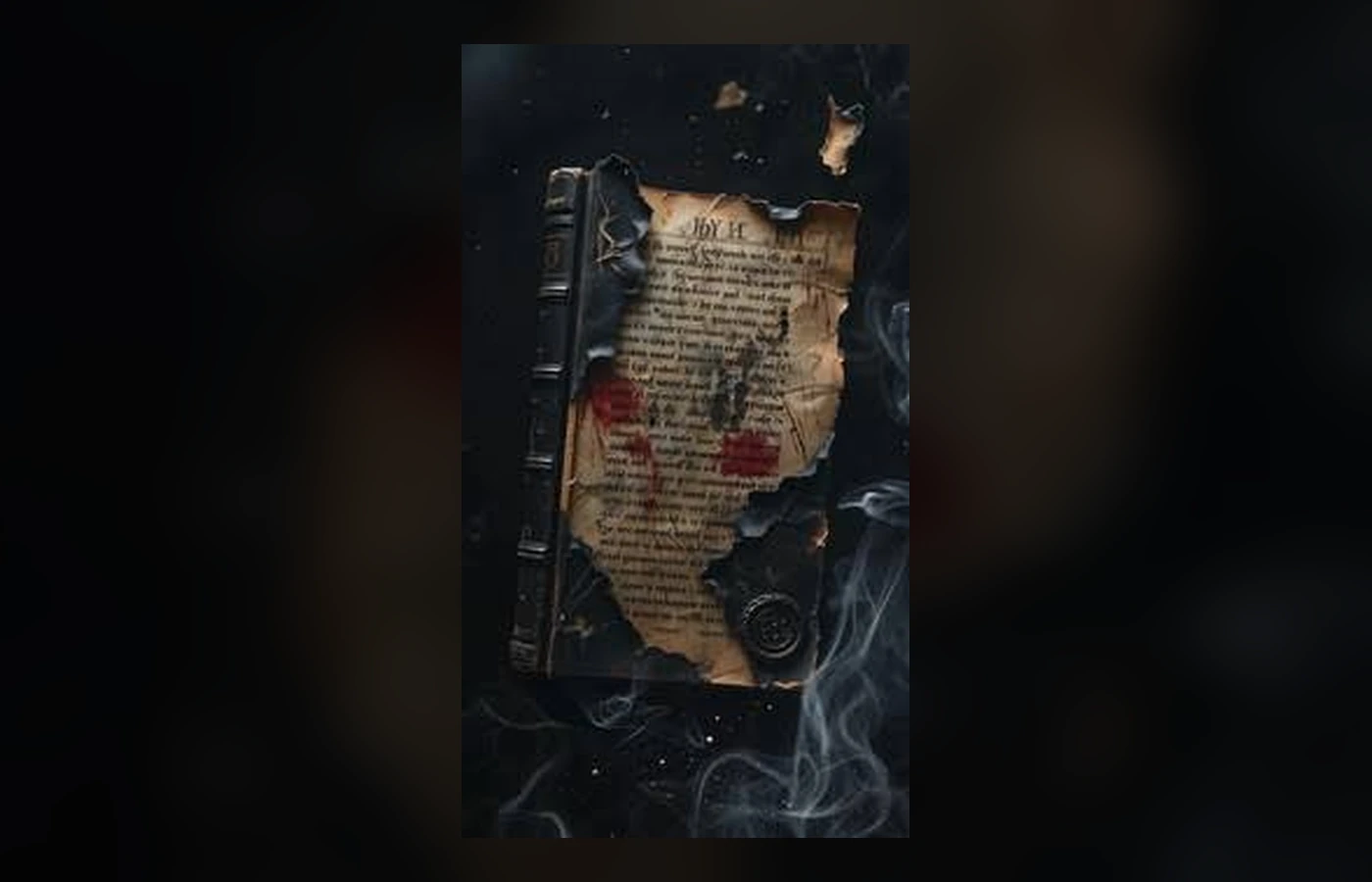
Across Arabic, Persian, Byzantine, European and South Asian intellectual worlds, ideas about astrology, alchemy, letters, symbols and protective objects travelled through scholars, scribes and translators. Alchemy included practical experiments and philosophical aspirations, among them the elusive philosopher’s stone. Many manuscripts acquired famous names and elaborate legends long after their original composition.
CHAPTER 06Words That Open DoorsAbracadabra, Hocus Pocus and Open Sesame
Abracadabra appears in ancient textual evidence as a protective word, famously written in diminishing forms; its deeper linguistic origin remains disputed. Hocus pocus became associated with stage conjuring, and proposed etymologies compete. Open Sesame belongs to the literary world of Ali Baba and the Forty Thieves, where a spoken phrase opens a hidden treasure chamber. Three expressions, three very different journeys through language, belief and storytelling.
CHAPTER 07The Books People FearedGrand Grimoire, Codex Gigas, Soyga and Voynich
The Grand Grimoire, sometimes called the Red Dragon, is surrounded by stories of forbidden pacts and secret repositories. The immense medieval Codex Gigas contains a famous portrait of the Devil and inspired the legend of a manuscript written in a single night. The Book of Soyga attracted the attention of John Dee, while the Voynich Manuscript remains celebrated for its mysterious script. The Necronomicon is different: it entered the world through H. P. Lovecraft’s fiction and subsequently acquired an extraordinary afterlife in popular imagination.
CHAPTER 08Europe’s Age of AccusationWitch Hunts, Trials and the Cost of Fear
In early modern Europe, allegations of witchcraft could become instruments of prosecution, social conflict and terror. The Salem trials of 1692 in colonial Massachusetts remain a defining case, involving accusations against more than 200 people and 20 executions. Explanations proposed for the initial incidents, including ergot poisoning, are debated. The surviving records invite readers to examine testimony, authority and the consequences of collective fear.
CHAPTER 09The Knights Templar and the Number ThirteenArrests, Legends and Later Superstitions
On Friday, 13 October 1307, arrests of Knights Templar began in France under Philip IV. Interrogations, trials and punishments unfolded over subsequent years. The connection between those events and modern Friday-the-thirteenth folklore is far from a simple, continuous origin story. The distance between a dated historical event and the mythology built around it is itself a compelling mystery.
CHAPTER 10Haiti, Vodou and the ZombiReligion, Storytelling and Contested Explanations
Haitian Vodou is a living religious tradition with a history shaped by African diasporic experience and Haitian culture. Popular stories of the bokor and the zombi have circulated widely, sometimes overshadowing the religion’s broader life. Proposals involving toxic substances have attracted attention and debate. We consider the accounts and their contexts without turning a community’s traditions into a horror stereotype.
CHAPTER 11The Occult in the Modern AgeÉliphas Lévi, Baphomet and Aleister Crowley
Nineteenth-century occult revivalists reinterpreted earlier symbolism. Éliphas Lévi’s Baphomet illustration became one of the era’s most recognisable images, subsequently acquiring new associations. Aleister Crowley developed Thelema and a provocative public persona; his writings and extraordinary claims shaped later movements. The histories of symbols and people are often more intricate than their reputations.
CHAPTER 12The Psychology of the UnseenSuggestion, Trance, Fear and the Nocebo Effect
Rhythm, repetition, expectation, social influence and heightened emotion can affect how people perceive extraordinary experiences. The nocebo effect describes ways negative expectations may contribute to real symptoms. Sleep-related experiences and altered states offer further avenues of inquiry. None of these perspectives requires dismissing a person’s account; they provide different questions to ask of it.
CHAPTER 13Objects, Maps and Sealed ArchivesThe Vatican, Ancient Tombs and Museum Collections
The Vatican Apostolic Archive preserves an immense documentary history and has inspired legends about hidden books. Ancient Egyptian tombs, especially Tutankhamun’s, generated their own stories of curses. Museum collections hold amulets, inscribed tablets, ritual objects and manuscripts whose provenance and meanings can be studied. Between documented collections and whispered tales lies a rich landscape for investigation.
THE READING ROOM
The Original Investigations
Explore the previously published, longer studies and individual manuscript investigations. These original features remain available in full.
Explore the original case files, historical objects and questions
01 / THE RED DRAGONThe Grand Grimoire
A book surrounded by stories of forbidden bargains and secret custodians. Its editions and attributions invite a closer look at the difference between a manuscript’s history and the legends attached to it.
02 / A BOOK THAT ESCAPED FICTIONNecronomicon
The terrifying volume imagined by H. P. Lovecraft became so persuasive in popular culture that later editions and internet lore sometimes blurred the boundary between a fictional invention and an ancient source.
03 / THE DEVIL’S BIBLECodex Gigas
This enormous medieval manuscript contains a striking full-page portrait of the Devil. A legend tells of a monk completing it in one night; the surviving book offers an equally remarkable material history.
04 / BETWEEN LIFE AND LEGENDHaitian Vodou and Zombie Traditions
Stories of the bokor and the zombi sit within a much larger Haitian religious and cultural world. The proposed role of toxic substances has been debated, while sensational depictions often obscure Vodou’s diverse practices.
05 / THE IMAGE THAT CHANGED MEANINGÉliphas Lévi and Baphomet
Lévi’s nineteenth-century drawing combined human and animal forms with symbolic gestures. Later movements and popular culture gave the image new meanings that were not all identical to his original interpretation.
06 / THE DREAM OF TRANSFORMATIONAlchemy and the Philosopher’s Stone
The quest for transmutation and the philosopher’s stone joined practical experimentation with symbolic and spiritual ambitions. Later legends about forbidden ingredients should be distinguished from what particular historical texts actually describe.
07 / THE BEAST AND THE NEW LAWAleister Crowley and Thelema
Crowley cultivated an unsettling public persona and developed Thelema, whose central phrase is often quoted without its philosophical context. His accounts of extraordinary communications remain part of his contested legacy.
08 / FEAR IN THE COURTROOMThe Salem Witch Trials
In 1692, accusations spread through colonial Massachusetts, leading to numerous prosecutions and deaths. Explanations for the initial behaviour, including ergot poisoning, remain debated; the documented judicial history is disturbing enough.
09 / THE NUMBER AND THE KNIGHTSFriday the Thirteenth
The arrest of many Knights Templar in France began on Friday, 13 October 1307. Later legends connected this date with bad luck, although the modern superstition has a more complicated history than one dramatic origin story.
10 / WHEN EXPECTATION HURTSThe Nocebo Effect
Fearful expectations can shape symptoms and bodily responses. The nocebo effect offers one way to explore the relationship between belief, stress and suffering without reducing every personal account to a single explanation.
11 / THE DOCUMENTS BEHIND CLOSED DOORSThe Vatican Archives
The Vatican Apostolic Archive preserves centuries of institutional records. Restricted access, scholarly catalogues and dramatic rumours have all contributed to its mystique; the actual holdings are more interesting than an invented inventory.
12 / THE TOMB AND ITS AFTERLIFEThe Curse of the Pharaohs
The discovery of Tutankhamun’s tomb helped popularise stories of ancient curses. A sequence of deaths, newspaper accounts and archaeological realities became woven into a legend that continues to invite investigation.
Is black magic scientifically proven?
Different traditions understand such experiences in different ways. We explore their histories, accounts and interpretations, while distinguishing what was recorded from what remains open to interpretation.
Are all grimoires ancient?
No. Manuscripts and printed editions have different dates, authors and histories. Some titles became famous centuries after the traditions they claim to represent.
Why do cultures have different ideas of magic?
Beliefs developed within distinct religious, linguistic and social settings. A practice described as protective in one community may be condemned or misunderstood in another.
Can a frightening experience have a natural explanation?
Some experiences have explanations involving sleep, stress, surroundings or coincidence; others remain deeply personal or difficult to interpret. We examine possibilities without rushing to a verdict.
Does Dark Page teach harmful rituals?
No. This archive studies manuscripts, objects, historical events and the psychology of belief. It does not provide instructions for harming, coercing or exploiting anyone.
PRESERVED FROM THE ORIGINAL PAGE
Forbidden Case Files, Objects & Questions
The original page’s twelve case files, historical features, object notes and questions are preserved below.
Beyond the Forbidden
Across centuries, magical manuscripts, protective amulets and stories of forbidden knowledge have shaped human imagination. Here we explore the historical record, the psychology of belief and the legends that survive, while allowing history, experience and competing interpretations to speak in their own voices.
FORBIDDEN BOOKS
The Grand Grimoire
Explore the history and reputation of the manuscript known as the Red Dragon.
Read the story →HIDDEN MANUSCRIPTS
The Book of Soyga
John Dee, strange alphabets and a Renaissance puzzle that inspired centuries of speculation.
Read the story →UNDECIPHERED TEXTS
The Voynich Manuscript
A genuine medieval manuscript with an undeciphered script—and no need for invented explanations.
Read the story →DARK PAGE / TWELVE FORBIDDEN CASE FILES
Twelve Doors into the Forbidden
Some of these stories begin in archives; others begin in literature, religious tradition or the whispers that gather around an unfamiliar object. Each opens a different door into the human fascination with hidden knowledge.
The case files distinguish historical records, literary creations and circulating traditions where their origins are known, while leaving room for questions and interpretation.
THE FORBIDDEN ARCHIVE / FOUR INVESTIGATIONS
The History Behind the Fear
Magic has never been one uniform practice. The word has been used to describe healing, divination, ritual protection, accusations of sorcery, ceremonial philosophy and supposed bargains with unseen powers. Its meanings have changed with language, religion, law and the people who held authority.
01 / ANCIENT WORLDS
The First Written Charms
In Mesopotamia, ritual specialists recorded incantations and protective practices on clay tablets. In ancient Egypt, texts and amulets accompanied medicine, religion and funerary customs. Calling these traditions “black magic” imposes a much later category on complex societies.
The surviving tablets open a window onto what people feared, hoped for and sought to influence.
02 / MEDIEVAL MANUSCRIPTS
Books at the Edge of Knowledge
Astrology, alchemy, talismans and learned ritual traditions circulated in manuscripts across the Mediterranean and beyond. Texts travelled through translation and adaptation; attribution to famous ancient figures often enhanced a book’s prestige.
The most compelling questions concern authorship, transmission and the distance between a manuscript’s reputation and its actual contents.
03 / WITCH TRIALS
When Accusation Became Evidence
Early modern European witch hunts demonstrate the danger of fear reinforced by coercive institutions. Confessions could be extracted under pressure; rumours and personal disputes were transformed into allegations of supernatural crime.
The trials invite difficult questions about testimony, fear, authority and the lives caught between them.
04 / THE MODERN OCCULT
The Reinvention of the Forbidden
Nineteenth- and twentieth-century occult revivals combined older symbols with new movements, publishing and popular entertainment. The internet has since made rare texts easy to reproduce—and easy to mislabel.
A manuscript’s age, provenance and interpretation can each tell a different story; the most intriguing questions often begin where those stories diverge.
BELIEF / PSYCHOLOGY / EVIDENCE
Why a Curse Can Feel Real
A threatening prediction can change how ordinary events are noticed and remembered. Anxiety heightens vigilance; confirmation bias makes apparent matches memorable while contradictions fade. Social expectation and the nocebo effect can also produce genuine distress without establishing a supernatural cause.
Sleep paralysis may involve a vivid sense of presence, pressure or fear while the body remains temporarily unable to move. These experiences deserve empathy and careful explanation, not ridicule or sensational diagnosis.
People who feel threatened by a curse should not be pressured into paying for expensive “removal” services or dangerous treatments. Evidence-based medical, psychological or practical help is appropriate when symptoms, harassment or financial exploitation are involved.
OBJECTS / MUSEUMS / MATERIAL HISTORY
Objects Once Believed to Hold Power
Protective Amulets
Small inscribed objects could express hope for health, safety or protection. Their materials, inscriptions and archaeological contexts tell us about the people who carried them.
Curse Tablets
Thin inscribed metal sheets from parts of the ancient Mediterranean record requests for supernatural intervention. They are historical evidence of wishes and rivalries, not verified outcomes.
Ritual Manuscripts
Cataloguing handwriting, ink, bindings and provenance can distinguish an authentic historical artefact from a modern fabrication or a misleading online description.
Questions from the Shadows
Editorial principle: we explore extraordinary accounts with curiosity, historical care and respect for differing interpretations, without promoting harmful or exploitative practices.
COMPLETE ORIGINAL INVESTIGATIONS
The Four Original Historical Studies
The full text and original images of the four previously published studies are preserved here.
Read full illustrated study
Black Magic & Forbidden Mysteries, Part I: From Babylon to the Witch Trials
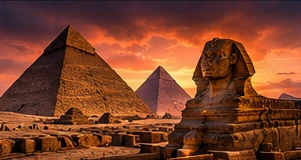
Where the Story Begins
The history of magic is older than the modern distinction between science, religion and superstition. Across ancient societies, people used prayers, protective objects, incantations and ritual specialists to confront illness, danger, uncertainty and death. Not every practice described as “magic” was regarded as evil by its practitioners. The category of “black magic” changed across cultures and centuries.
Mesopotamia: Protection and Fear
Texts from ancient Mesopotamia preserve incantations intended to ward off perceived curses, illness and hostile spirits. Babylonian scholars also studied celestial omens. These records demonstrate what people believed and practiced; they do not demonstrate that a spoken formula could override physical laws.
Egypt: The Power of Words
Ancient Egyptian traditions included protective spells and funerary writings. The texts commonly called the Book of the Dead were collections intended to help the deceased navigate the afterlife—not a single manual for controlling ghosts. Their surviving illustrations and manuscripts offer a remarkable window into ideas about death, judgment and renewal.
Greece, Rome and Beyond
Ancient Mediterranean sources describe amulets, curse tablets, divination and appeals to supernatural beings. South Asian traditions also preserve complex histories of ritual and esoteric thought. These diverse traditions should not be treated as one uniform system.
Europe’s Witch Trials
Early modern European witch persecutions, especially between the fifteenth and eighteenth centuries, brought accusations, imprisonment and executions. Historians estimate that tens of thousands were executed; victims were not all burned, and many trials occurred after the medieval period. The history is a warning about fear, coercive testimony and the dangers of accusing vulnerable people without evidence.
Image note: The accompanying illustrations are artistic interpretations, not photographs of historical artefacts.
Continue reading: Part II — Spells, Amulets, Grimoires and Ritual Traditions.
Read full illustrated study
Black Magic & Forbidden Mysteries, Part II: Spells, Amulets, Grimoires and Ritual Traditions
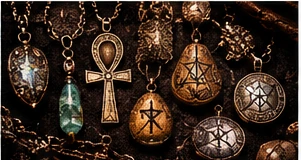
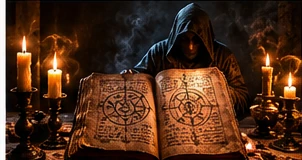
What People Have Called Magic
Historical records describe many practices under the broad label of magic. Their meanings depend on language, place and period. The following are descriptions of documented traditions—not instructions or evidence that supernatural effects occur.
1. Spoken Charms and Written Incantations
People recited prayers, formulae and protective words, or wrote them on paper, clay and metal. Such practices often accompanied ordinary attempts to cope with illness, uncertainty or danger.
2. Amulets and Protective Symbols
Amulets were worn, carried or placed in buildings. Symbols could communicate religious identity, protection, memory or social status. A surviving object establishes the practice, not the supernatural power attributed to it.
3. Divination and Omens
Some practitioners interpreted dreams, stars, lots or patterns to seek guidance. These systems have rich cultural histories, but claims of reliable prediction require independent testing.
4. Curse Tablets and Binding Rituals
Ancient Greek and Roman archaeological finds include inscribed tablets intended by their makers to influence rivals, disputes or relationships. Museums study these as evidence of social conflict and belief, not proof that the intended harm took place.
5. Grimoires and Secret Books
Medieval and early modern manuscripts sometimes combined prayers, diagrams, astrological ideas and ritual instructions. Their authorship and dates are frequently contested. A book’s existence should never be confused with confirmation of its extraordinary claims.
6. Spirit Communication and Séances
Accounts of mediums and séances became especially prominent in nineteenth-century spiritualist movements. Investigators documented both sincere belief and cases of deception. Reports should be examined individually.
7. Healing, Fear and the Placebo/Nocebo Effects
Belief and expectation can affect distress and symptom perception. The nocebo effect helps explain why a feared curse may feel physically consequential without establishing a supernatural cause. Persistent symptoms deserve qualified medical attention, not blame directed at another person.
Image note: The accompanying images are AI-generated editorial illustrations, not photographs of authenticated historical artefacts.
Next: Part III considers belief, skepticism, religion, psychology and the exploitation of fear.
Read full illustrated study
Black Magic & Forbidden Mysteries, Part III: Believers, Skeptics and the Psychology of Fear
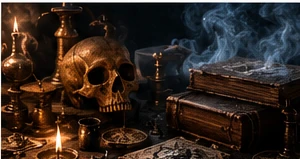
Two Ways of Understanding the Unseen
Stories about curses and unseen forces endure because they speak to deeply human experiences: vulnerability, unexplained events, injustice and the wish for control. Believers and skeptics often begin from different standards of evidence.
Why Some People Believe
Believers may point to religious texts, inherited traditions, personal experiences and events that seem impossible to explain. Islam, Christianity, Judaism and other traditions contain discussions of magic or supernatural beings, although interpretations differ widely within each faith. A religious reference and a scientifically demonstrated mechanism are different kinds of claims.
Why Others Remain Skeptical
Skeptics ask whether extraordinary effects can be observed independently, measured and reproduced under conditions that rule out coincidence, suggestion and fraud. Reliable scientific evidence has not established that curses or spells can suspend physical laws. This does not mean every personal experience is insincere; it means the explanation remains unproven.
Illness, Misinterpretation and Human Vulnerability
Seizures, sleep paralysis, psychosis, grief and anxiety have at times been interpreted through supernatural frameworks. These experiences warrant care and accurate assessment. It is neither fair nor medically sound to assume that illness proves possession or that a person accused of sorcery caused it.
The Business of Fear
Some individuals exploit fear by demanding money for removing alleged curses or threatening clients with harm unless they pay. Such claims can cause financial loss, isolation and delayed healthcare. Readers should be wary of guaranteed supernatural results and coercive demands.
What History Can Actually Tell Us
We can verify that people wrote incantations, carried amulets, conducted rituals and prosecuted alleged witches. We can study the cultural meanings of those actions and their consequences. The historical record does not, by itself, establish the supernatural powers attributed to them.
Image note: The illustrations in this article are AI-generated symbolic artworks, not documentary evidence of supernatural events.
Dark Page’s Position
Curiosity deserves room. So do evidence, compassion and intellectual humility. The real history of forbidden mysteries is fascinating enough without turning uncertainty into certainty—or fear into a business.
Read full illustrated study
Black Magic & Forbidden Mysteries, Part IV: The Objects That Survived — A Museum Guide
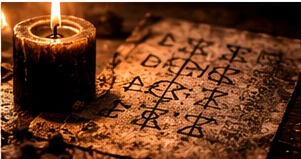
When a Mystery Becomes an Object
Stories about forbidden powers are difficult to test, but the objects left by people who believed in them are real. Clay tablets, inscribed metal, papyri, amulets, manuscripts and court records allow historians to ask more precise questions: who made this, when, for whom, and what did its owner hope it would do?
1. Mesopotamian Incantation Tablets
Cuneiform tablets from ancient Mesopotamia preserve prayers and incantations associated with protection, healing and the removal of perceived harmful influences. The text tells us about a ritual tradition and its practitioners; it cannot by itself establish the success of the ritual.
2. Egyptian Funerary Papyri
The writings conventionally grouped under the title Book of the Dead were not a single standardized book. Different copies contain selections of spells and illustrations intended to assist the deceased in the afterlife. They belong to a religious and funerary context, not simply to a modern category called black magic.
3. Greek and Roman Curse Tablets
Thin sheets of inscribed lead and other materials have been recovered from archaeological contexts. Some were written to influence competitions, legal disputes or personal relationships. Their wording is evidence of a wish or intention, not evidence that the intended effect occurred.
4. Protective Amulets
Amulets crossed boundaries between religious devotion, everyday protection and practices later described as magical. Their materials, inscriptions and archaeological contexts matter more than sensational claims attached to them online.
5. Grimoires and Manuscripts
Manuscripts associated with ceremonial magic often survive in copies made long after a text’s alleged origin. Scholars compare handwriting, paper, language and transmission histories to establish what can actually be dated. A dramatic title or legendary attribution is not reliable provenance.
6. Witch-Trial Records
Legal records reveal how suspicion could become accusation and, sometimes, execution. They must be read with care: confessions may have been shaped by fear, coercion or torture, and the allegations themselves are not proof of supernatural acts.
How Dark Page Will Caption These Images
Every historical illustration should identify its object, approximate date, place or culture, holding institution, source link and image rights. Reconstructions and AI-generated illustrations, if used, must be labelled as such. No staged photograph should be presented as evidence of an occult event.
Questions Worth Asking
What is the earliest securely dated source? Is the inscription translated by a qualified specialist? Is the story repeated because of independent evidence or because later writers copied one another? Could a more ordinary explanation fit the record?
These questions do not diminish the mystery. They give it a history worth reading.
Explore the series: Black Magic & Forbidden Mysteries.



