

Dark Page Kids · Original Wonder Story · Ages 7–12
The farther the dream travelled, the stranger the meaning of a second became.
Dark Page Kids | Little Explorers | Ages 9–12 | Science-inspired fantasy

Ten-year-old Leo loved reading about space. One evening she discovered a strange fact: some regions of the universe contain black holes, where gravity is so strong that light cannot escape once it crosses a boundary called the event horizon.

“If light cannot get out,” she wondered, “is that where all the darkness in the universe lives?”
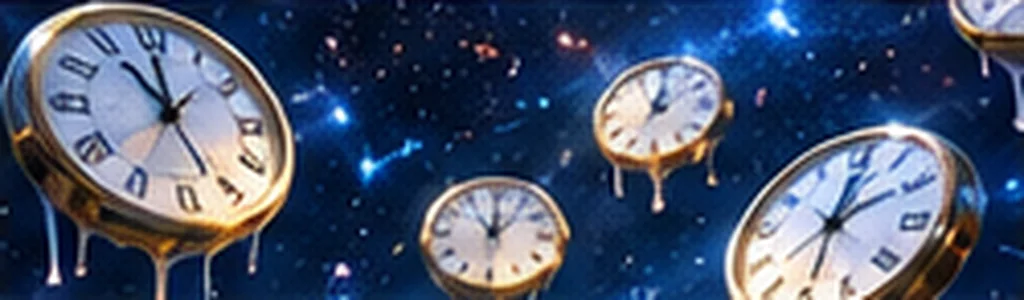
Pause and wonder: What would the stars look like near a black hole?
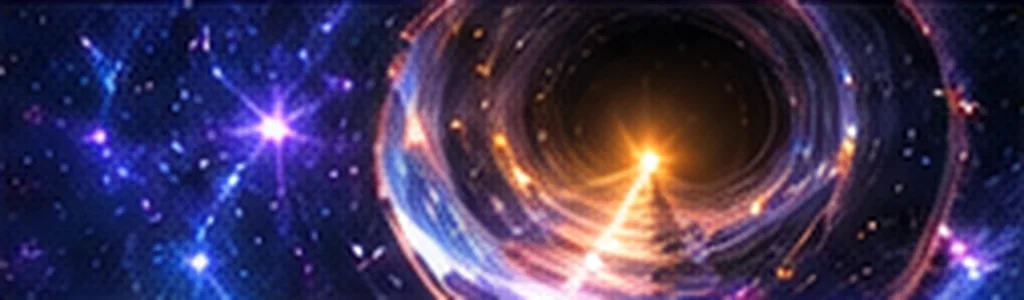
That night she dreamed of a shining spacecraft travelling toward a black hole near the star system Cygnus X-1. Beyond the window, stars seemed stretched and bent. A bright ring of hot material glowed around the darkness.
Her ship’s clock began to behave strangely. A calm voice from the navigation computer said, “Strong gravity changes how time passes compared with clocks far away.”
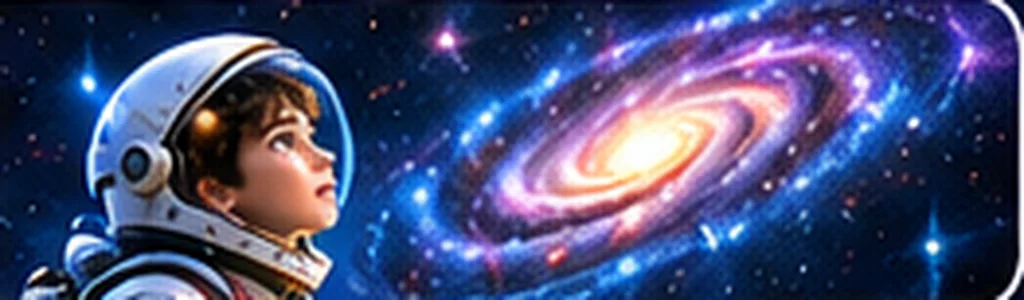
Leo stared into the darkness. “When light crosses the event horizon,” she asked, “what happens to its story? Could a black hole be a doorway to another universe—or is that only something we imagine because we cannot see inside?”
For a moment the stars appeared to form a brilliant blue pattern. The spacecraft turned away, and Leo watched the distant light bend into a beautiful arc.
Then she woke in her own bed. Morning sunlight lay across her astronomy book. Had the blue pattern been a message? She opened her notebook and wrote one more question: How do scientists learn about places they cannot visit?
What Do You Think?
- Why can light not escape from inside a black hole’s event horizon?
- What could scientists measure from outside a black hole?
- How is a scientific idea different from a wonderful dream?
Science Note: Black holes and gravitational time dilation are real subjects of scientific study. Cygnus X-1 is a known black-hole system, not the largest black hole in the universe. Black holes as doorways to other universes remain speculative, and the blue message in this story is imaginary.
Wonder Questions for Young Explorers
- What would the stars look like near a black hole?
- Why can time pass differently in strong gravity?
- How do we distinguish an astronaut’s dream from what science can actually test?
Keep wondering: The best explorers do not always find an answer on the first try. They observe, ask, imagine, and ask again.
Continue exploring: Read Lily’s journey beyond the black hole and Oliver’s adventure with gravitational waves.




[…] exploring: Read Leo’s encounter with a black hole and Noah’s journey into the deep […]
[…] Explore the science behind the story: Read how scientists detected gravitational waves, then discover Leo’s adventure near a black hole. […]
[…] The Edge of the Black Hole Where Time Slowed — Leo’s Dream → […]
[…] The Secret World Beneath the Ocean →The Edge of the Black Hole → […]
[…] The Edge of the Black Hole →The Time Machine → […]