
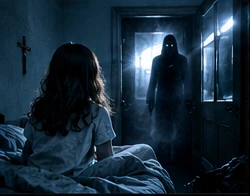

A literary retelling of a reported event or enduring legend. Atmospheric scenes are reconstructed, not eyewitness transcripts.
From the street, the apartment building offers no warning. Its windows resemble those of hundreds of others in Madrid. Families return with shopping bags, doors close, and televisions glow behind curtains. Inside one home, however, an ordinary evening has become difficult to imagine.
The Vallecas case grew around the death of teenager Estefanía Gutiérrez Lázaro and later claims of disturbances reported by her family. Stories link the events to an Ouija board and describe sounds, moving objects and an atmosphere of mounting fear.
In the popular telling, police officers arrive and find a household desperate for an explanation. Their visit becomes one of the story’s most frequently repeated details. The existence of reported observations, however, is not a scientific determination that supernatural forces caused the incidents or the girl’s death.
Imagine a family sitting together after midnight, listening to a sound from the hall. A photograph hangs slightly crooked. Someone remembers how it looked the day before. Grief makes the smallest changes difficult to ignore, while the growing legend gives every detail a dramatic interpretation.
The apartment becomes a place where testimony, fear and media retelling overlap. Each version seems to add a sharper noise, a more startling movement or a stronger official endorsement. Beneath those layers remains a bereaved family and an experience that attracted extraordinary attention.
The Vallecas story is haunting because it takes place in a recognisable modern home. Its doors and corridors are ordinary. The mystery comes from the feeling that ordinary things have stopped behaving as they should.
Further reading: The Enfield Poltergeist · The Great Amherst Mystery.



