
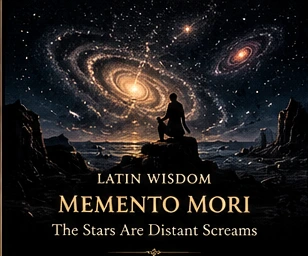

The night sky is an archive. Light takes time to travel, which means the stars and galaxies we see are observed as they were, not necessarily as they are at this instant. This scientific fact gives an ancient human concern—mortality—a new and startling scale.
The Question Beneath the Image
The Latin reminder ‘memento mori’ asks us to remember that we will die. It has appeared in art through skulls, extinguished candles, wilting flowers and hourglasses. Its purpose is not always despair. Remembering limits can sharpen attention, making a passing hour seem precious precisely because it cannot be repeated.
Where Wonder Begins
The sky offers an extraordinary parallel. Some starlight began its journey before human history. Looking upward, we encounter distance translated into time. Yet it would be misleading to say every visible star is already dead; many continue to shine. The more accurate mystery is that our eyes receive a message from an earlier moment.
What Remains Unanswered
Between a skull on a painter’s table and a galaxy in a telescope lies a common question: how should a finite life respond to a vast universe? The answer may begin not with fear but with the decision to notice what is here.
Further reading: Life, Death and Beyond · Omar Khayyam on time.




[…] reading: Memento Mori · Omar Khayyam on […]