
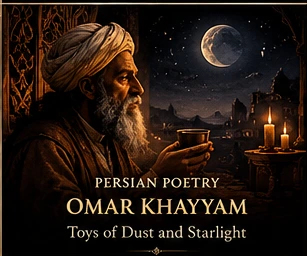

The poetry associated with Omar Khayyam repeatedly places pleasure and mortality in the same cup. A garden blooms, wine is poured, a human voice speaks—and the knowledge that everything passes gives each image a sharper edge.
The Question Beneath the Image
Readers across the world often encounter Khayyam through Edward FitzGerald’s celebrated English Rubáiyát, which is a creative adaptation rather than a transparent, line-for-line rendering of a single Persian original. Many quatrains attributed to Khayyam have disputed authorship. That uncertainty is part of the literary history, not a reason to abandon the poems.
Where Wonder Begins
The image of people as moving shadows beneath the sun is especially powerful. A shadow has form but no independent substance; it exists through a relationship between light and matter. As metaphor, it asks whether our confidence in permanence is misplaced. We enter the world, cast our brief outlines, and vanish from the wall.
What Remains Unanswered
Yet Khayyam’s mood need not be read as hopeless. Impermanence can make a friendship, a shared meal or a moment of beauty more urgent. The unanswered question is whether awareness of an ending diminishes life—or makes it luminous.
Continue reading: Explore Rumi’s inward ocean and Japanese haiku and fleeting moments.




[…] reading: Explore Omar Khayyam and the passing of time and the contemplative world of Japanese […]