
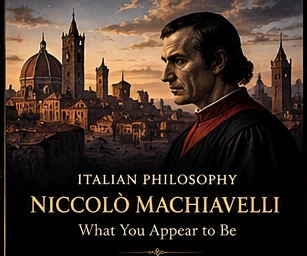

A face is not a biography. Niccolò Machiavelli understood that political life is shaped by appearances, reputation and the distance between what leaders are and what others believe them to be. Centuries later, that distance remains one of the most unsettling features of public life.
The Question Beneath the Image
The mask is useful because human beings cannot directly inspect another person’s intentions. We interpret gestures, speeches, promises and carefully chosen images. A ruler may appear merciful while acting ruthlessly; a feared person may privately doubt every decision. Appearance is not always false, but it is never the complete record.
Where Wonder Begins
Social media has made this old political problem intimate. Each person can now edit a public self: a selection of photographs, opinions and triumphant moments. The resulting portrait may be sincere and still omit most of the life behind it. We become both the makers and the audience of our own masks.
What Remains Unanswered
Machiavelli’s enduring challenge is to look beyond performance without assuming that cynicism is wisdom. The question is not whether everyone is secretly evil. It is how to judge responsibly when the evidence is always partial.
Further reading: Dostoevsky · German thought.



