
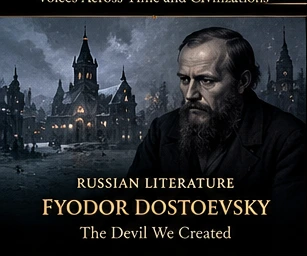

Fyodor Dostoevsky’s fiction places moral mystery inside ordinary human beings. His characters confess, rationalise, love, humiliate themselves and discover that a single mind can hold incompatible desires. The most frightening rooms in his novels are often rooms of conscience.
The Question Beneath the Image
It is tempting to imagine evil as an external force, something with a recognisable face and a clear boundary. Dostoevsky complicates that comfort. A person may commit harm while explaining it as justice. Another may experience guilt before any court has spoken. Ideology, wounded pride and the longing to be exceptional can distort moral vision.
Where Wonder Begins
His work does not offer a simple formula that all people are monsters. It asks why human freedom includes the capacity to betray our own values. The tension matters because it prevents the reader from dismissing wrongdoing as the property of some distant species of villain.
What Remains Unanswered
When the final page closes, the questions continue. What does repentance require? Can suffering produce insight, or does it sometimes merely deepen pain? What happens when an intelligent explanation becomes an excuse? Dostoevsky’s lasting mystery is the human heart: familiar, articulate and never fully understood.
Further reading: Schopenhauer, Nietzsche and Goethe · Nietzsche and the abyss.




[…] reading: Dostoevsky · German […]