
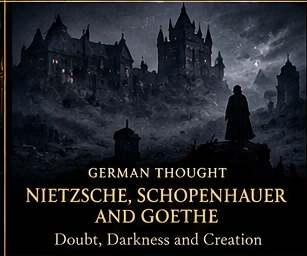

German thought offers some of the most memorable images of human uncertainty: desire as a force that never rests, an abyss that unsettles its observer, and a dramatic spirit whose destructive intentions produce unexpected consequences.
The Question Beneath the Image
Arthur Schopenhauer viewed desire as central to the suffering of existence. Friedrich Nietzsche challenged inherited moral certainties and asked what happens when old sources of meaning lose their authority. Goethe’s Faust stages the dangerous bargain between knowledge, ambition and consequence.
Where Wonder Begins
These thinkers did not offer a single philosophy of darkness. Their disagreements are precisely what make the conversation worth entering. Is freedom the pursuit of desire or release from its grip? Does the collapse of certainty open a space for creativity, or merely expose us to fear? Can harmful intentions sometimes produce good outcomes without becoming morally admirable?
What Remains Unanswered
Their works remain unsettling because the questions resist easy optimism and easy despair alike. They ask us to examine not only what we believe, but why we need to believe it.
Further reading: Nietzsche and the abyss · Dostoevsky and conscience.



