
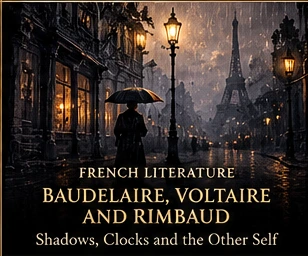

French literature turned the modern city into a theatre of wonder and estrangement. Charles Baudelaire found beauty and unease in crowded streets; Voltaire tested certainty with wit and argument; Arthur Rimbaud pushed poetic identity toward a startling fracture.
The Question Beneath the Image
The city promises anonymity, but it also multiplies encounters. Every illuminated window suggests a life we cannot enter. Every passing stranger becomes a story that vanishes before we can ask its name. Baudelaire’s urban imagination makes this experience feel both intoxicating and lonely.
Where Wonder Begins
Voltaire’s philosophical writing insists that grand explanations deserve scrutiny. Rimbaud’s language unsettles the grammar of the self. Together, these writers reveal different routes toward the unknown: observation, doubt and visionary disruption.
What Remains Unanswered
Many eerie lines circulated online under famous names are modern inventions. Rather than repeating them as quotations, we can honour the actual literary achievement: these writers made familiar life strange enough to examine again. The mystery is not hidden in a supernatural shadow following us down a street. It may be hidden in the fact that we can never fully know the person walking beside us.
Further reading: French philosophy and the divided self · Modern voices in poetry.




[…] reading: French literature · modern […]