
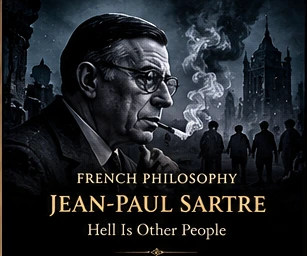

We often describe identity as though it were a room with a single occupant. French existentialism makes the room less comfortable. Jean-Paul Sartre examined the pressure of being seen and judged by other people, while Arthur Rimbaud’s startling declaration, ‘Je est un autre,’ turns the self into a stranger.
The Question Beneath the Image
To be observed is to discover that others possess versions of us we cannot control. The person we imagine ourselves to be may not resemble the person remembered by a friend, feared by an enemy or described by a stranger. This is not necessarily hypocrisy. Human identity is relational, and each relationship illuminates a different surface.
Where Wonder Begins
The mystery grows sharper in solitude. If nobody is watching, do we become more authentic, or do we merely lose a familiar mirror? Our private thoughts are not always transparent to us. We surprise ourselves with jealousy, courage, tenderness and fear.
What Remains Unanswered
The French philosophical tradition offers no simple escape from these tensions. Instead, it asks us to take responsibility for a life that cannot be reduced to a label. Perhaps the most haunting stranger we will ever meet is the person we become.
Further reading: French literature · modern poetry.




[…] reading: French philosophy and the divided self · Modern voices in […]