
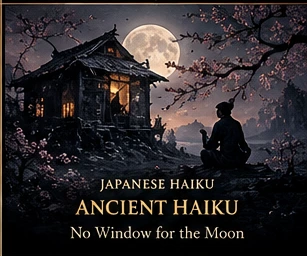

A few words can change the shape of a landscape. Japanese haiku is famous for its brevity, but its power comes from the space it leaves unspoken. A season, a sound, a small movement: the poem opens a scene and asks the reader to complete it.
The Question Beneath the Image
One widely circulated verse describes a home destroyed by fire and a new freedom to see the moon without obstruction. The wording and attribution vary in English circulation, so it is best approached as a literary image rather than presented as an authenticated ancient haiku. Its emotional reversal remains startling.
Where Wonder Begins
Destruction usually narrows the world. Here it appears to open the sky. The paradox does not mean that loss is secretly good, or that suffering should be romanticised. Rather, it reveals the mind’s capacity to discover an unexpected perspective even when the familiar frame has disappeared.
What Remains Unanswered
Haiku often invites attention rather than argument. A moon reflected in water is both present and untouchable. A bell fades while the silence around it seems to deepen. Such images do not explain the universe. They let us feel, for a moment, how mysterious ordinary perception can be.
Further reading: Rumi and the inner self · Omar Khayyam on time.



