

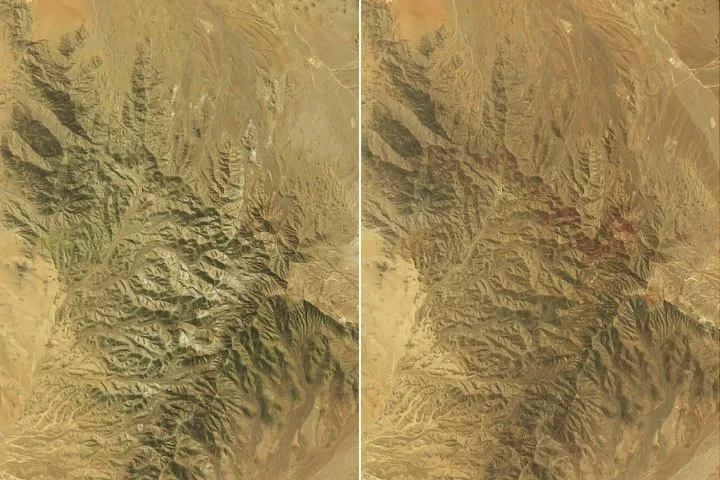
Colour spread across a landscape famous for dryness. NASA’s Earth Observatory report of 19 November 2026 shows parts of Chile’s Atacama Desert turning green, red-purple and white after an unusually wet winter.
Landsat images from 14 September and 24 October document different stages of the spring flowering. Rain had awakened seeds dormant in the soil. Researchers quoted by NASA suggest this may be the broadest flowering desert observed during the satellite era.
That possible record remains an attributed assessment. The images document vegetation change, while fieldwork helps identify species and interpret what the colours mean. Researchers are combining satellite observations with drones and ground photography.
How does life persist through the long intervals between such displays? The spectacle invites a question about patience as much as abundance. Conservation also requires understanding what remains in the soil when the colour disappears.



