
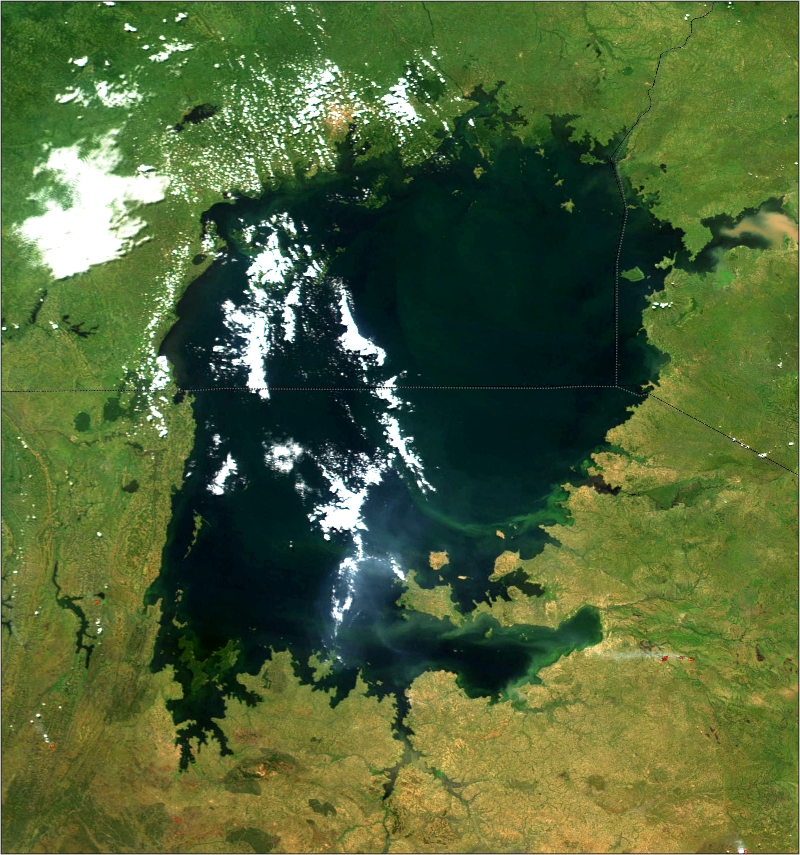

In 1962, a school near Lake Victoria became the centre of an extraordinary medical mystery. The people affected were not laughing at a joke. Many were frightened, exhausted, and unable to control what was happening.
A sound that would not stop
Imagine a classroom where a burst of laughter does not fade when the teacher asks for silence. Instead, it returns, joined by crying, agitation and distress. The episode spreads beyond the classroom, and ordinary lessons become impossible. That is the unsettling story preserved in medical reports from the Bukoba district of Tanganyika, now part of Tanzania.
The outbreak began in January 1962 at a girls’ school in Kashasha, near Lake Victoria. Accounts of the episode describe pupils experiencing bouts of involuntary laughter, crying and restlessness. It is tempting to call this a strange comedy, but the clinical record tells a more serious story: the symptoms interfered with schooling and daily life. What looked like laughter was not necessarily happiness.
From a school to neighbouring communities
As affected pupils returned home, similar episodes were reported at other schools and in villages. The outbreak was sufficiently disruptive to attract medical investigation. The often-repeated figures of roughly a thousand people affected and numerous school closures appear in later retellings, but estimates differ between sources and should not be mistaken for a precise modern surveillance count.
Two physicians, A. M. Rankin and P. J. Philip, published a report in the Central African Journal of Medicine in May 1963. Their account described laughter, crying and restlessness spreading from a girls’ school into surrounding communities. They reported no significant abnormal physical findings, normal laboratory tests, no identified food toxin and no fatalities. Their proposed explanation was what the medical language of the time called “mass hysteria.” That older label can sound dismissive today, particularly when applied to young people whose suffering was real.
What does “mass psychogenic illness” mean?
Modern discussion more often uses the term mass psychogenic illness: physical symptoms occurring within a socially connected group without an identified shared infectious or toxic cause. It does not mean that people are pretending. Nor does it mean that a clinician can safely skip investigating infection, poisoning or other medical conditions. Those possibilities must be assessed before a psychogenic explanation is considered.
Human nervous systems respond to fear, uncertainty, expectation and the behaviour of people around us. Stress can produce genuine bodily effects, and symptoms can spread through observation and social connection without a bacterium or virus moving between people. Researchers continue to debate how such outbreaks should be understood and how social pressures, cultural context and individual distress interact.
A 2007 scholarly reassessment by linguist Christian F. Hempelmann cautioned that the familiar phrase “laughter epidemic” can mislead. This was not simply contagious amusement; laughter was one symptom within a more complex disturbance. Treating the episode as a bizarre joke erases the experience of those affected.
A country in transition
The timing matters. Tanganyika had gained independence in December 1961. The following year brought political change and new expectations. Some later interpretations connect the outbreak with pressures on schoolchildren and communities during a period of rapid transition. Such connections are plausible historical interpretations, not a proven single cause for every individual episode.
The incident also raises questions about the way outside observers describe unfamiliar societies. A dramatic headline can transform frightened pupils into an exotic curiosity. A responsible history should instead ask what the original investigators observed, which claims were later embellished, and whose voices are missing from the archive.
The mystery that remains
There is no evidence that a supernatural force, a mysterious laughing virus or a secret chemical caused the Tanganyika outbreak. The medical investigation favoured a socially mediated, psychogenic explanation. Yet the precise chain of circumstances that made this particular outbreak take hold cannot be reconstructed with certainty more than six decades later.
Perhaps the most haunting part of the story is not the laughter itself. It is how easily an outward expression can be mistaken for an inward emotion. A person may laugh while suffering. A crowd may share symptoms without sharing an infection. And a community’s distress can be turned into entertainment by people far away.
The question left behind in Kashasha is therefore not merely, “Why did they laugh?” It is also, “Who listened?”
Sources and image credit
- Rankin, A. M., and Philip, P. J. “An epidemic of laughing in the Bukoba district of Tanganyika.” Central African Journal of Medicine 9 (May 1963), 167–170. PubMed record; journal abstract.
- Hempelmann, Christian F. “The laughter of the 1962 Tanganyika ‘laughter epidemic’.” Humor 20 (2007), 49–71. DOI: 10.1515/HUMOR.2007.003.
- Pringle, Y. “Mass Hysteria in the Wake of Decolonisation.” In Psychiatry and Decolonisation in Uganda (2019). DOI.
- Illustrative geographic image: NASA satellite view of Lake Victoria, via Wikimedia Commons. Public domain (NASA). This is a modern satellite image of the region, not a photograph of the 1962 outbreak.




