
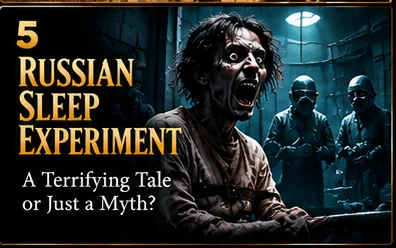

A sealed chamber. Five prisoners. A mysterious gas that prevents sleep. After days of confinement, the story says, the subjects descend into unimaginable horror. The Russian Sleep Experiment has become one of the internet’s most recognizable tales—but it is not a verified historical event.
Where the story came from
The narrative circulated online as creepypasta, a form of collaboratively shared internet horror fiction, around 2010. It uses the language of secret Soviet laboratories and suppressed records to make the extraordinary sound documentary. That framing is central to its appeal.
No credible archival evidence establishes that the described experiment took place. The supposed gas, the chamber and the graphic outcomes belong to the fictional narrative, not to an authenticated scientific report.
Why people believe it
The story borrows from real anxieties about unethical experimentation and state secrecy. Historical abuses such as the CIA’s MKUltra program and Japan’s Unit 731 make the setting feel plausible, even though they do not validate this particular tale.
Its popularity reveals a wider problem: once a frightening story is reposted without its fictional context, repetition can make it seem like evidence. The truly unbelievable part may be how easily a made-up account acquires the appearance of history.
Editorial classification: Fiction / internet folklore. Not a verified Soviet experiment.
Further reading: The Chopper Poltergeist · The Little Kitchen Ghost Orders.




[…] reading: The Russian Sleep Experiment: Fact Check · Under […]