

DARK PAGE · THE AGE OF WONDER
The Winning Ticket and the Curse of Fortune: Four Lives Changed by Luck
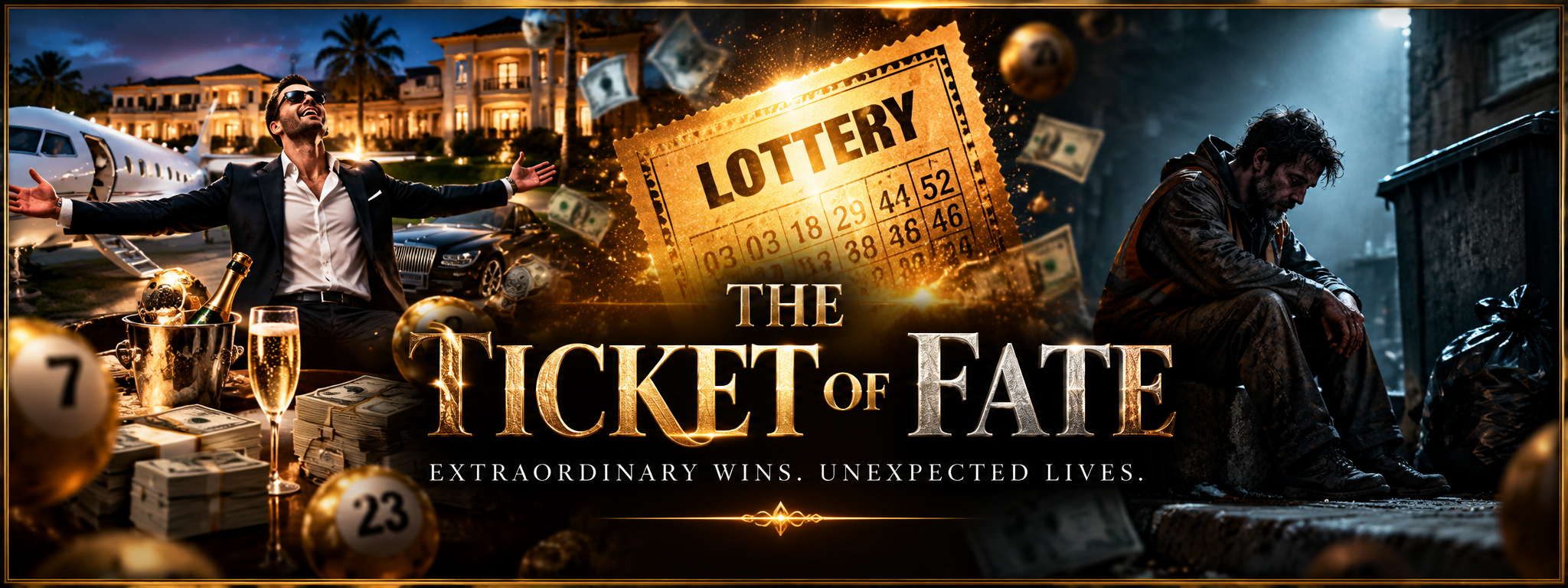
One small piece of paper. A few numbers. And suddenly the world begins treating an ordinary person as though fate has personally selected them. But what happens when the cheering stops?
The Boy Who Won Millions
Michael Carroll was just 19 when he won roughly £9.7 million in the UK National Lottery in 2002. His sudden wealth became a tabloid spectacle, and accounts of extravagant spending followed him for years. Later reporting described his return to ordinary work. His story is often packaged as a morality tale about wasted riches. The more unsettling question is whether someone so young, newly famous and surrounded by demands could ever have been prepared for the speed of the change.
The Woman Who Won Four Times
Joan Ginther became famous for four major lottery wins in Texas across several years. The improbable sequence prompted speculation about mathematical secrets, hidden methods and extraordinary luck. Yet improbable events do occur when millions of people play games over long periods. Without evidence of wrongdoing or a repeatable predictive method, the wins cannot establish that lottery outcomes can be foretold. An extraordinary coincidence is still not a proven supernatural power.
The Fortune That Drew Danger
In 2006, Florida labourer Abraham Shakespeare won a lottery prize advertised at $30 million. In the years that followed, his life became entangled in financial and personal turmoil. He was later murdered, and his remains were discovered buried in 2010. The tragedy should not be reduced to a claim that money itself kills. What it reveals is how visibility, trust and vulnerability can change when a private person suddenly becomes publicly wealthy.
The Man Who Survived—and Won Again
Australian Bill Morgan became a media sensation after surviving a serious medical crisis and later winning a prize on a scratch card. During a television recreation of his win, he reportedly scratched another winning ticket on camera. It sounds scripted because life occasionally produces sequences no screenwriter would dare submit. But a striking sequence does not mean the universe has suspended probability; it means that rare events become memorable stories.
Why the Numbers Never Remember You
In a fair lottery with independent draws, yesterday’s result does not make a number more likely to appear tomorrow. A long run without a particular number is not a debt the lottery owes its players. This misunderstanding is called the gambler’s fallacy. Likewise, winning once does not guarantee that a person is blessed with a special statistical advantage. The rules of each game determine the odds, not dreams, birthdays or the feeling that a number is “due.”
The Real Mystery Is Human
Winning money can buy freedom, but it can also change relationships, attract unwanted attention and magnify existing difficulties. The stories of Carroll, Ginther, Shakespeare and Morgan do not prove a curse or a cosmic reward. They reveal four very different encounters between chance and character. If fortune arrived at your door tonight, would it recognise the person who opened it a year later?
Editorial note: Prize amounts, dates and individual biographical accounts should be read in the context of reporting and official lottery records. Dark Page does not promote lottery systems or suggest that winning numbers can be predicted.
Further reading: Lottery Secrets: Sudden Wealth · The Invisible Hand.



