

DARK PAGE / THE MIND & BODY
Does the Heart Think? The Strange Intelligence of a Beating Organ
A heart can change the way we feel and attend to the world. But is that the same as thought?
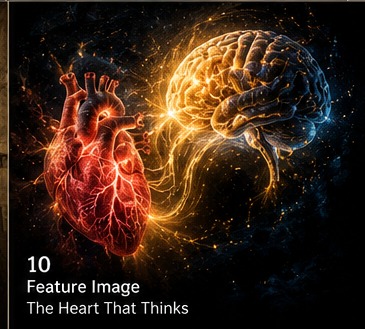
Before you have found the words for fear, your heartbeat may already have changed. Before you can explain why a room feels unsafe, your chest may tighten. For centuries, poets have spoken of the heart as if it knew things the mind had not yet discovered. What if there is a biological truth concealed within that metaphor—not a second thinking brain, but a continuous conversation between heart and mind?
The Mystery: A Message Arrives Before a Thought
Picture a person standing at a railway station, waiting for someone who has not arrived. Their eyes scan the crowd. Their pulse quickens. The body is not merely obeying a finished thought; bodily signals and mental processes interact as the situation unfolds. The question is not whether the heart writes secret sentences. It is how signals from the heart become part of the experience of anxiety, anticipation and relief.
What We Know: The Heart Has Its Own Neural Network
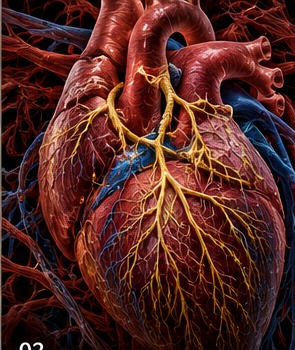
The heart contains an intrinsic cardiac nervous system: networks of neurons and supporting cells that help regulate cardiac function. This network participates in local sensing and coordination and interacts with the autonomic nervous system. Popular descriptions sometimes call it the heart’s “little brain.” The nickname is evocative, but it does not mean the heart can reason, form beliefs or think independently in the way the brain does.
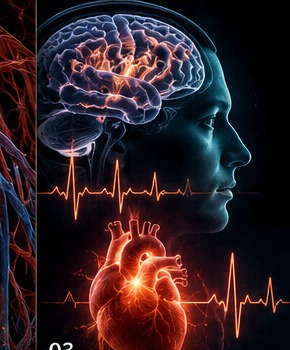
Electrical signals coordinate each heartbeat, and the nervous system continuously adjusts heart rate and other functions in response to bodily demands. Communication travels in both directions. The brain influences the heart through autonomic pathways; information about cardiovascular activity also travels back toward the brain, including through pathways associated with pressure-sensitive receptors.
The Body’s Signals and the Feeling of Being Alive
Interoception is the perception and interpretation of signals from within the body. Heartbeat-related signals are one source of information the brain may use when constructing bodily awareness and emotion. Researchers investigate how the timing of heartbeats, attention to internal sensations and cardiovascular changes relate to perception and decision-making. Results vary across tasks and people, and an association does not establish that the heart is doing the thinking.
A racing heart may accompany fear, excitement, exercise or illness. The same bodily sensation can be interpreted differently depending on the circumstances. That is one reason it is misleading to describe emotions as messages issued by the heart alone. Emotions involve interacting brain, body and environmental processes.
Does the Heart Remember?
Stories sometimes claim that recipients of heart transplants inherit the donor’s memories or personality. These accounts are compelling narratives, but there is no reliable scientific evidence that a transplanted heart transfers autobiographical memories or a donor’s identity. Major life events, medication, recovery, expectation and the human search for meaning can influence how people describe changes after transplantation. Respect for those experiences should not be confused with proof of memory transfer.
NEW RESEARCH / 2025–2026
The Heart Thinks Along with the Mind?
In September 2025, the Max Planck Institute for Human Cognitive and Brain Sciences highlighted research on the dynamic relationship between heart activity and mental processes. The provocative phrase “the heart thinks along with the mind” invites an important distinction: the timing and signals of the cardiovascular system can help shape experience, but that does not establish that the heart reasons independently.
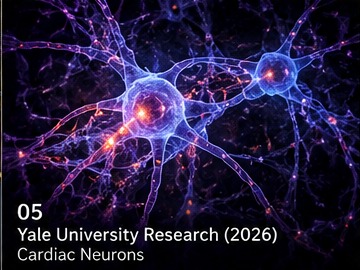
A Neural Network Inside the Heart
Research publicised by Yale in July 2026 examined distinct populations of neurons in the heart’s intrinsic nervous system and their roles in regulating cardiac activity, including responses to stress. The reported experiments were conducted in mice. These findings help explain how local neural circuits regulate the heart; they are not evidence of human-like thought inside cardiac tissue.
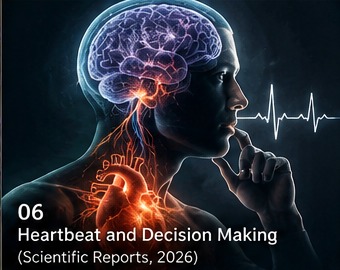
Can the Timing of a Heartbeat Affect a Decision?
A May 2026 report in Scientific Reports, analysing experimental data from 29 participants, described associations between phases of the cardiac cycle and aspects of action-related decision processes. This is an intriguing line of inquiry, but the small sample and study design limit broad conclusions. The brain remains central to decision-making, while bodily signals may modulate some processes.
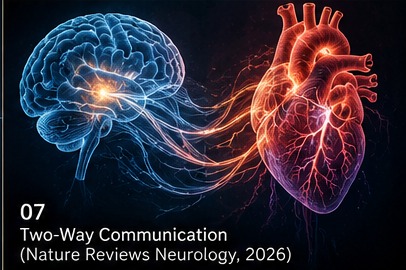
A Two-Way Conversation
A 2026 review in Nature Reviews Neurology examined the reciprocal connections between cardiovascular and neurological systems. Together, these lines of research suggest that separating “thinking” from the body’s signals is too simple. Yet there is still no reliable demonstration that the heart independently forms thoughts, beliefs or autobiographical memories.
The better question is not whether a second person lives in our chest. It is how every beat of the heart participates in the changing experience of the person we already are.
Research leads for further verification: Max Planck Institute for Human Cognitive and Brain Sciences (25 September 2025); Yale School of Medicine (July 2026); Scientific Reports (May 2026); Nature Reviews Neurology (2026). These findings should be read in their original methodological context; the phrase “the heart thinks” is a metaphor, not a demonstrated capacity for independent reasoning.
What Remains Unknown?
Scientists are still investigating exactly how cardiovascular signals shape attention, emotional experience and conscious perception. How much does the timing of a heartbeat matter for what we notice? Why are some people more sensitive to internal bodily signals than others? How do stress and long-term health alter the conversation between heart and brain? These questions are genuine, testable and more interesting than the claim that the heart is secretly a second human mind.
What Could Change Our Understanding?
Advances in neuroscience, cardiac physiology and the study of interoception may clarify how signals from the body participate in emotion and behaviour. Such work could eventually inform better care, but it would not establish that the heart independently thinks. A scientific discovery can deepen an ancient metaphor without turning the metaphor into literal anatomy.
Perhaps the heart does not think in words. Perhaps its mystery is more intimate: it keeps speaking to a brain that is never truly alone.

WRITTEN BY
Dark Page Research & Editorial Team
Original editorial feature exploring the science, history and unanswered questions of the human experience. The circular artwork is the team’s editorial emblem, not a portrait of a scientist or individual author.
A Conversation Between Organs
Signals from the heart influence bodily awareness, while the brain continually regulates cardiovascular activity. This two-way relationship helps explain why emotion can be felt in the chest and why changes in heartbeat may affect attention. It does not establish a second conscious thinker inside the heart. The scientific story is richer than either a simplistic dismissal of bodily feeling or the claim that the heart secretly reasons like a brain.
Further reading: The Other 90% of the Brain · The Memory That Never Happened.



