
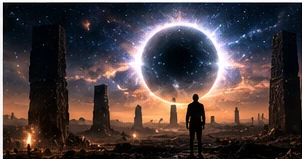

Some stories frighten us by showing a monster. Cosmic horror frightens us by changing the scale of the room. In the work of H. P. Lovecraft, humanity is not the centre of the universe; the unknown may be indifferent to our wishes, morals and explanations.
The Question Beneath the Image
Edgar Allan Poe approached dread through unstable perception, grief and obsession. Shakespeare, in Macbeth, imagined life as a brief performance passing into silence. These are different literary traditions, yet each asks what becomes of human certainty when the stage grows too large or too fragile.
Where Wonder Begins
The fear of the unknown is not only fear of danger. It is the shock of discovering that our categories may be inadequate. A telescope reveals distances the mind struggles to picture. A deep ocean contains creatures adapted to a world without sunlight. Fiction takes that cognitive discomfort and gives it a voice.
What Remains Unanswered
Cosmic horror is not scientific evidence for hidden entities. It is an imaginative method for confronting limits. The most compelling question may be whether a small human voice can still create meaning beneath an immeasurable sky.
Further reading: Poe and the uncertain world · Nietzsche and the abyss.




[…] reading: Poe and cosmic horror · Japanese haiku and fleeting […]