

DARK PAGE · THE AGE OF WONDER
Twelve Kilometres into Darkness: The Secrets Beneath Our Feet
Where wonder begins, investigation must follow.
A Hole in the World
On the Kola Peninsula, engineers spent years drilling into the ancient crust of Earth. Their borehole reached roughly 12.3 kilometres, deeper than any ordinary mine. It sounds like an entrance to the underworld. Yet compared with Earth’s radius of about 6,371 kilometres, it barely scratched the surface. The extraordinary part of the story is not how deep we went, but how much remains beyond direct human reach.
The Heat That Stopped the Drill
Deep drilling confronts rock temperatures, pressure, unstable borehole conditions and the limits of equipment. The Kola project helped researchers investigate the crust and challenged some assumptions about the structure of deep rock. It did not open a tunnel to a hidden civilisation or to the centre of the planet. Legends about strange voices recorded from hell belong to folklore, not verified geology.
How Scientists See Through Solid Rock
If nobody has visited the core, how do scientists know it exists? Earthquakes send waves through the planet. Different wave types travel differently through solids and liquids, and their arrival patterns reveal internal layers. Together with gravity, magnetism and experiments on minerals under extreme pressure, these measurements support the familiar picture of crust, mantle and core. It is an inference built from many observations, not a guess based on a drawing.
The Ocean Beneath the Ground
Groundwater fills pores and fractures in rocks; in some regions vast aquifer systems sustain ecosystems and cities. Deep below the surface, microorganisms survive in darkness using chemical energy. Their presence has transformed ideas about where life can exist. But claims of a single giant ocean sloshing beneath every continent misrepresent what geological research actually describes.
Caves That Keep Their Secrets
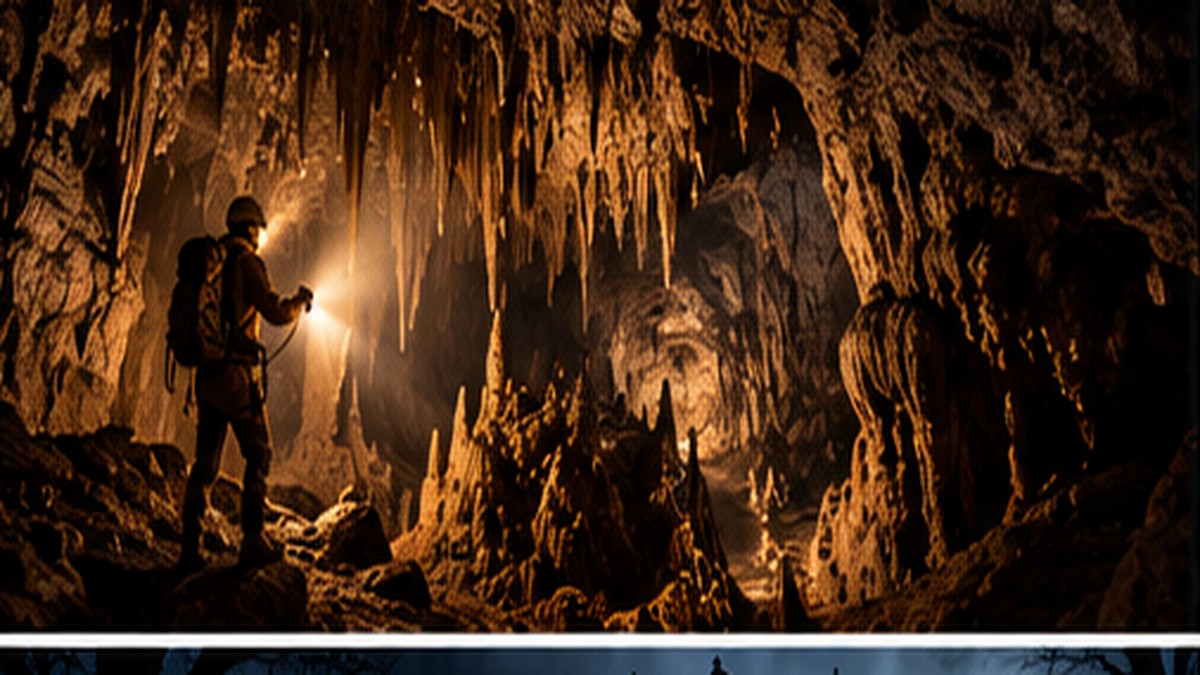
Cave systems can contain remarkable formations, isolated biological communities and traces of ancient human activity. Exploring them requires patient surveying and strict safety practices. A chamber sealed for millennia might preserve fragile evidence that disappears the moment it is disturbed. That is why archaeology and cave science must treat discoveries as records, not props in an adventure story.
The Hidden Fire
Earth’s interior drives plate tectonics, volcanic activity and much of the planet’s long-term geological change. The ground beneath our homes is not an inert platform; it is the uppermost skin of a dynamic world. Its movement is usually slow on a human timescale, until an earthquake reminds us that the surface is temporary.
The Unopened Door
The deepest questions may concern the origin of Earth’s magnetic field, the behaviour of the mantle and the resilience of life under pressure. Every new measurement opens a narrow window into a realm we may never enter ourselves. What else is hidden in the darkness beneath the familiar streets where we walk?
Editorial note: Scientific claims are distinguished from legends and speculative ideas. This is a narrative feature, not a claim of new discoveries.
Further reading: The Ocean’s Last Dark Kingdom · The Amazon’s Secret Geometry.




[…] reading: Secrets Beneath Our Feet · The Infinite […]