

DARK PAGE · THE AGE OF WONDER
Before Adam: The Footprints That Challenge Our Story of Being Human
Where wonder begins, investigation must follow.
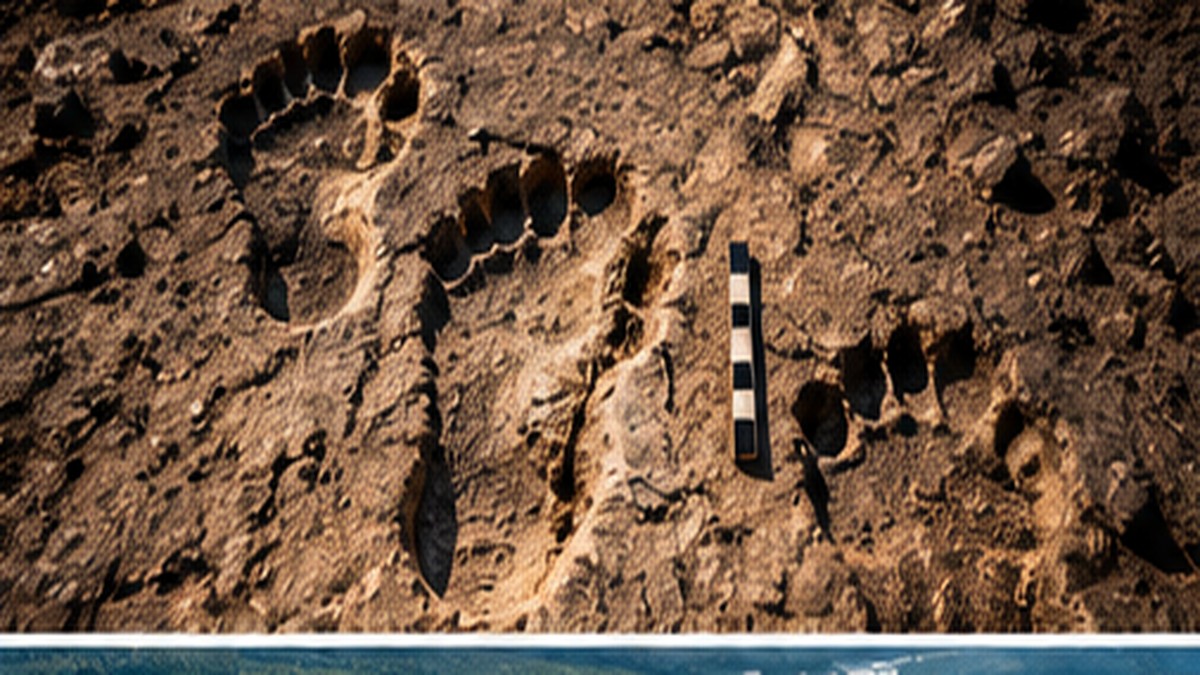
Footprints Older Than Our Stories
Imagine finding footprints pressed into ancient mud by people who vanished long before the first cities, books or recorded kings. At Laetoli in Tanzania, fossil footprints about 3.66 million years old preserve evidence of upright walking by early hominins. They do not tell us what their makers called themselves, what they feared or whether they possessed stories of creation. They offer something quieter and more powerful: physical traces of lives separated from ours by an almost unimaginable span of time.
A Family Tree With Missing Branches
Human evolution is not a ladder with a modern person standing triumphantly on its top rung. It is a branching history of populations and related species, many now extinct. Fossils associated with Australopithecus, Homo erectus, Neanderthals and other groups reveal different combinations of anatomy, behaviour and adaptation. Scientists revise their interpretations as new discoveries arrive. Even the exact relationships among some ancient groups remain disputed.
The DNA of the Disappeared
Genetic research shows that the ancestors of many living people interbred with Neanderthals, while some populations also carry Denisovan ancestry. These findings transformed the old picture of isolated human lineages. Our past includes meetings, migrations and exchanges that left traces in living genomes. DNA cannot reveal every conversation or belief, but it can expose relationships no written chronicle preserved.
Where Adam Enters the Conversation
Adam occupies a foundational place in Abrahamic religious traditions, yet believers and scholars interpret the relationship between sacred narrative, history and evolution in different ways. Some read Adam as the first biological human; others explore theological understandings that distinguish spiritual vocation from the emergence of a species. These interpretations should not be flattened into a single religious position. Science examines testable evidence about biological ancestry; theology addresses revelation, meaning and humanity’s relationship with the divine.
The First Question
When did our ancestors begin to think symbolically, bury their dead, make art or ask questions about existence? Archaeological evidence points to complex behaviours emerging in different times and places, not necessarily in one dramatic instant. A shell ornament, a carved object or a carefully prepared burial can suggest an inner life, but interpretation demands caution. An artefact does not come with a transcript of its maker’s thoughts.
The Unfinished Human Story
The deepest mystery may not be whether we can identify one precise beginning. It may be how a lineage of vulnerable creatures developed language, memory, cooperation and the ability to imagine the invisible. The fossil record gives us fragments; genetics adds another set of clues; faith and philosophy ask different kinds of questions. Between them lies a conversation worth having without pretending that every disagreement has already been settled.
Editorial note: This narrative feature distinguishes documented evidence from interpretation, speculation and belief.
Further reading: Born Beyond the Ordinary · Evidence Before Sensation.



