
DARK PAGE / DISCOVER YOUR DESTINY / A LIBRARY OF INTERPRETATIONS
Numerology: When Numbers Become Stories
From ancient number symbolism to modern Life Path calculations — two perspectives and a thousand questions.
A date can be written as eight digits. A name can be converted into numbers. But when does arithmetic become interpretation? Across cultures, numbers have been used to count harvests, describe celestial cycles, compose music, order architecture and imagine correspondences between the visible and invisible. Numerology begins where number is treated not only as quantity but also as a possible carrier of meaning.
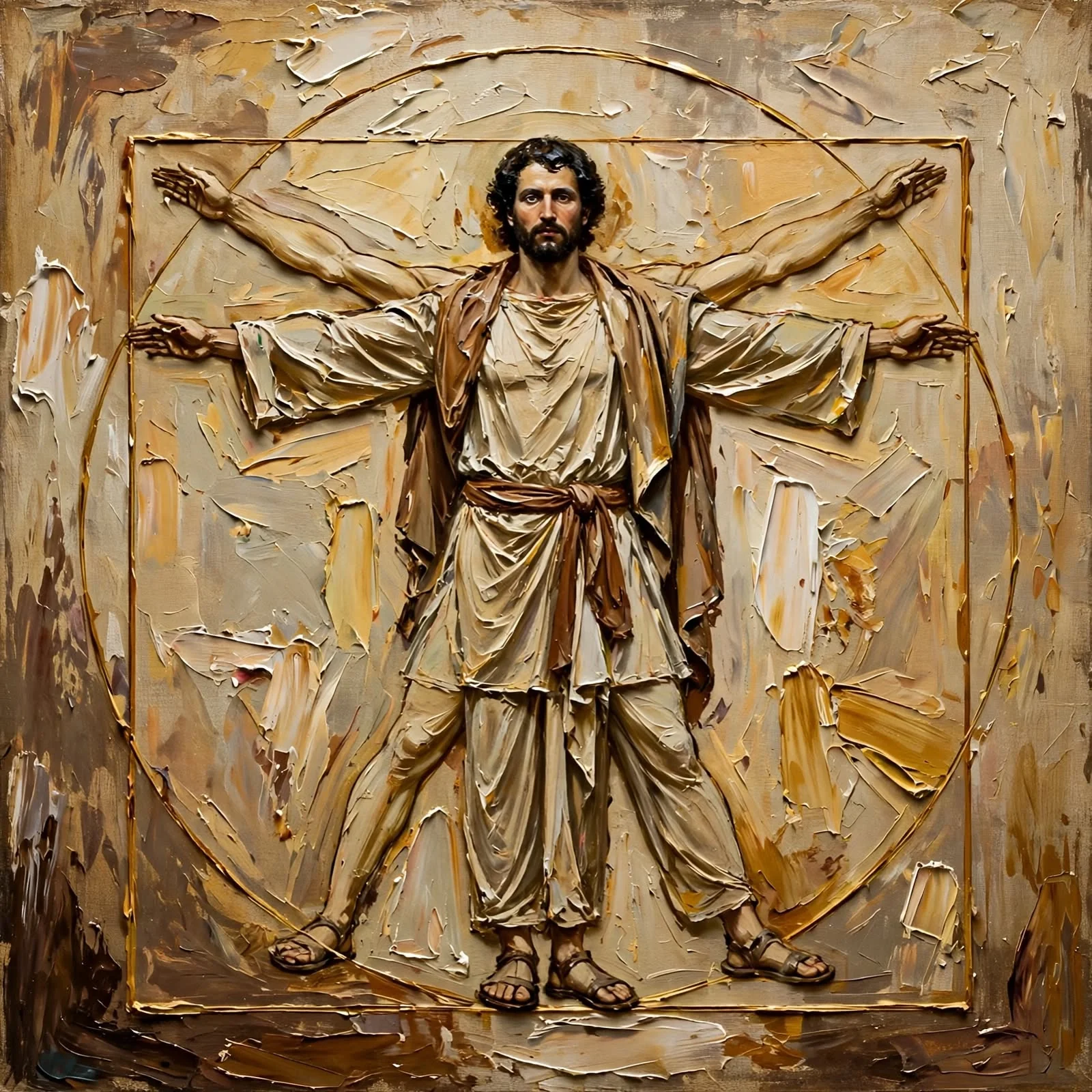
1. A History of Numbers and Meaning
Number symbolism has no single birthplace. Ancient societies developed mathematical practices alongside religious, philosophical and literary uses of numbers. Greek traditions associated with Pythagoras explored number and harmony; later philosophical and esoteric writers drew on such associations in different ways. The popular modern method of reducing a birth date to a Life Path number should not be presented as an unchanged formula handed down directly from Pythagoras. Its contemporary forms reflect later interpretation and system-building.
There are also distinct letter-number traditions, including Hebrew gematria and Arabic abjad. Their alphabets, historical settings and rules differ. Calling them all numerology can be useful as a broad comparison, but it must not erase those differences.
2. What Is a Life Path Number?
In one widely used modern system, the digits of a person’s date of birth are added and reduced until a single digit remains. Some practitioners preserve the numbers 11, 22 and 33 as “master numbers”; others reduce them further. These are conventions of particular schools, not laws of arithmetic. A transparent reading must say which rule it follows.
A Worked Example: 14 July 1992
Write the date as 14/07/1992. Add every digit: 1 + 4 + 0 + 7 + 1 + 9 + 9 + 2 = 33. Under a master-number convention, the reading may retain 33, often written 33/6. Under a single-digit convention, 3 + 3 = 6. The arithmetic is straightforward; the significance assigned to 33 or 6 belongs to the interpretive tradition.
Common Symbolic Themes
| Number | Common interpretive themes | A question to ask |
|---|---|---|
| 1 | Initiative, individuality | Where does independence help or isolate us? |
| 2 | Cooperation, sensitivity | When does harmony require disagreement? |
| 3 | Expression, creativity | Can a story reveal what a fact alone cannot? |
| 4 | Structure, discipline | When does order become limitation? |
| 5 | Change, freedom | How much uncertainty do we welcome? |
| 6 | Care, responsibility | What is the boundary between duty and choice? |
| 7 | Reflection, inquiry | Can a question be more valuable than an answer? |
| 8 | Ambition, stewardship | What do we mean by success? |
| 9 | Compassion, completion | How do endings change our understanding of beginnings? |
These associations are examples of one family of interpretations. They are not established measurements of personality, and not every numerology school uses the same vocabulary.
3. Why Do Different Calculators Disagree?
Some methods sum all digits at once; others reduce day, month and year separately before combining them. The treatment of 11, 22 and 33 can change the displayed result. Name-based numerology introduces further choices: which alphabet, which spelling, which letter-value table, and whether a changed name changes the reading. A serious comparison makes the procedure visible rather than hiding it behind an impressive result.
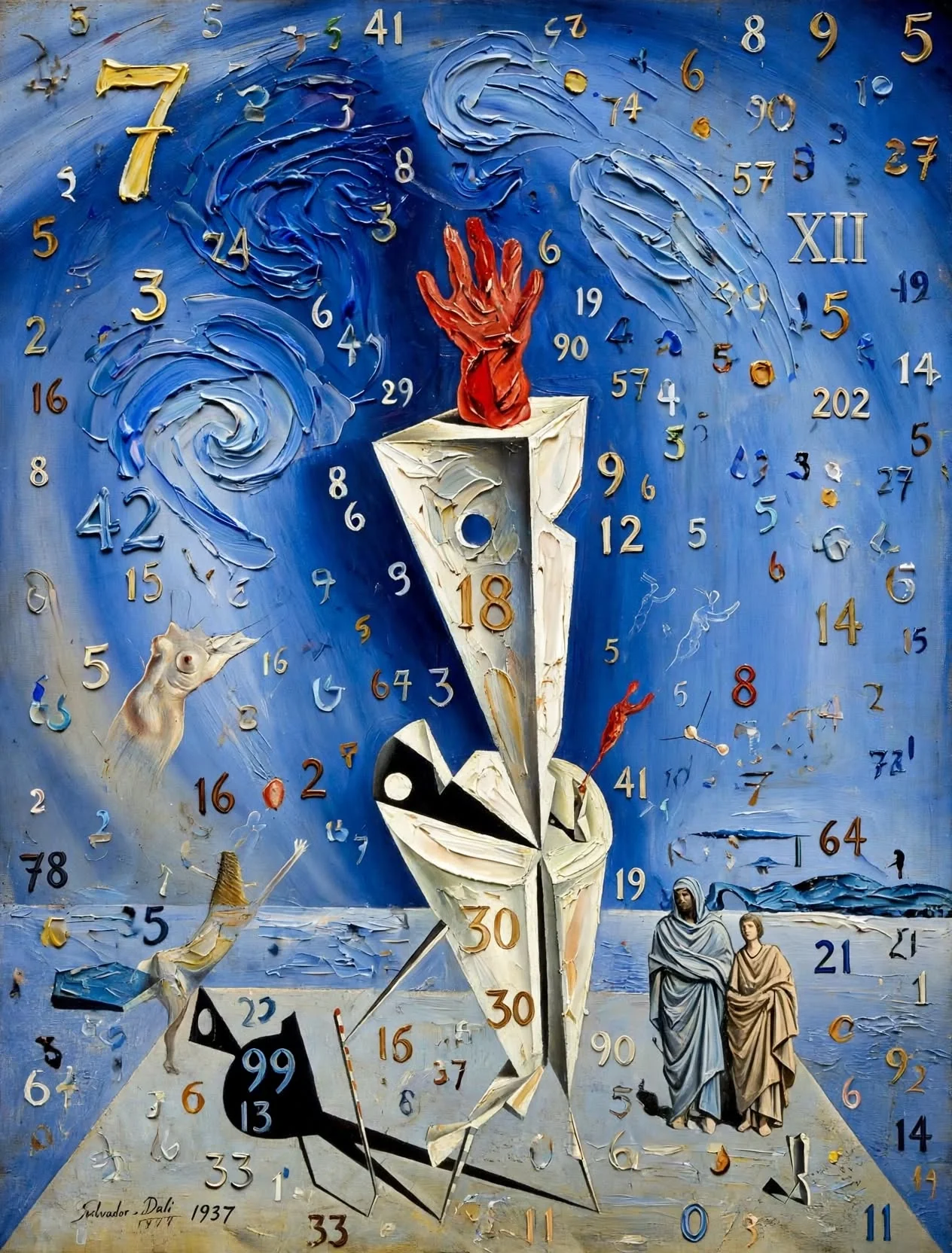
4. Name Numerology Is Not One Universal System
Popular Western letter-number methods often map Latin letters to digits using a repeating sequence from 1 to 9. Other traditions assign values differently. A name written in Arabic, Urdu, Hebrew or Latin script does not necessarily preserve the same total across systems. Transliteration is an interpretive choice, not a neutral conversion. For Arabic letter values and their historical contexts, explore our Abjad guide.
5. Two Perspectives: Symbol and Explanation
The Traditional Perspective
For practitioners, numbers can form a symbolic language. A reading may invite reflection on recurring themes, the rhythm of a life or a moment of uncertainty. Some interpret repeated numbers as signs, and some find that the ritual of calculating and contemplating them helps articulate feelings that are difficult to name.
The Alternative Perspective
Psychologists study pattern recognition, selective attention, memory and the tendency to perceive a broadly worded description as personally accurate. Mathematicians can explain why repeated digits and coincidences occur without requiring a hidden message. The calculation of a number is reproducible; the claim that its symbolic meaning reliably predicts an individual’s future is a separate question requiring evidence.
These perspectives need not be caricatures. The subjective meaning of an experience and a claim about its external predictive power are different matters. A reader can examine both without being told what to believe.
6. An Interactive Life Path Laboratory
Choose a date and compare two clearly labeled reduction conventions. All calculations happen inside your browser; this tool does not submit or store the date.
7. Questions That Remain
Why do numerical patterns feel significant at certain moments of life? Can a symbolic system be meaningful without being predictive? What kind of independent test would distinguish a reliable forecast from a compelling story? If two systems assign different numbers to the same person, what exactly are they measuring?
Dark Page does not answer these questions on the reader’s behalf. Our purpose is to make the methods understandable, the perspectives visible and the mystery worth exploring.
8. Further Reading and Primary Context
For the history of mathematics and Pythagorean thought, consult scholarly histories of ancient Greek philosophy; for contemporary psychological perspectives, look for research on the Barnum effect, confirmation bias and pattern perception. For comparisons with letter-number traditions, consult specialist histories of gematria and abjad rather than assuming a single shared origin. Historical claims and contemporary interpretations should be evaluated separately.
DARK PAGE SPECIAL FEATURE / THE OTHER LIFE OF NUMBERS
Four Numbers That Shook Mathematics
Some numbers did more than answer questions. They forced mathematicians to ask what a number could be. The square root of a negative number, the diagonal of a square, zero and the mathematics of infinity all exposed limits in familiar ways of thinking. Their histories are dramatic enough without inventing terrors or tragedies.
An important distinction: This feature is about the history of mathematics, not the divinatory claims of numerology. Mathematical results can be proved under precise definitions; symbolic interpretations of a birth date require a different kind of evidence.
1. The Impossible Root: √−1 and the Imaginary Unit i
For every real number x, its square x² is non-negative. There is therefore no real number whose square equals −1. This does not mean the expression is meaningless in every mathematical system. It means that the real number system must be extended if we want to solve an equation such as x² + 1 = 0.
During the sixteenth century, algebraists working on cubic equations encountered expressions involving square roots of negative numbers. Gerolamo Cardano discussed such expressions, and Rafael Bombelli subsequently developed rules that made them useful in calculation. Later mathematicians gave complex numbers a rigorous and geometrical interpretation. The symbol i denotes the imaginary unit, defined by i² = −1. A complex number takes the form a + bi, where a and b are real.
The label “imaginary” can mislead: complex numbers are mathematically well-defined and indispensable in electrical engineering, signal processing, quantum mechanics and many other fields. They are not imaginary in the sense of being arbitrary or false. Modern navigation and communications depend on sophisticated mathematics, but it would be an exaggeration to claim that a phone’s GPS literally cannot function without this one symbol in every implementation.
Try the idea: (1 + i)(1 − i) = 1 − i² = 2. A seemingly impossible square root participates in a perfectly consistent calculation.
2. The Diagonal That Would Not Become a Fraction: √2
Imagine a square whose sides each have length 1. The Pythagorean theorem gives its diagonal as √(1² + 1²) = √2. Its decimal expansion begins 1.41421356… and never terminates or repeats periodically. More fundamentally, √2 cannot be expressed as a ratio of two integers: it is an irrational number.
A classic proof assumes √2 = p/q with p and q integers having no common factor. Squaring gives p² = 2q², so p is even. Write p = 2k; then 4k² = 2q², which implies q² = 2k² and q is even too. But then p and q share a factor of 2, contradicting the assumption. The original fraction cannot exist.
Ancient Greek mathematicians grappled with incommensurable magnitudes, and later stories associated the discovery with the Pythagorean circle. The dramatic claim that Hippasus was drowned for revealing irrationality is a legend, not an established historical fact. Even the precise attribution of the original discovery is uncertain. The genuine mathematical revolution is extraordinary enough: lengths can exist that no ratio of whole numbers can express.
3. Zero: A Number, a Placeholder and a Boundary
Zero has at least two distinct roles: it can mark an empty place in positional notation, and it can be treated as a number with its own arithmetic properties. Different cultures developed notation and ideas of zero in different ways. The history of the modern decimal place-value system owes an enormous debt to South Asian mathematical traditions, with important subsequent transmission and development across the Islamic world and Europe.
Zero obeys familiar arithmetic identities: a + 0 = a and a × 0 = 0. Division by zero is another matter. For a nonzero number a, the expression a ÷ 0 is undefined in ordinary real-number arithmetic. It is not simply “equal to infinity.” If a/0 = b, then multiplying by zero would imply a = 0 × b = 0, a contradiction when a is nonzero. The expression 0/0 is also undefined, for a different reason: infinitely many candidate values would satisfy 0 × b = 0.
In calculus, a quantity may grow without bound as a denominator approaches zero, but the behavior depends on the function and the direction of approach. For example, 1/x tends toward positive infinity as x approaches zero from the right and negative infinity from the left. Neither statement defines 1/0. Stories that ancient Greeks universally “banned” zero as a demonic concept are historically misleading; attitudes toward nothingness and mathematical notation were far more varied.
4. Aleph-Null: The Infinite That Can Be Counted
Georg Cantor developed a theory that made it possible to compare the sizes of infinite sets. The symbol ℵ₀ (aleph-null) denotes the cardinality of the natural numbers 1, 2, 3, 4, … . This is a countably infinite set: its members can be placed in a sequence indexed by the natural numbers.
Surprisingly, the even positive integers 2, 4, 6, 8, … have the same cardinality as all positive integers. Pair each n with 2n: every member of each set has exactly one partner. The even numbers form a proper subset, yet both sets are countably infinite.
But Cantor’s diagonal argument shows that the real numbers between 0 and 1 cannot be listed in this way. Their infinity is uncountable, strictly larger than ℵ₀. Thus there is more than one size of infinity. This is a mathematical theorem, not a metaphor.
Cantor’s ideas met significant opposition, notably from Leopold Kronecker, and later became foundational in modern mathematics. Claims that studying infinity caused Cantor’s psychiatric illness are unsupported and unfairly reduce a complex personal history to a sensational story. Intellectual controversy and personal health should not be confused with proof of a causal link.
Two Perspectives: The Shock of the Unknown
The historical and mathematical perspective: Each case required a refinement of definitions, methods or the number systems mathematicians were willing to consider. A proof of irrationality, the construction of complex numbers, the rules of division and the comparison of infinite cardinalities have precise mathematical content.
The philosophical perspective: These discoveries invite a larger question: when a familiar framework cannot contain an object, is the object impossible, or is the framework incomplete? That sense of wonder belongs naturally at Dark Page. But wonder should not blur the boundary between mathematical proof, historical anecdote and mystical speculation.
Four Questions for the Reader
Which is stranger: a number whose square is negative, a length that no fraction can express, a zero that cannot be used as a divisor, or an infinity larger than another infinity? Why do we sometimes mistake unfamiliar mathematical objects for impossible ones? How does a compelling historical legend change our understanding of a genuine discovery? What would count as evidence when a claim moves from mathematics into predicting a person’s life?
Research directions: Explore primary writings by Cardano and Bombelli on algebra; Euclid’s treatment of incommensurable magnitudes; Brahmagupta’s arithmetic rules involving zero; and Cantor’s work on set theory and cardinality. For accessible secondary histories, consult specialist mathematical histories rather than treating unsourced viral stories as established biography.
← Back to the Destiny Library · Next: Abjad and Letter Numerology →
Editorial note: This article describes a symbolic tradition and alternative interpretations. The interactive calculator does not provide medical, legal, financial or other professional advice, and cannot establish future events.
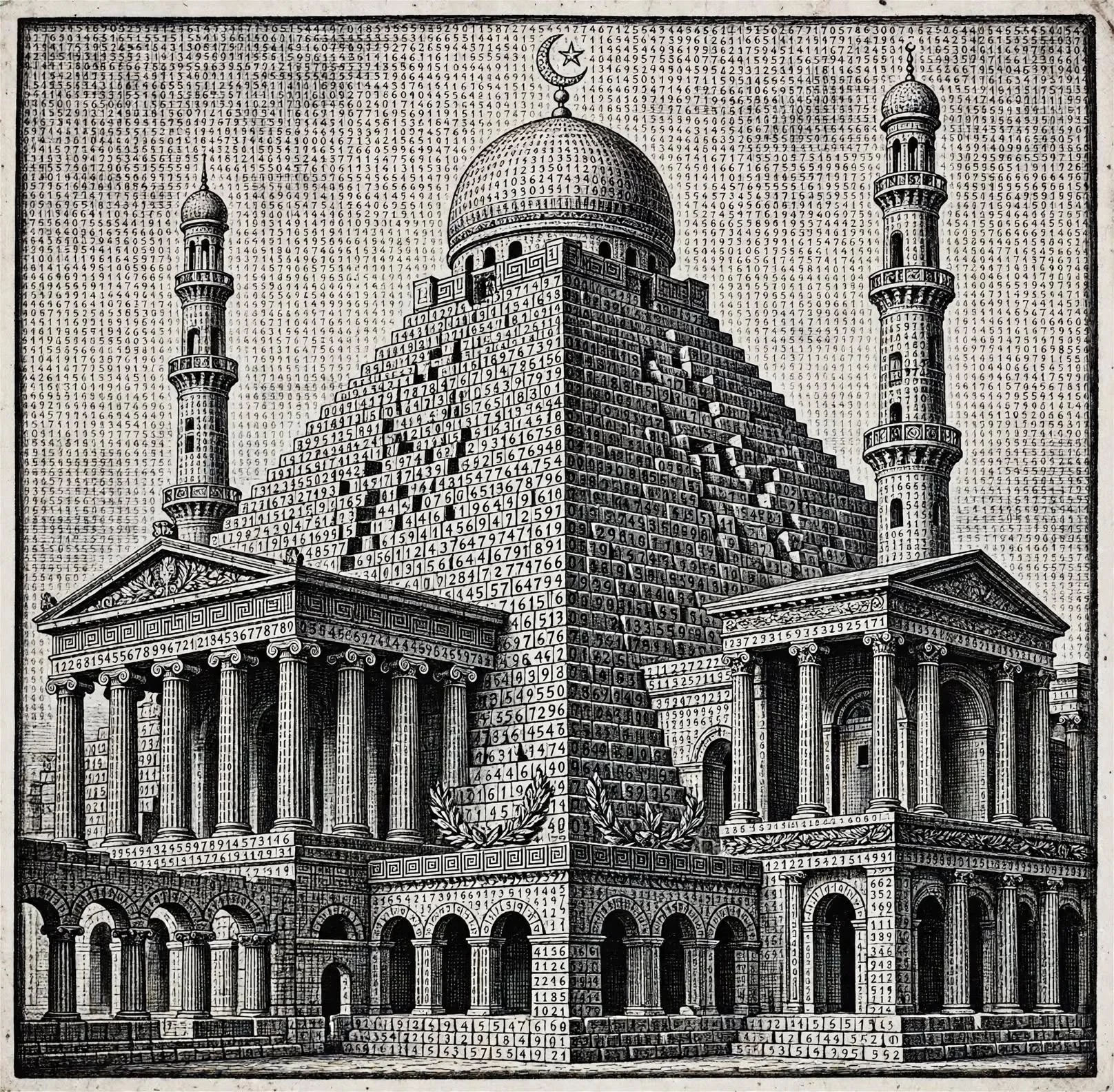
FEATURED ILLUSTRATED ATLAS
When Numbers Become Destiny
Explore 20 beautifully illustrated stories about the numbers that influence cultures, architecture, travel, gifts and popular beliefs—from Italy’s 17 and China’s 8 to 786 and 1001.



