
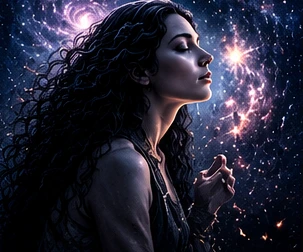

Contemporary poetry inherits ancient questions and places them inside modern rooms: hospital corridors, railway stations, glowing screens and cities that never quite become silent. The vocabulary changes; the uncertainty does not.
The Question Beneath the Image
Sylvia Plath’s writing is often read for its intensity and intricate imagery, but reducing a poet to biography or pain misses the craft of the work. A poem is an artistic construction, not a transparent medical record. Its images may illuminate a difficult experience without being a literal statement of fact.
Where Wonder Begins
Modern poets explore identity, displacement, memory and the strange distance between public language and private feeling. The smallest detail—a notification that never arrives, an empty chair, the light under a closed door—can become a symbol with an emotional life of its own.
What Remains Unanswered
Wonder does not require archaic vocabulary. It can emerge from the ordinary technologies and habits of our age. The task of poetry is to notice the hidden pressure inside them, and to give that pressure a form that another person can recognise.
Further reading: French literature and the unquiet city · Poetry for our time.




[…] Further reading: French philosophy and the divided self · Modern voices in poetry. […]