
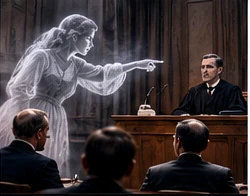

A literary retelling of a reported event or enduring legend. Atmospheric scenes are reconstructed, not eyewitness transcripts.
Mary Jane Heaster could not accept the quiet explanation offered for her daughter’s death. The house had become still, the funeral had passed, and the people around her expected grief to settle into silence. Instead, questions grew louder.
Her daughter, Zona Heaster Shue, had died in West Virginia in 1897. The husband, Erasmus Shue, became the focus of suspicion. Mary Jane later said Zona appeared to her and described a violent death. In the account that became famous, a mother’s sorrow was transformed into a message from beyond the grave.
Imagine the nights before Mary Jane approached the authorities. She repeats the details to herself, trying to decide whether they belong to a dream, a memory or something she cannot name. Each morning she wakes with the same conviction that the official account is wrong.
The body was exhumed. A post-mortem examination revealed injuries, and the case proceeded through ordinary legal investigation and trial. Erasmus Shue was convicted of murder. The story is often described as a ghost solving a crime, but the courtroom did not simply accept supernatural testimony as proof.
That distinction does not diminish the narrative’s emotional force. A woman whose life had ended could no longer speak in court. Her mother insisted that the silence concealed a terrible wrong, and the investigation ultimately revealed a homicide.
The Greenbrier Ghost survives as both a true-crime case and a legend about a mother’s refusal to stop asking questions. Whether one hears a ghost in the story or the persistence of human love, the final image is the same: a voice that would not be dismissed.
Further reading: The Chatsworth Crash Calls · The Tsunami Ghosts of Ishinomaki.



