

Birth Stories — Part Sixteen | Everything Has a Beginning. Every Beginning Has a Story.
Before there was a forest, there was no shade. Before there was a flower, no bee could visit one. Before a seed could fall into soil, the continents were landscapes without grass, orchards, or the familiar green of a living hillside. Yet the planet was not lifeless. Its earliest inhabitants were microscopic, and some of them would eventually change the atmosphere so profoundly that creatures like us could breathe.
The birth of plants was not a single morning when something green suddenly appeared. It was a sequence of evolutionary transformations spanning billions of years: cells that captured sunlight, organisms that released oxygen, algae that developed complex forms, and descendants that gradually conquered the land. The story of plants is the story of how life learned to remake its world.
Before Green: A Planet Already Alive
Earth formed about 4.54 billion years ago. Its early surface and atmosphere changed dramatically as the planet cooled, oceans formed, and geological processes continued. Evidence suggests that life existed by at least 3.5 billion years ago, and possibly earlier, although the oldest proposed traces are debated. Those organisms were not trees, mosses, or flowers. They were microbial life.
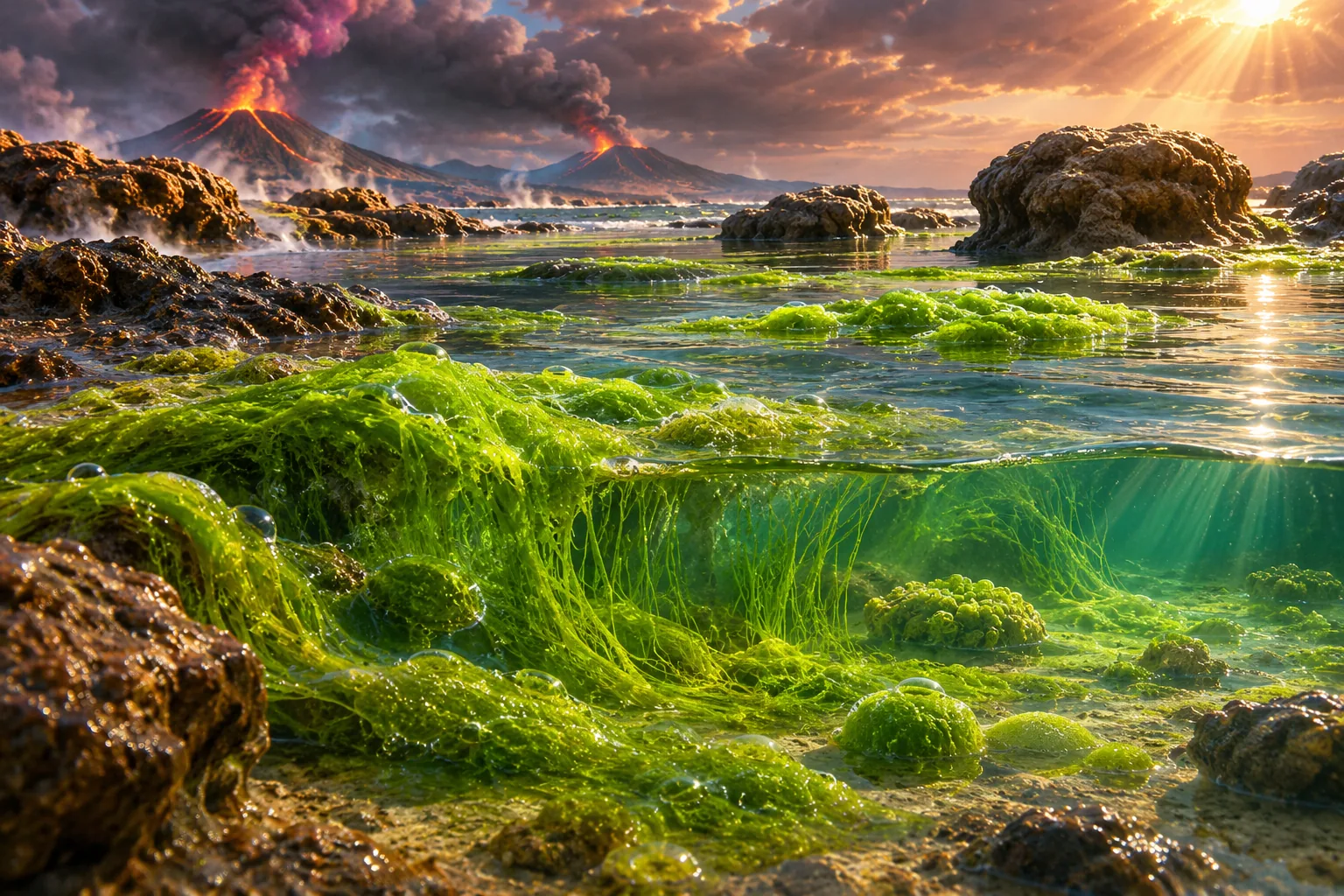
Photosynthesis—the capture of light energy to power biological chemistry—also has a long history. Not all photosynthesis releases oxygen. Some bacteria use light while relying on substances other than water and produce no oxygen as a by-product. Oxygenic photosynthesis, associated with the ancestors of modern cyanobacteria, was an especially consequential innovation. Using light energy, water, and carbon dioxide, these organisms could build organic matter and release oxygen.
The chemistry was not an instant transformation of Earth’s air. Oxygen accumulated gradually, and much of it initially reacted with minerals and other substances. Around 2.4 billion years ago, during the Great Oxidation Event, atmospheric oxygen rose in a major and enduring way. The timing and causes are still studied. Oxygen was toxic to many existing organisms, yet it also opened possibilities for new metabolisms and, much later, complex animal life.
The earliest makers of oxygen were not land plants. They were microbial pioneers. Without their immense contribution, the world that eventually supported forests, insects, birds, and humans would have been profoundly different.
How a Cell Became a Green World
Plants belong to a lineage whose history includes an extraordinary partnership between cells. In the distant past, a eukaryotic cell incorporated a photosynthetic cyanobacterium. Over evolutionary time, that internal partner became a chloroplast—the structure in which plants and many algae carry out photosynthesis. Scientists call this process endosymbiosis.
Chloroplasts still carry genetic traces of their bacterial ancestry. Every leaf is therefore part of an ancient biological collaboration. Sunlight enters; pigments such as chlorophyll absorb portions of its energy; a complex network of reactions turns that energy into chemical forms the organism can use. The process sustains the plant and helps support the food webs around it.
To call this a miracle is a literary response. To understand how it works is a scientific achievement. Both responses begin with wonder, but they answer different questions.
The First Green Steps onto Land
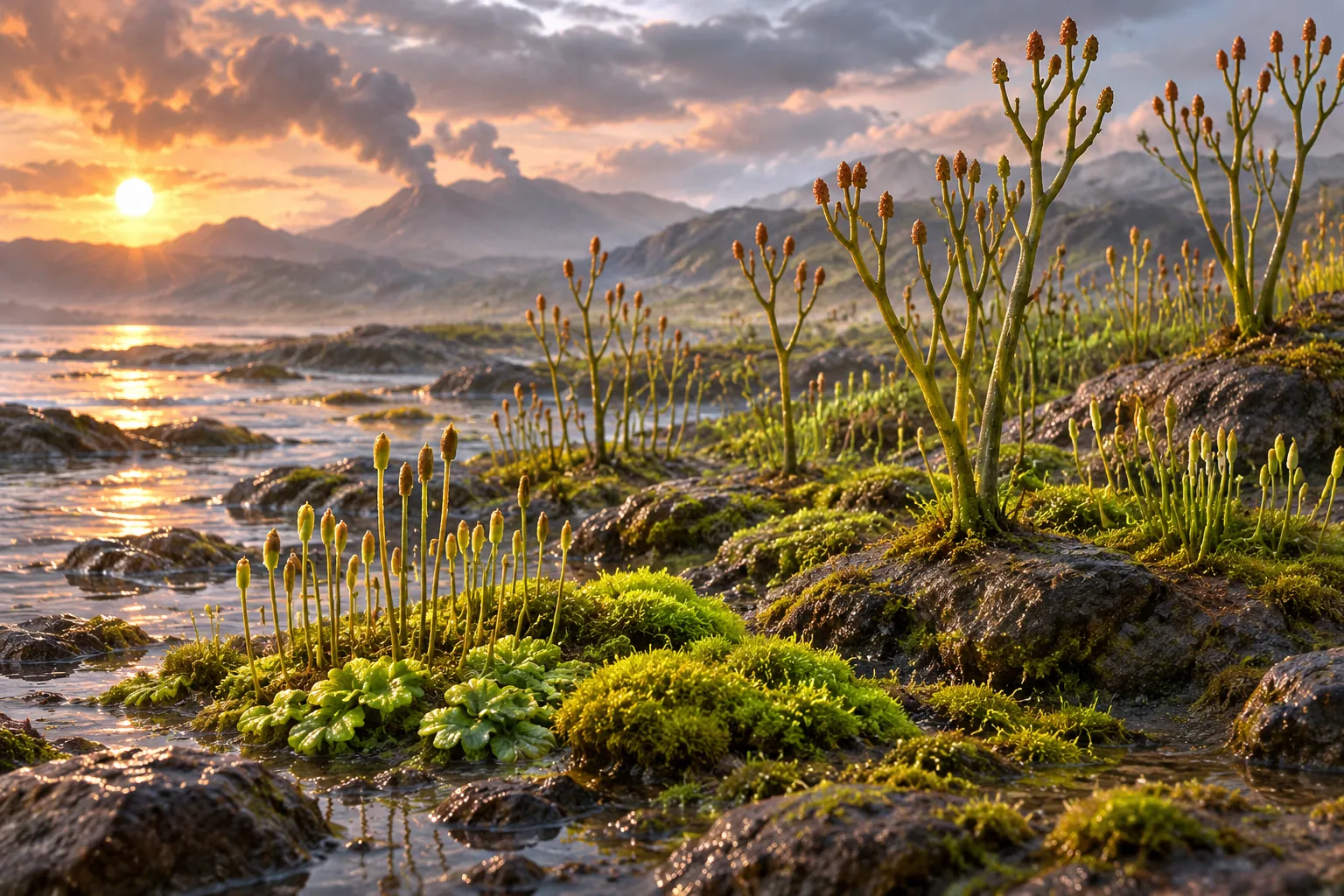
Land plants evolved from freshwater green-algal relatives, with their ancestors adapting over long periods to life beyond continuous immersion. Genetic evidence and fossils suggest a complex transition, with evidence for early land plants reaching back into the Ordovician, more than 450 million years ago. Exact dates remain uncertain.
Life on land posed formidable problems. Water could evaporate. Ultraviolet radiation was intense. Reproduction no longer took place in the same aquatic environment. Plants evolved protective surfaces, structures for regulating gas exchange, ways of anchoring themselves, and relationships with fungi that helped them obtain nutrients.
Early land plants were small. They did not immediately resemble modern lawns or trees. Nor did they single-handedly create all soil: weathering, microbes, fungi, and other processes had already been shaping terrestrial surfaces. But roots and plant-associated organisms helped transform rock, sediment, and organic material into increasingly complex soils.
When the World Acquired Forests
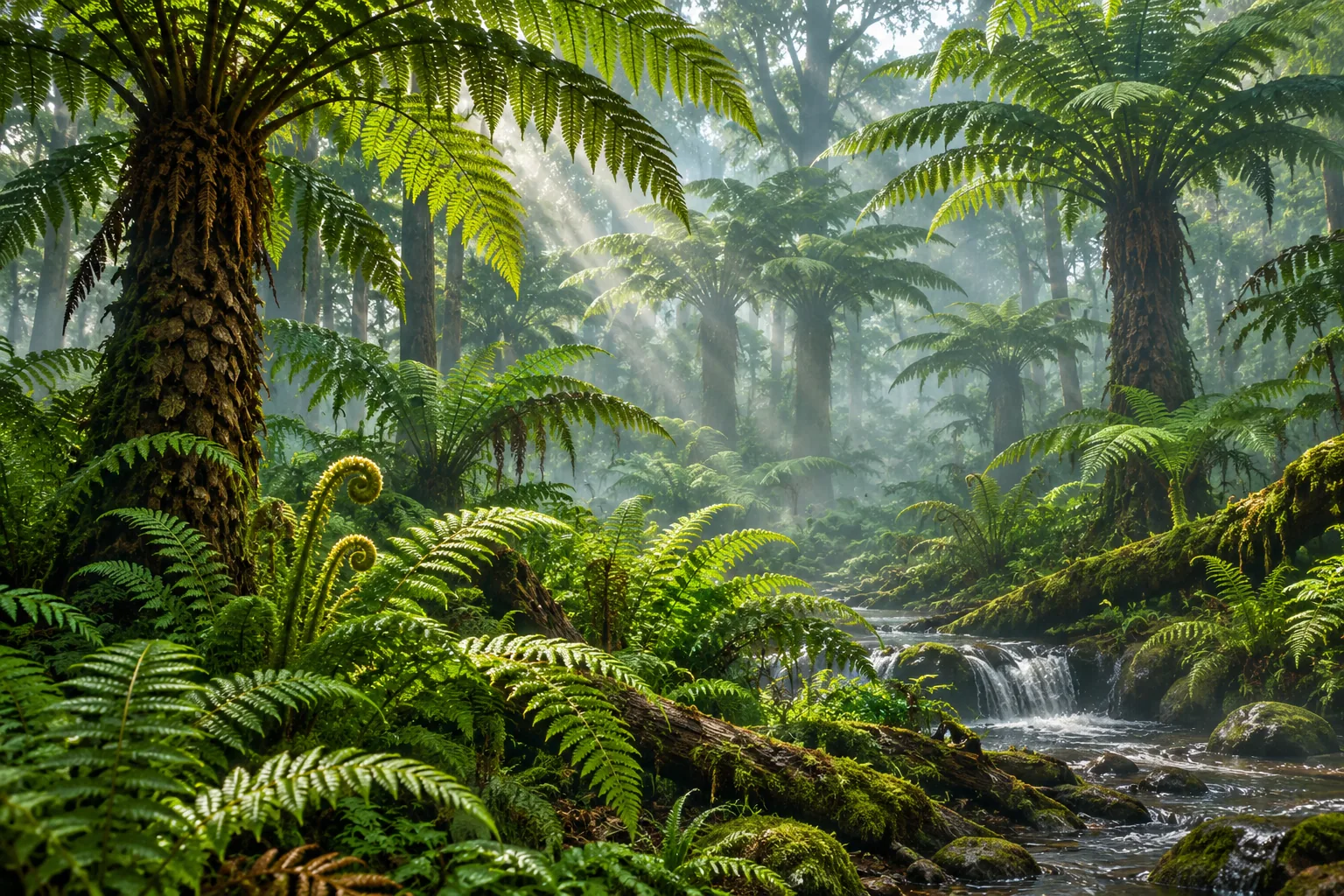
During the Silurian and Devonian periods, plants diversified dramatically. Vascular tissues enabled water and nutrients to move through larger bodies. Roots extended into the ground; stems grew taller; leaves evolved in different lineages. By the Devonian, roughly 419–359 million years ago, landscapes included increasingly substantial plant communities and some of the earliest forests.
The evolution of trees was not one event. Several lineages independently developed tree-like forms. Some early forests contained organisms unlike the trees we know today. Their roots altered soils and weathering, while vegetation influenced the carbon cycle and the habitats available to other organisms.
Animals were not simply waiting for plants to build them a home. Arthropods and other life forms were already exploring terrestrial environments during overlapping periods. Over immense stretches of time, plants, fungi, insects, and vertebrates shaped one another’s opportunities.
Seeds: A Future Wrapped for Travel
Early land plants reproduced through spores, and many modern groups still do. The evolution of seeds, beginning among ancient seed-plant lineages in the late Devonian and Carboniferous, was a major innovation. A seed protects a developing embryo and supplies resources that can help it survive until conditions favor growth.
Seed plants eventually spread through diverse environments. Conifers, cycads, ginkgos, and other gymnosperms became important elements of ancient landscapes. Some survive today as reminders of evolutionary histories far older than human civilization.
A seed is an elegant biological promise. It can wait. It can travel. It can begin again when rain, temperature, and light align. But it is not invincible: each species has its own requirements, and many seeds lose viability under unsuitable conditions.
The Flower That Changed the Conversation
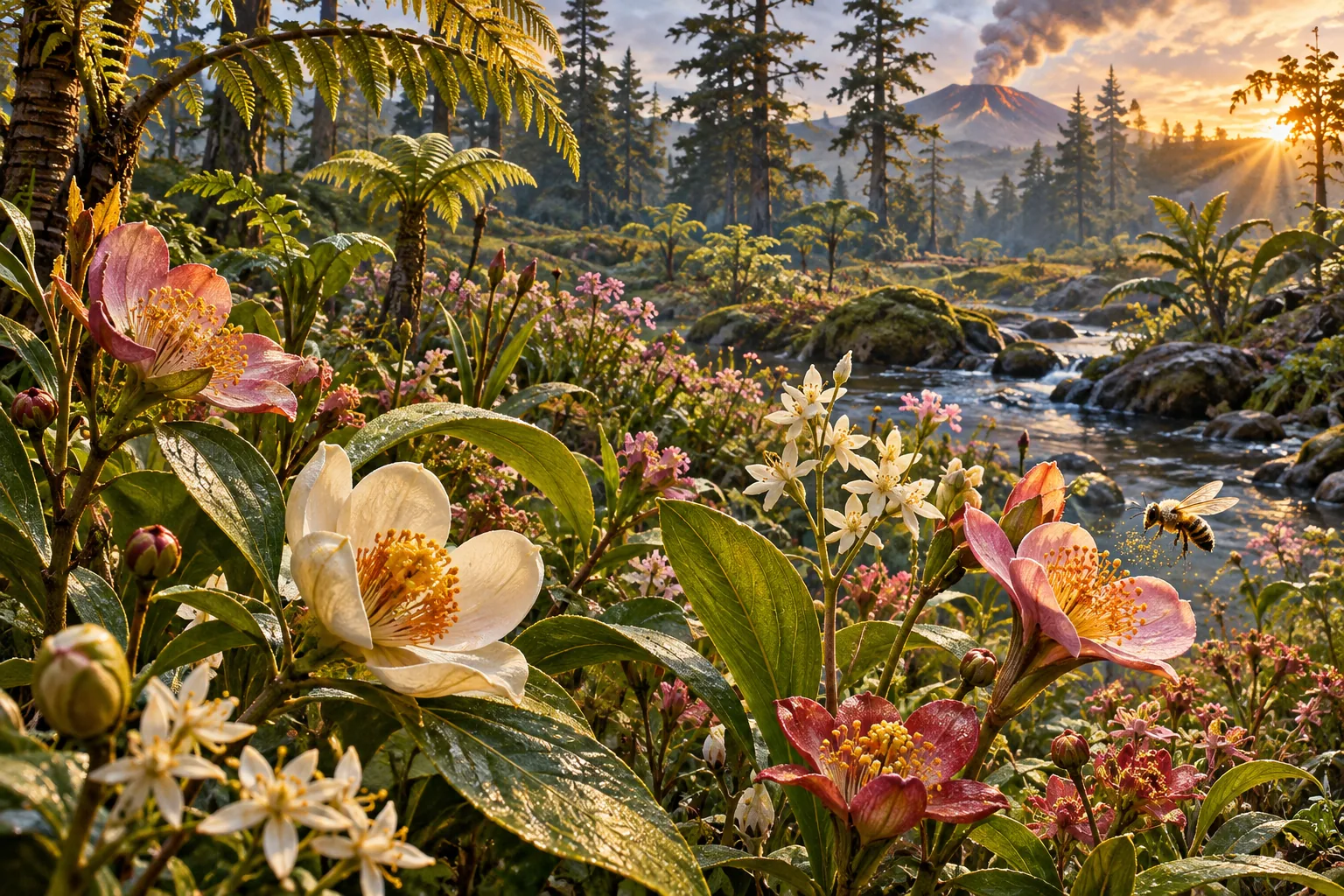
Flowering plants, or angiosperms, diversified dramatically during the Cretaceous period. Fossils indicate that flowering plants were established by roughly 130–140 million years ago, while their earlier evolutionary history remains under investigation. Flowers were not the first way plants reproduced sexually, and they did not create the idea of seeds. They introduced new reproductive structures and relationships that became extraordinarily successful.
Many flowers attract pollinators through color, scent, shape, nectar, or other rewards. Insects, birds, bats, and other animals can transfer pollen between flowers. Some plants instead rely on wind or water. Pollination partnerships evolved in diverse forms, including remarkable cases of close specialization.
Bees are important pollinators, but they are not the only ones. The frequently quoted figure that roughly three-quarters of crop types benefit to some extent from animal pollination does not mean that bees produce three-quarters of all food, or that the world’s food supply would instantly be halved without them. Staple grains such as wheat, rice, and maize are largely wind-pollinated or self-pollinating. Nevertheless, the loss of pollinators would seriously affect many fruits, nuts, vegetables, and wild plants, as well as nutritional diversity and ecosystems.
The flower was not merely decoration. It became a meeting place where evolutionary interests crossed: a plant needed reproduction, an animal sought food, and a relationship developed that changed the living landscape.
Plants and the Invention of Human Agriculture
Humans did not invent plants, but we profoundly changed many of them. Over thousands of years, people selected seeds and propagated desirable varieties, gradually transforming wild species into crops. Agriculture arose through multiple regional histories rather than one global agricultural revolution. Wheat and barley were domesticated in Southwest Asia; rice in East Asia; maize in Mesoamerica; potatoes in the Andes; and several grains, roots, and other crops in Africa and Oceania.
Selection made some grains easier to harvest, some fruits sweeter, and some vegetables larger. It also changed the ecology of human settlement. Farming supported growing populations and specialized occupations, while introducing risks from crop failure, soil depletion, and dependence on fewer food sources.
Modern humanity depends heavily on a relatively small number of major crops for calories, but the precise proportion varies with the measure used. Thousands of other edible plant species exist, many cultivated locally or gathered from the wild. Protecting that diversity may prove vital as climates change.
The Pharmacy Hidden in a Leaf
Plants have supplied medicines, poisons, dyes, fragrances, and chemical starting points for modern drugs. Traditional medical systems across Africa, Asia, the Americas, Europe, and Oceania developed extensive knowledge of useful plants. Some remedies later proved effective under scientific testing; others did not, and natural origin alone does not guarantee safety.
The history of aspirin includes salicylate-containing plants such as willow, but modern aspirin is a synthesized compound, not simply powdered tree bark. Paclitaxel, an important anticancer medicine, was originally isolated from Pacific yew and later produced through other methods. Artemisinin, a major antimalarial compound, was developed through research involving Artemisia annua; Tu Youyou received a share of the 2015 Nobel Prize in Physiology or Medicine for discoveries concerning its use against malaria.
Claims that a fixed majority of all modern medicines come directly from plants depend on definitions and should not be repeated as simple fact. The deeper truth is more interesting: biodiversity is an enormous reservoir of chemistry, and studying it has already saved lives.
Fibers, Wood, Paper, and the Materials of Civilization
Plants supplied more than food and medicine. Cotton, flax, hemp, and other fibers helped humans make cloth, rope, and sails. Wood became shelter, tools, boats, furniture, and fuel. Papyrus and paper changed the preservation of knowledge. Plant oils, resins, and dyes became essential to crafts and industries.
Cotton was domesticated independently in different regions, including South Asia and the Americas. Its global history also includes coercion, plantation slavery, colonial trade, and industrial labor. A soft shirt can conceal a difficult history.
Some bamboo species can grow astonishingly quickly under favorable conditions, but a widely repeated maximum growth figure does not describe every bamboo plant. Likewise, the water footprint of a cotton shirt varies by farming method, climate, supply chain, and calculation. Precise-sounding figures should not be treated as universal constants.
Remarkable Lives in the Plant Kingdom
Rafflesia produces some of the largest individual flowers in the world, and certain species are famous for their strong odor. The tiny aquatic plant Wolffia produces among the smallest flowers. Some bristlecone pines live for thousands of years; the tree known as Methuselah is a celebrated example of extreme longevity, although exact ages and records require careful verification.
Plants can also respond to their surroundings in sophisticated ways. Roots alter growth in response to water and gravity. Leaves and flowers respond to light. Some plants release chemical signals when attacked; others change their defenses in response to herbivores. Experiments suggest that plants detect vibrations and other environmental cues, but popular claims that they think or feel pain exactly as humans do go beyond established evidence.
Their biology is remarkable without turning them into miniature people. A tree does not need a human nervous system to be astonishing.
Rainforests Are Not the Planet’s Only Lungs
Tropical rainforests are among the richest terrestrial ecosystems. The Amazon supports immense biodiversity, stores carbon, influences rainfall, and helps regulate regional and global climate processes. Estimates of its tree numbers and species richness are impressive, but depend on surveys and modeling.
Calling the Amazon the “lungs of the Earth” can mislead if it implies the forest supplies a fixed share of the oxygen we breathe. Forests both produce oxygen through photosynthesis and consume oxygen through respiration and decomposition. Over long periods, their net contribution to atmospheric oxygen is more complex than a popular percentage suggests. Marine photosynthetic organisms are also major participants in Earth’s oxygen cycle.
Forests matter profoundly even without a misleading slogan. They sustain habitats, influence water cycles, store carbon, and support human communities whose lives and knowledge are tied to them.
The Plants We Are Losing
Deforestation, habitat conversion, invasive species, pollution, unsustainable harvesting, and climate change threaten plant diversity. The scale of forest loss depends on whether we measure gross clearing, net change, or particular forest types. Millions of hectares can be affected in a year, but no single annual number captures all regions and causes.
Climate change is not simply the result of cutting trees, nor can tree planting alone stop it. Burning fossil fuels remains a major driver of rising greenhouse gas concentrations. Protecting intact forests, restoring degraded ecosystems, reducing emissions, and supporting sustainable agriculture are complementary tasks.
Plant extinction can ripple through food webs and human livelihoods. A lost species may take with it unique genetic traits, ecological relationships, or chemical compounds that no one has yet studied. Conservation is not nostalgia. It is protection of possibilities.
The Vault Beneath the Arctic Mountain
On the Norwegian archipelago of Svalbard, the Svalbard Global Seed Vault stores backup samples of crop seeds from gene banks around the world. Its cold setting and secure design help protect agricultural diversity against disasters and losses elsewhere. It is sometimes nicknamed the “doomsday vault,” but it is not a magical storehouse capable of restoring every plant or ecosystem after any catastrophe.
Seed banks are one part of a broader conservation effort. Botanical gardens, protected habitats, Indigenous stewardship, community seed networks, and the cultivation of diverse local varieties are also important. Some plants cannot be preserved by conventional seed storage at all. Saving the future of plants means preserving living relationships, not merely collecting packets of seeds.
Tomorrow’s Green World
Researchers are studying crops that tolerate drought or heat, more efficient water use, soil microbiomes, plant diseases, and the genetics of resilience. Some methods involve traditional breeding; others use advanced molecular tools. The challenge is not just to produce more food. It is to do so while maintaining biodiversity, protecting soils, and ensuring that farmers and communities can benefit fairly.
Urban trees can cool neighborhoods, while restored wetlands and forests can support ecosystems and help manage water. But species choice, local ecology, and long-term care matter. A plantation of a single fast-growing tree is not automatically a substitute for an ancient forest.
The Leaf That Connects Us to the Sun
Hold a leaf up to the light. Its green color is familiar enough to be overlooked. Yet within its cells, an inheritance from ancient microbial life is still at work. Light becomes chemical energy. Carbon from the air becomes living tissue. Water moves from soil through stems to leaves. The plant grows, and countless other organisms depend upon the world it helps create.
When a farmer plants a seed, the act contains both memory and hope. When someone rests beneath a tree, they enter a shelter built slowly from sunlight, water, minerals, and time. When a forest is destroyed, more than timber disappears; relationships that took centuries or millennia to form may be broken.
The history of plants is not exactly the history of life’s beginning. Life came first. But plants and their photosynthetic ancestors changed what life on Earth could become. They helped turn a planet of microbes, rock, and water into a world of forests, flowers, animals, and human stories.
Everything has a beginning. The green world began long before us—and our future still grows within it.
Sources and Further Reading
- Encyclopaedia Britannica — Photosynthesis
- Encyclopaedia Britannica — Great Oxidation Event
- Encyclopaedia Britannica — Plant Evolution and Paleobotany
- Royal Botanic Gardens, Kew — State of the World’s Plants and Fungi
- FAO — Global Forest Resources Assessment
- IPBES — Global Assessment of Biodiversity and Ecosystem Services
- Crop Trust — Svalbard Global Seed Vault
- Nobel Prize — Tu Youyou
Editorial note: This essay distinguishes microbial oxygen producers from true plants, and established scientific findings from contested dates, evolutionary hypotheses, and popular environmental claims.



