

Birth Stories — Part Fourteen | Everything Has a Beginning. Every Beginning Has a Story.
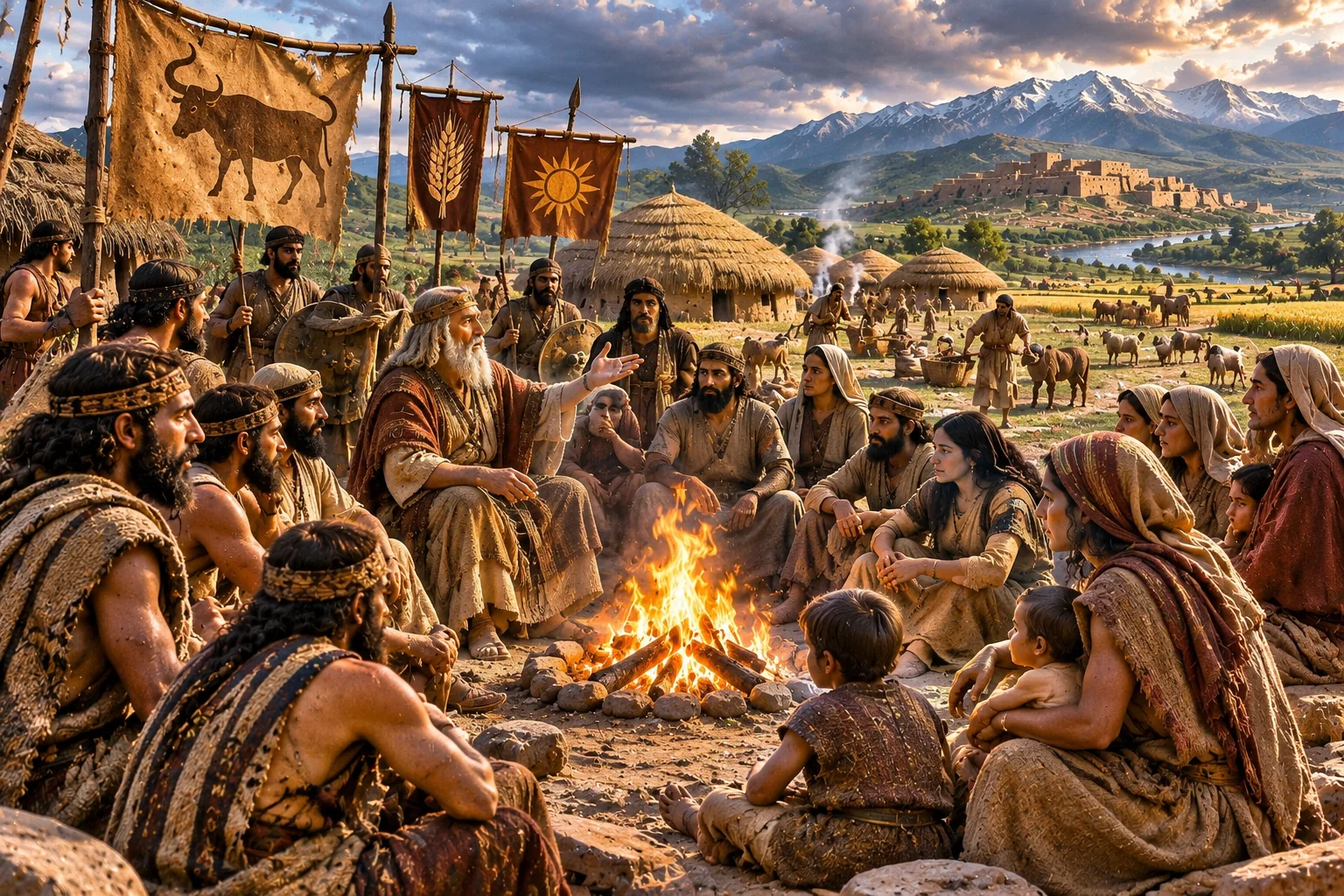
A person can love a country without ever seeing most of it. Someone born beside a cold northern sea may feel connected to a stranger living thousands of miles away under the same flag. They may speak different languages, worship differently, and disagree about almost everything. Yet when the country is threatened, when its athletes win, or when its history is remembered, both may say the same small word: we.
How did that word become powerful enough to redraw maps, overthrow monarchies, inspire liberation movements—and justify terrible violence? The birth of nations is not the story of one invention or one treaty. It is the history of how human communities learned to imagine political belonging on a scale far larger than the family, village, or city.
A Nation Is Not a State
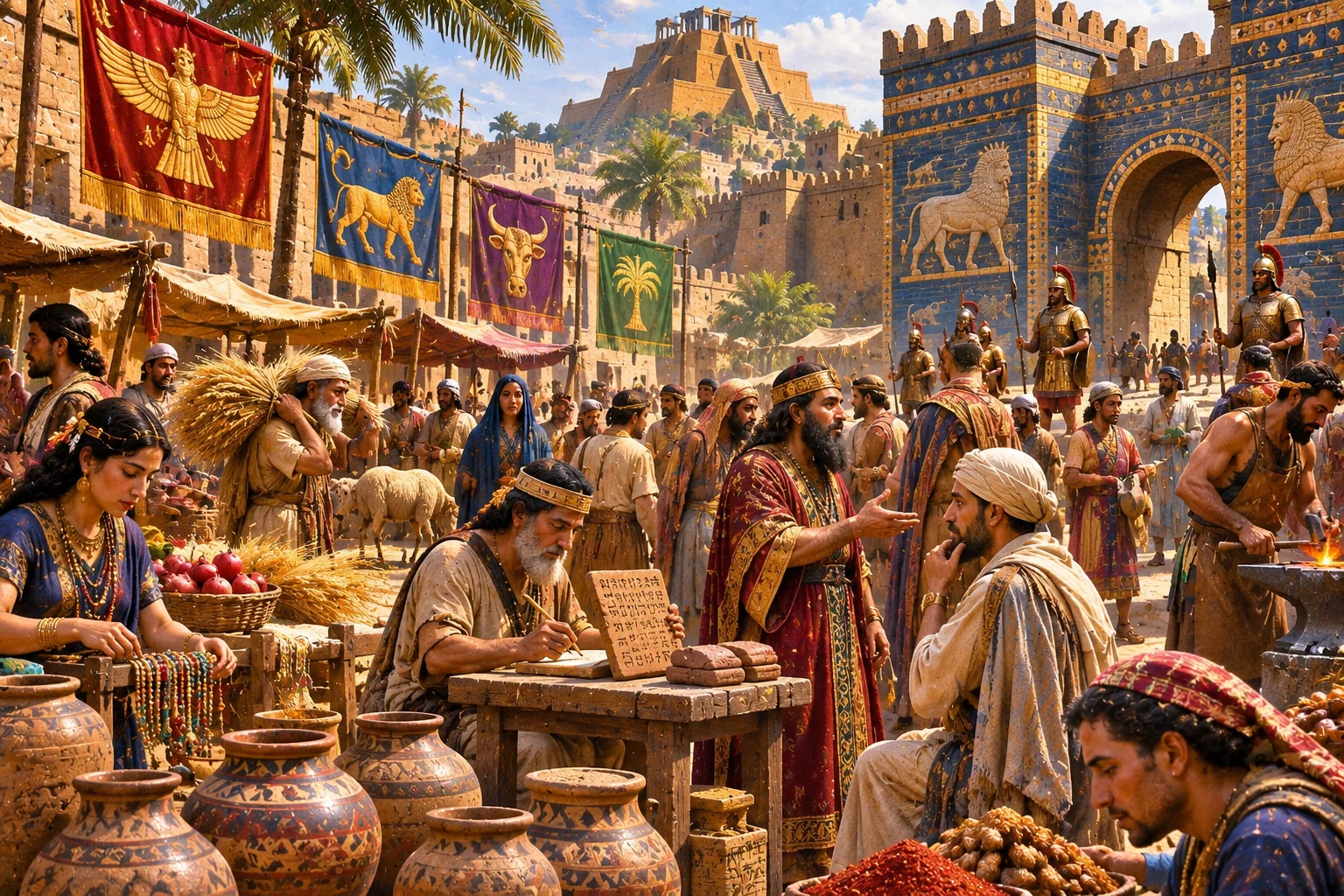
We often use nation, country, and state as if they meant the same thing. They do not. A state is a political organization claiming authority over a territory and population. A nation is a community whose members understand themselves as belonging together through some combination of memory, culture, language, ancestry, institutions, or shared political aspirations. Nationalism is the conviction that this collective identity matters politically—often that it should govern itself.
Some states contain several nations. Some nations extend across multiple states. Some national communities have no sovereign state at all. And a person may belong simultaneously to a city, a religious community, an Indigenous people, a nation, and humanity at large. These identities do not always fit neatly inside one another.
Political theorist Benedict Anderson famously described nations as imagined communities. He did not mean they were fake. He meant that most members will never meet, yet can imagine a bond with one another. A nation is real in its consequences because people organize their lives around that shared idea.
Before Nationalism: Older Forms of Belonging
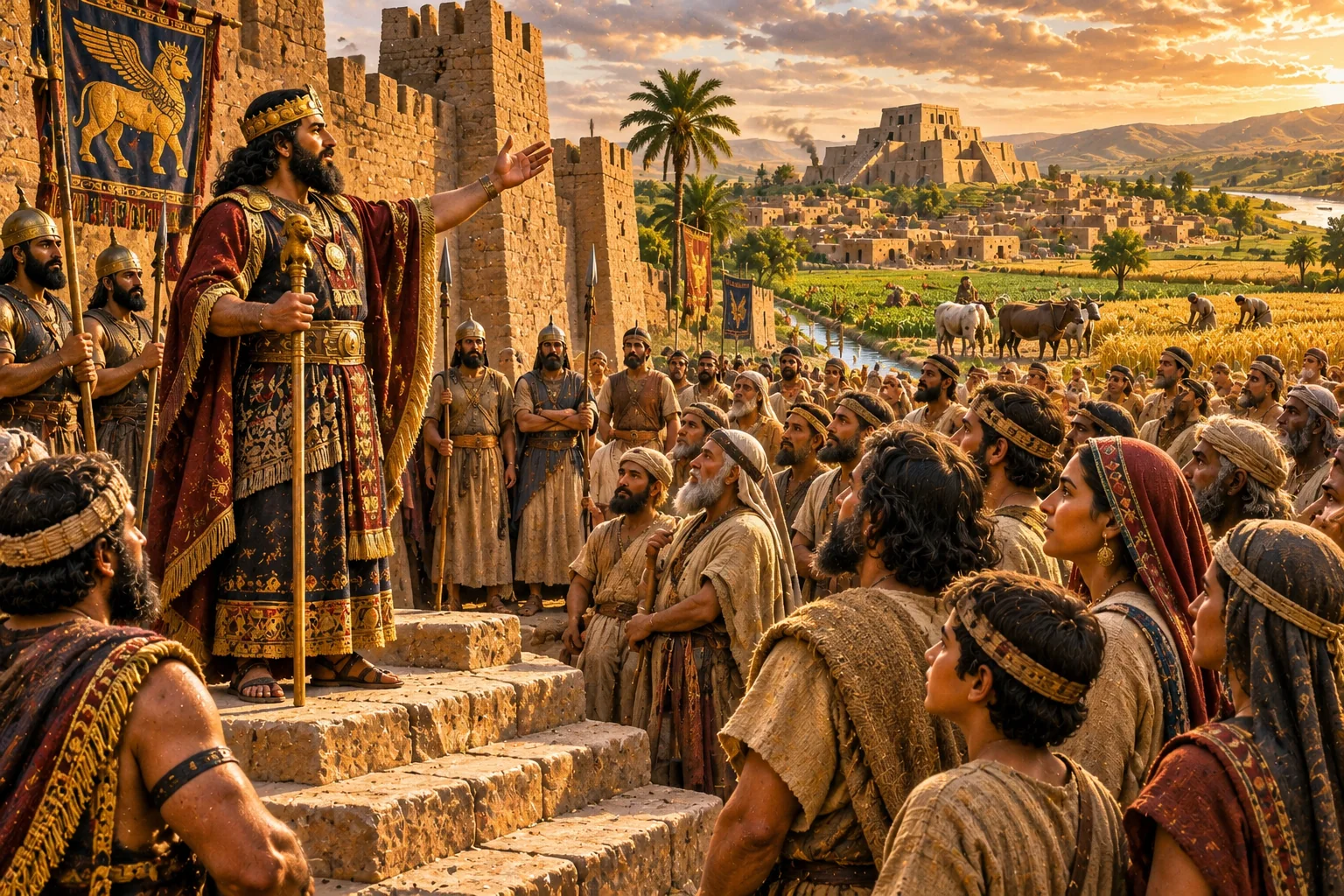
Long before modern nationalism, people expressed strong attachments to lands, rulers, cities, languages, religious traditions, and communities. Ancient Egyptians, Greeks, Romans, Chinese, and many others developed forms of collective identity. It would be wrong to claim that imperial subjects felt no common belonging or that every ancient society consisted only of tribes.
What differed was the political framework. Empires could rule over many peoples without requiring them to share one national identity. Dynastic authority, religion, local privilege, and allegiance to a sovereign often mattered more than the idea that a culturally defined people should possess its own state. Modern nationalism did not invent human belonging. It reorganized belonging into a claim about political legitimacy.
Even this distinction is debated. Historians disagree about how far national consciousness can be traced into the medieval or ancient past. There is no universally accepted birthday of the nation.
The Westphalian Myth
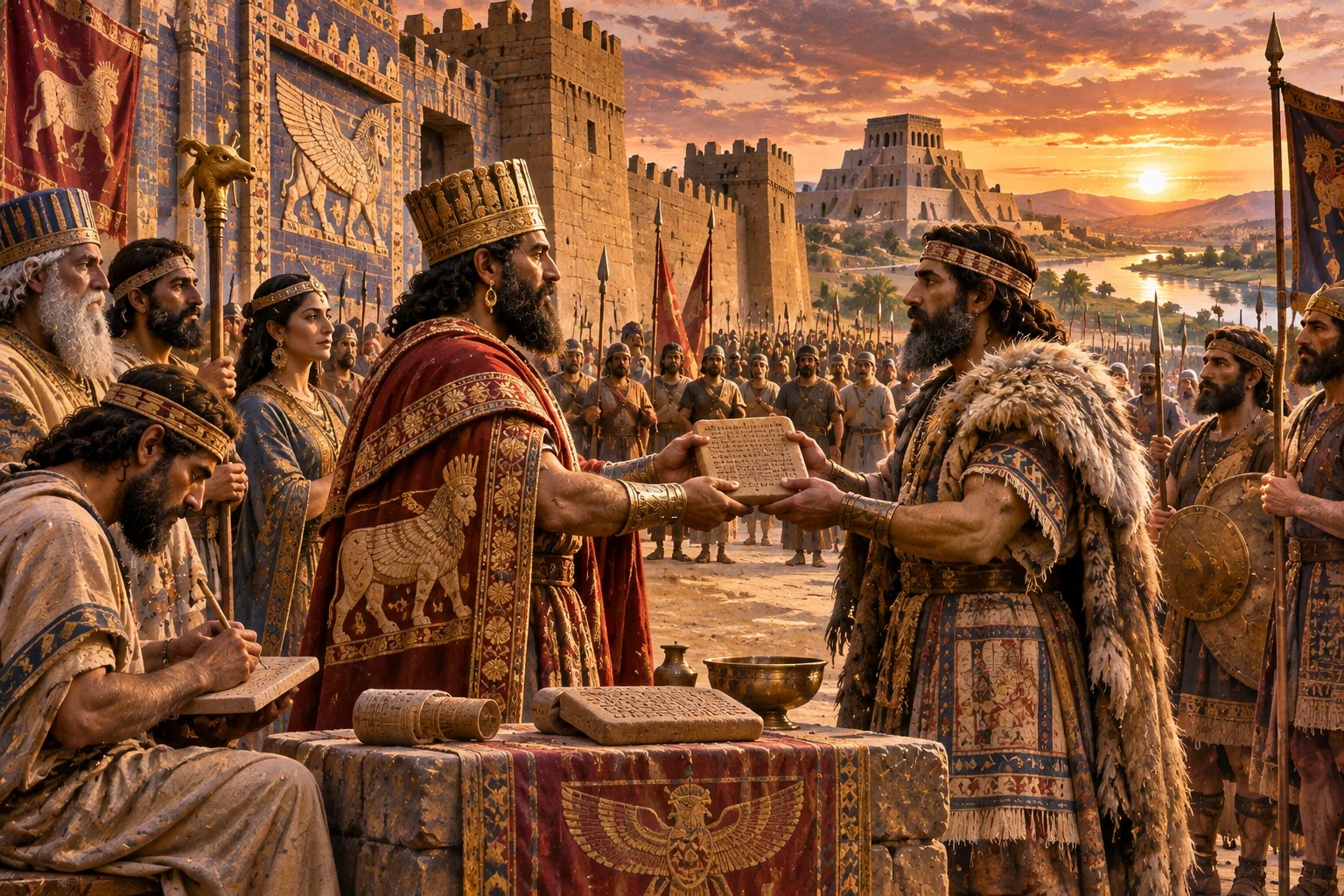
The Peace of Westphalia in 1648 ended major phases of the Thirty Years’ War and reshaped political arrangements in Europe. It is frequently presented as the moment the modern sovereign nation-state was born. That tidy story is misleading. The treaties did not establish modern popular sovereignty, did not make every state a nation-state, and did not instantly create the contemporary rule of non-intervention.
Ideas and practices of territorial authority developed over centuries, while empire, dynastic marriage, religious hierarchy, and colonial conquest continued. Westphalia matters, but it is a chapter in the history of states—not a magical moment when nations appeared on the map.
Printing, Schools, and the Shared Story
How could strangers begin to imagine themselves as one people? Printing helped circulate common stories, newspapers, political arguments, maps, and historical narratives. Schools increasingly taught shared languages and civic traditions. Governments counted populations, standardized administration, and drew boundaries. Armies and public ceremonies brought people into national institutions. Railways and later broadcasting made distant regions feel closer.
These developments did not work uniformly or peacefully. A national language could widen communication while pushing minority languages to the margins. A shared history could inspire solidarity while omitting uncomfortable chapters. National identity was never simply discovered, like a mountain. It was interpreted, taught, argued over, and continually remade.
Revolutions Across the Atlantic
The American Revolution declared independence in 1776 and advanced a political claim that legitimate government derived from the governed. Yet its founding promise coexisted with slavery, the exclusion of women from political equality, and the dispossession of Indigenous peoples. National freedom was proclaimed before it was broadly shared.
The French Revolution beginning in 1789 transformed political language by placing the nation and citizen at the center of sovereignty. Revolutionary symbols, mass mobilization, and the ideal of civic equality helped spread a new understanding of political membership. But the tricolor and La Marseillaise were not the world’s first national flag and anthem. Nor did revolutionary equality immediately extend to everyone.
In Haiti, enslaved and formerly enslaved people fought a revolutionary struggle that led to independence in 1804. The Haitian Revolution challenged both colonial rule and the racial limits of Atlantic declarations of liberty. It belongs at the heart—not the margins—of the story of modern nationhood.
Across Spanish and Portuguese America, independence movements in the nineteenth century reshaped political maps. Their leaders debated whether the new countries should be republics, monarchies, federations, or centralized states. Independence did not settle the deeper question of who counted as the nation: Indigenous peoples, enslaved populations, rural communities, and women often remained excluded from power.
Europe’s Age of National Movements
During the nineteenth century, nationalism became a formidable force across Europe. Greek independence from Ottoman rule gained international recognition in 1830. Italian unification unfolded through a series of campaigns and political changes, with the Kingdom of Italy proclaimed in 1861 and Rome incorporated in 1870. German unification culminated in the proclamation of the German Empire in 1871. These histories cannot be reduced to a single year or to the effortless merger of people who already agreed on everything.
National movements drew upon poetry, folklore, historical scholarship, language reform, and public ritual. They also depended on diplomacy, war, elite leadership, and economic interests. Some imagined the nation in civic terms, as a community of citizens. Others emphasized ancestry, religion, or ethnic descent. Most actual movements combined elements of both.
There was a paradox at the center of this awakening: the nation promised that people should govern themselves, but political leaders still had to decide which people belonged within the boundary.
Empires, Colonies, and the Demand for Self-Rule
Nationalism was not merely a European export adopted unchanged elsewhere. Colonized peoples developed their own languages of resistance, drawing on local political traditions as well as global ideas about rights and self-determination. Anti-colonial movements in Asia, Africa, the Caribbean, and the Pacific confronted empires that often proclaimed liberty at home while denying it abroad.
The First World War shattered several European empires. The 1919 peace settlements created or reshaped states, but did not establish a universal right for every nation to form its own country. President Woodrow Wilson’s rhetoric of self-determination was applied selectively, while colonial empires survived and in some places expanded through mandate systems. Borders frequently contained minorities whose own wishes were not fully consulted.
The Second World War accelerated the crisis of empire. India and Pakistan became independent in 1947 amid Partition, mass displacement, and extensive communal violence; estimates of deaths vary substantially. Israel declared independence in 1948, amid war and the displacement of large numbers of Palestinians, an event remembered by Palestinians as the Nakba. The People’s Republic of China was established in 1949 after civil war, not through a simple birth of a previously nonexistent Chinese nation.
In 1960, often called the Year of Africa, seventeen African countries gained independence. Decolonization continued through subsequent decades, with leaders and movements confronting the difficult inheritance of colonial borders, unequal economies, and diverse communities. Ghana’s independence in 1957, Algeria’s in 1962, and later struggles in Portuguese Africa and southern Africa illustrate how varied these paths were.
Bangladesh emerged as an independent state in 1971 after war and mass suffering. Its history is a powerful reminder that shared religion does not necessarily erase differences of language, political representation, culture, or economic interest. In 1991 the Soviet Union dissolved into fifteen independent states. The violent disintegration of Yugoslavia in the 1990s showed how competing national claims could produce ethnic cleansing and war.
Who Draws the Border?
On a map, a border looks like a line. On the ground, it may divide a farm, a neighborhood, a language community, or a family. Boundaries can be shaped by rivers and mountains, but also by conquest, negotiation, colonial administration, treaties, and war. Some are internationally disputed. Others have remained stable despite deep internal diversity.
National self-determination sounds simple until different communities claim the same territory. Which group gets to decide? What happens to those who do not identify with the majority? Can two national communities share institutions, or must one claim exclude the other? These questions have no universal answer, but the rights and safety of people cannot be treated as incidental details.
Pakistan and the Challenge of Plural Belonging
Pakistan’s creation in 1947 offers one important case within this wider history. The Lahore Resolution of 1940 became a landmark in the political movement for Muslim-majority homelands in British India, although its language and subsequent interpretation were more complex than a single unchanging blueprint. Muhammad Ali Jinnah’s address to Pakistan’s Constituent Assembly on 11 August 1947 articulated a vision of freedom of worship and equal civic standing.
Pakistan’s experience also illustrates the challenge of building a state among communities with multiple languages, regional histories, and political aspirations. Urdu became a national symbol and a language of communication, but the history of Bengali and the eventual independence of Bangladesh show why national unity cannot be assumed to follow automatically from a shared faith or official language. The country’s history belongs in the global debate over how states balance common identity with genuine pluralism.
What Nations Made Possible
Modern states can coordinate public health, education, infrastructure, welfare, law, and democratic representation on a large scale. National movements have inspired resistance to imperial domination and demands for equal citizenship. Constitutions can articulate rights, and public institutions can create a sense that strangers owe one another more than indifference.
Yet none of these achievements belongs exclusively to nationalism. Constitutions existed in varied forms before modern nation-states; passports, armies, taxation, and systems of public education also have older histories. Nor does every nation-state deliver equal rights. A flag cannot guarantee justice, and a passport does not guarantee freedom of movement.
National solidarity is at its best when it widens the circle of concern without requiring everyone inside it to become identical.
When Belonging Becomes Exclusion
Nationalism can encourage liberation and mutual responsibility. It can also be turned into a doctrine of superiority, racial purity, forced assimilation, or conquest. The world wars had multiple causes—including imperial rivalry, militarism, alliances, economic crisis, and aggressive ideologies—and should not be explained by nationalism alone. But extreme nationalist and racist movements contributed profoundly to the violence of the twentieth century.
The Holocaust revealed the catastrophic consequences of a state built around exclusionary racial ideology. Ethnic cleansing in the Balkans and genocide in Rwanda arose from different histories, but each demonstrates how political leaders can weaponize identities and dehumanize neighbors. Love of one’s own community does not logically require hatred of another. When leaders insist that it does, the nation becomes a weapon against the people it claims to defend.
Can a Nation Have More Than One Language?
Yes. Switzerland, Canada, South Africa, India, and many other states contain multiple linguistic communities. Some have developed institutions for recognizing that diversity; others continue to struggle over it. A common language may ease administration, but it is neither a necessary nor a sufficient condition for national belonging.
Similarly, citizenship need not rest on shared ancestry or religion. Civic forms of nationalism emphasize laws, rights, and political participation. Ethnic forms emphasize inherited culture or descent. Real societies often contain tensions between these ideals. The decisive question is whether people who differ from the majority can still belong without surrendering their dignity.
Beyond the Nation-State?
Today, 193 states are members of the United Nations. Membership in the UN is not a definitive count of all countries or nations, and recognition of statehood remains politically complex. The European Union demonstrates that sovereign states can pool powers in shared institutions, although not all EU members use the euro and freedom of movement operates under particular legal rules rather than as a universal visa-free promise to everyone.
Climate change, pandemics, financial crises, migration, and digital networks cross national borders. They demand cooperation that no state can achieve alone. Yet global connections have not erased national attachments. People may participate in worldwide cultures while still speaking a local language, remembering a particular landscape, or voting in national elections.
Multiple identities are not necessarily a contradiction. A person can care about a hometown, a country, a continent, and the planet without pretending that their interests will always align. The challenge is to make these loyalties compatible with one another.
The Nation That Has Not Yet Been Imagined
There is no inevitable march from tribe to city to nation to one world government. History does not move along a single staircase. Nations can emerge, divide, unite, change their meaning, or survive without states. Their future will depend on political choices as much as inherited stories.
Imagine two strangers meeting in an unfamiliar place. One asks where the other comes from. A country is named. Suddenly there may be a shared memory, a joke, a song, or an argument about home. That feeling can be tender and sustaining. It can also become dangerous if it teaches either person that those outside the circle matter less.
The most hopeful nation is not one that insists all its people are the same. It is one that makes room for difference while insisting that every member counts. Its strength is measured not only by the flags raised in celebration, but by the rights protected when celebration ends.
Everything has a beginning. A nation begins when people imagine a shared “we.” Its moral future depends on whom they allow that word to include.
Sources and Further Reading
- Encyclopaedia Britannica — Nationalism
- Stanford Encyclopedia of Philosophy — Nationalism
- Encyclopaedia Britannica — Peace of Westphalia
- Encyclopaedia Britannica — Haitian Revolution
- United Nations — Growth in UN Membership
- Encyclopaedia Britannica — Partition of India
- Encyclopaedia Britannica — Decolonization
- European Union — Member Countries
Editorial note: This is a global historical essay, not a claim that nations emerged in one country or one year. Contested questions of sovereignty, self-determination, national identity, and historical casualties are treated with appropriate caution.



