

Birth Stories — Part Seven | Everything Has a Beginning. Every Beginning Has a Story.
Perhaps medicine began before there was a word for pain. Imagine a wounded hunter, unable to walk, and another human being who chose not to leave him behind. Someone brought water. Someone covered a wound. Someone stayed through the night. We cannot recover that first act of care, name its giver, or know exactly when it happened. But ancient healed injuries and evidence of long-term survival with serious impairments suggest that prehistoric people sometimes cared for one another. Medicine has no single birthday. Its oldest instrument may have been a helping hand.
The First Healers Had No Hospitals
Long before writing, humans learned by observation: some plants soothed, others poisoned; pressure could stop bleeding; immobilizing an injured limb might help it heal. Archaeologists have identified evidence of prehistoric medical interventions, including trepanation—opening the skull—in different societies. A remarkable skeleton from Borneo has been interpreted as evidence of a successful lower-leg amputation roughly 31,000 years ago, though the details of the operation and recovery cannot be reconstructed with certainty. These discoveries challenge the idea that surgery began only with written civilizations.
Healing has never been merely a straight march from superstition to science. Across cultures, practical remedies, spiritual explanations, ritual, observation, and communal support existed together. Some treatments helped; others harmed; many cannot be assessed from surviving evidence. The history of medicine is the history of learning to distinguish them.
Egypt: When Injuries Became Cases
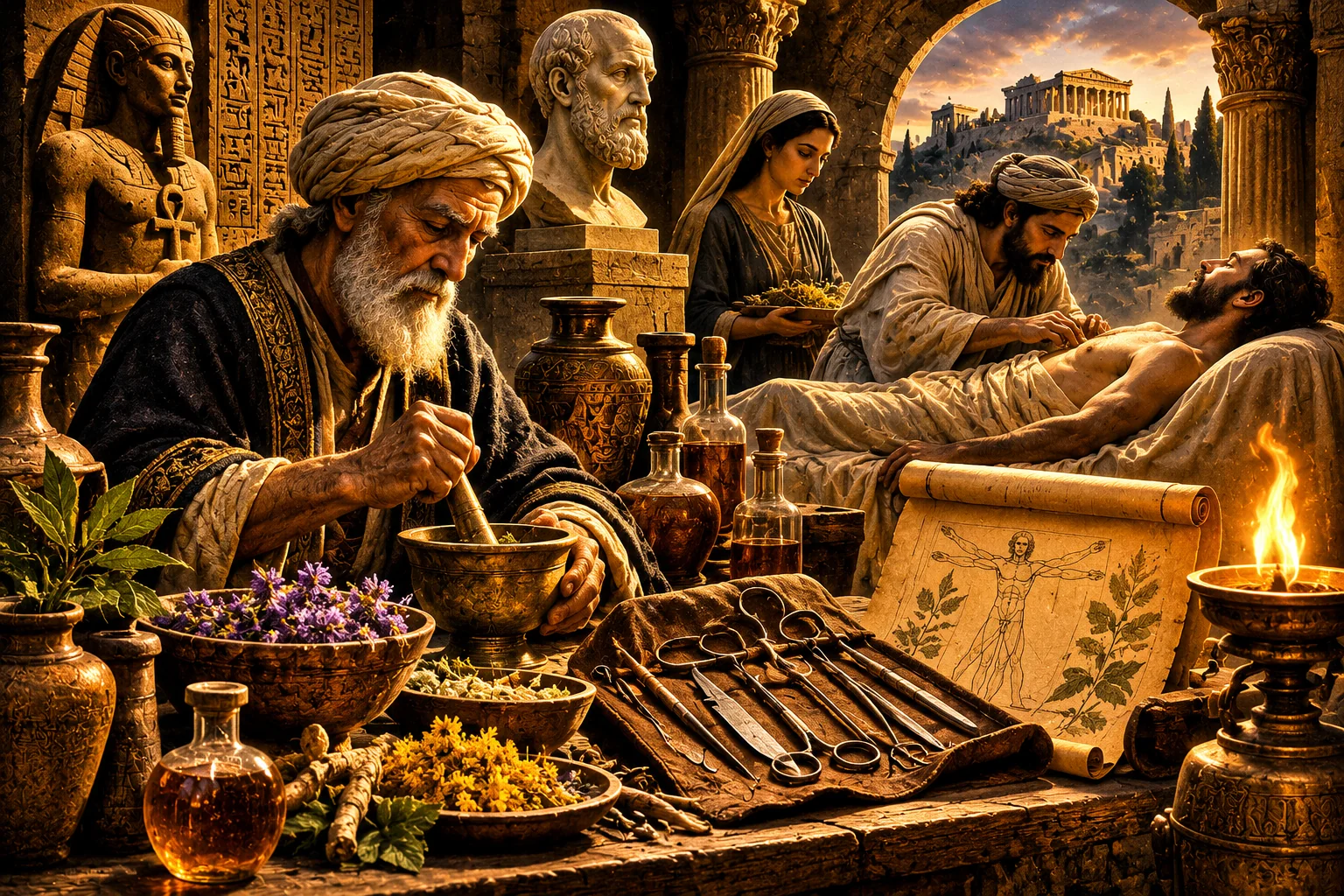
Imhotep, an official and architect associated with Pharaoh Djoser in the third millennium BCE, was later revered as a healing deity. He is often called an early physician, but no surviving medical treatise can securely be attributed to him. His reputation tells us something important about how ancient societies remembered healing, not necessarily what he personally discovered.
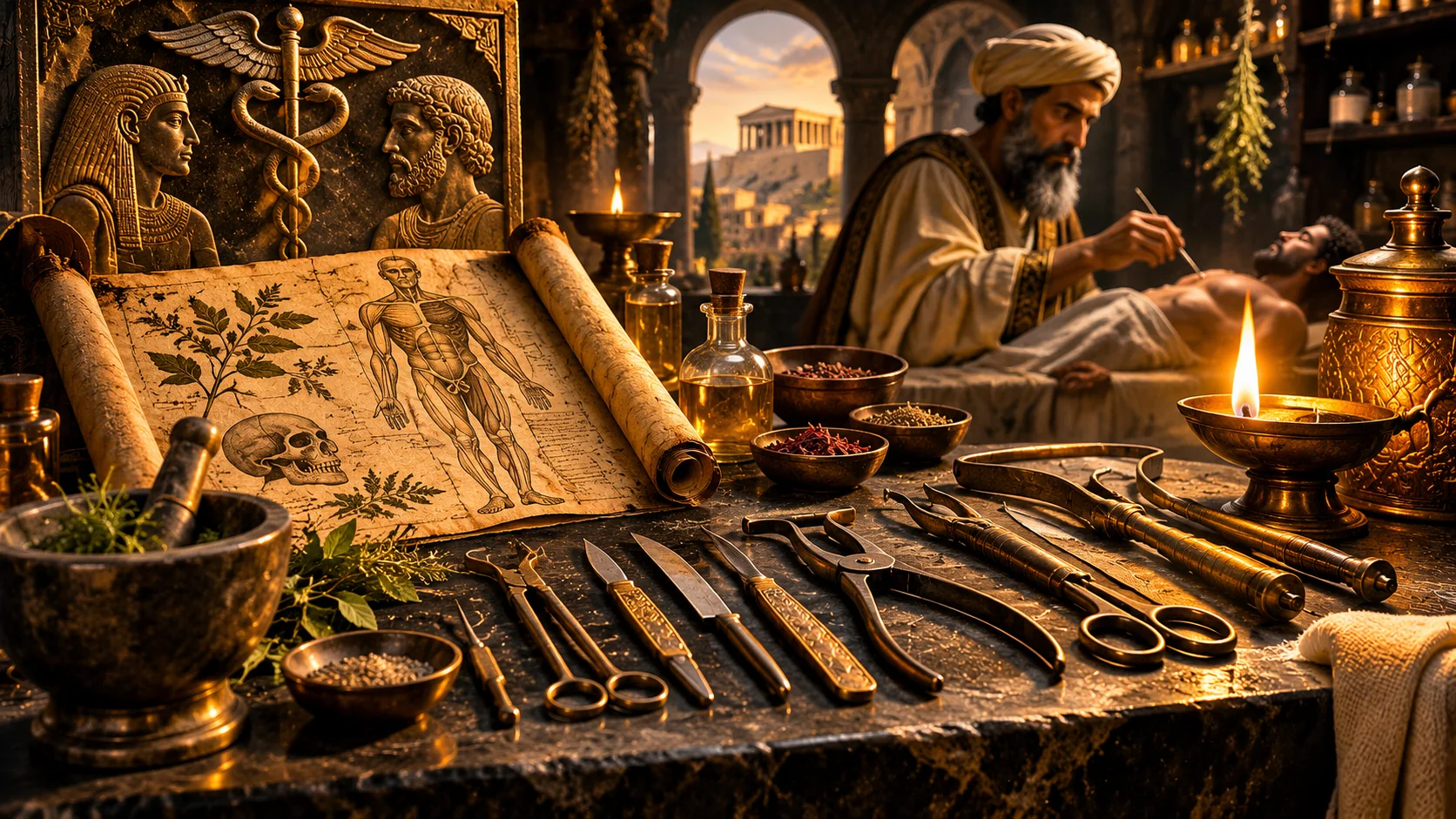
The Edwin Smith Surgical Papyrus, copied around the seventeenth century BCE from older material, describes 48 cases of injuries, especially to the head and upper body. It records examination, diagnosis, prognosis, and treatment, including cases judged untreatable. Its practical approach is striking, though it does not represent all Egyptian medicine. The Ebers Papyrus preserves a vast collection of remedies and medical knowledge. Ingredients such as honey appear in ancient treatments; some modern medical-grade honey products are used for particular wounds, but ancient recipes cannot be assumed safe or effective simply because an ingredient remains familiar.
Written case notes introduced a revolutionary possibility: one healer’s observations could instruct another healer centuries later.
India and China: Different Maps of the Body
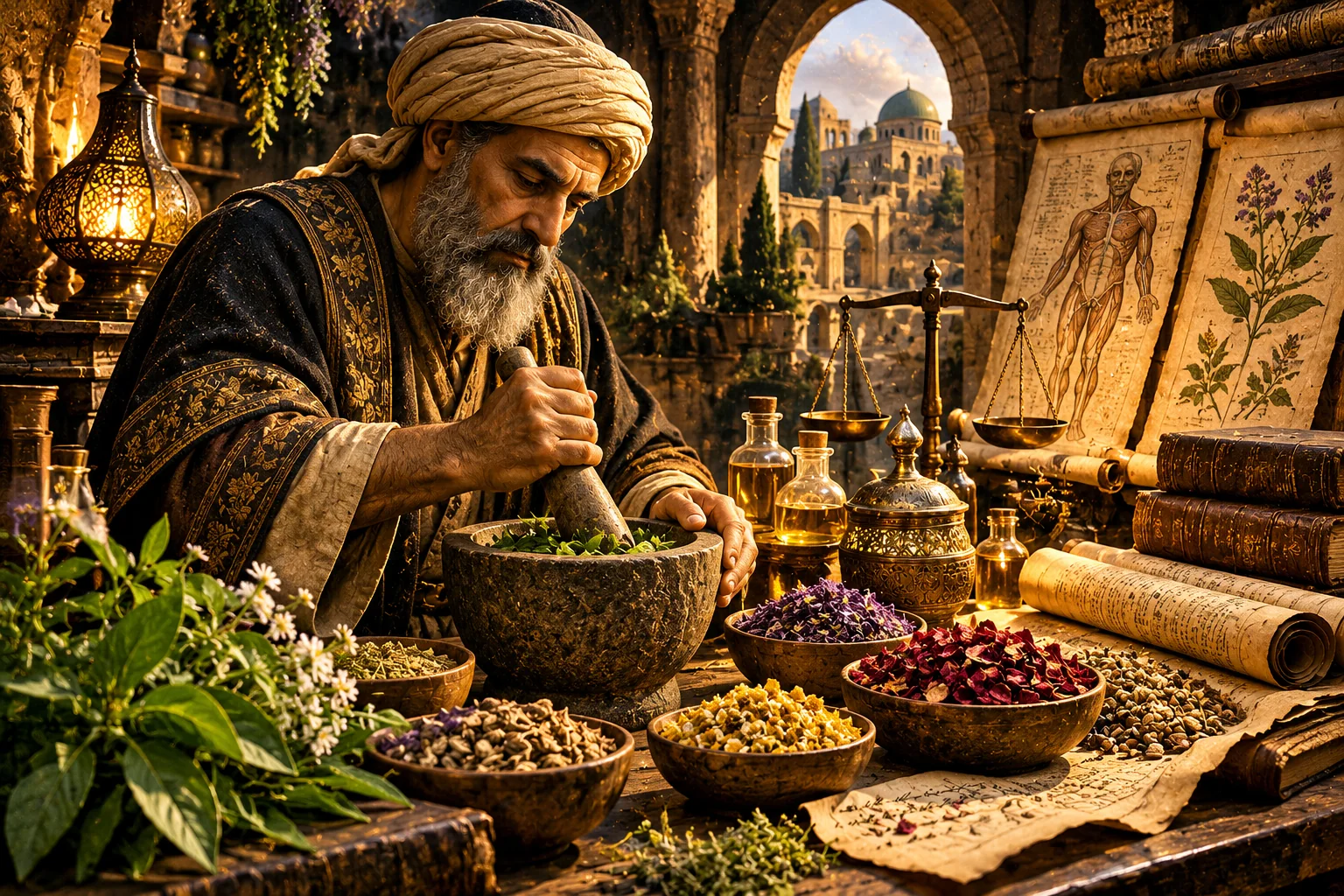
South Asian medical traditions developed into the complex systems associated with Ayurveda. The Charaka Samhita and Sushruta Samhita were compiled and revised over long periods; assigning each text to a single author and precise sixth-century BCE date would oversimplify their history. They discuss diagnosis, diet, medicines, anatomy, and surgical procedures. The Sushruta tradition is particularly noted for descriptions of surgical instruments and nasal reconstruction. Its practical teachings are historically significant, although ancient operations should not be described as identical to modern plastic surgery.
Chinese medicine developed its own rich traditions of herbal practice, acupuncture, pulse assessment, and theories of bodily balance. The Huangdi Neijing, or Yellow Emperor’s Inner Canon, is a foundational compilation whose formation spans centuries. These traditions deserve serious historical study without treating every ancient explanation as a scientifically verified account of disease. The world did not possess one medical civilization waiting to be discovered by another. It possessed many communities asking how bodies suffer and heal.
Hippocrates and the Ethics of the Bedside
Hippocrates lived on the Greek island of Kos in the fifth and fourth centuries BCE. The writings collected under his name were produced by multiple authors. Some argued that diseases, including epilepsy, should be understood through natural causes rather than divine punishment alone. Yet naturalistic medical ideas also existed in earlier cultures. Hippocratic medicine famously used the theory of four humors, a model later shown to be scientifically unsound.
Its most enduring legacy may be ethical rather than physiological: the healer has duties toward the sick. The ancient Hippocratic Oath is not taken verbatim by every modern doctor, and contemporary medical pledges differ. But the underlying questions remain: What does a patient trust a physician to do? What must a physician never do? And whose interests come first when knowledge confers power?
Galen, born in the second century CE, combined anatomy, experimentation, and medical theory in works that shaped later medicine. He demonstrated important functions of nerves and showed that arteries carry blood, but his conclusions were constrained partly by reliance on animal dissection. Some errors endured for centuries precisely because his authority became difficult to question.
Hospitals, Translation, and the Islamic World
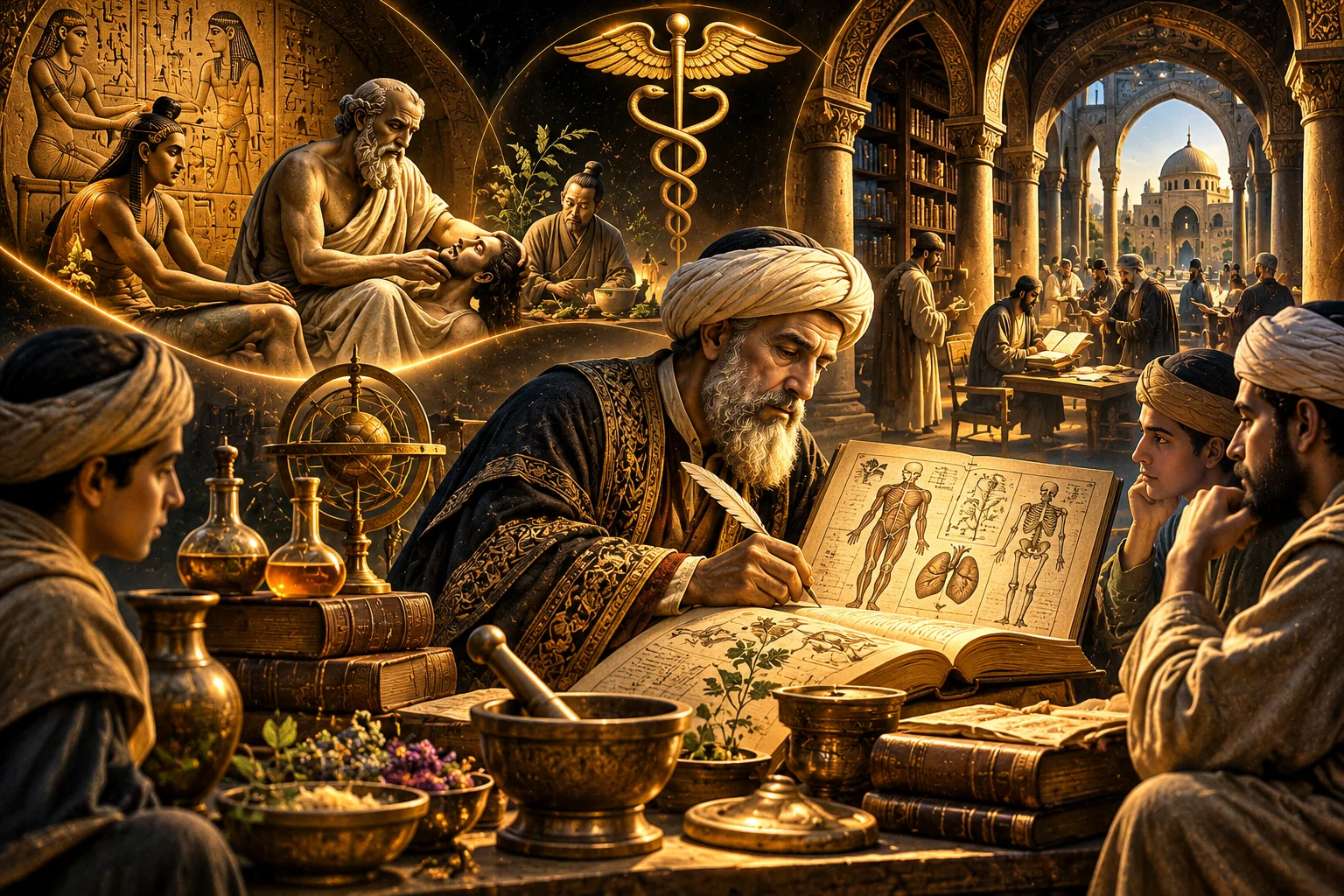
Hospitals and organized places of care appeared in different forms in ancient and late antique societies, including Roman military medical facilities and charitable institutions. In the medieval Islamic world, bimaristans developed as notable centers of treatment, teaching, and sometimes public provision. Baghdad, Damascus, and Cairo became associated with medical scholarship and hospital practice.
Arabic-language scholars translated, debated, and expanded earlier Greek and other medical works. Al-Razi, known in Latin as Rhazes, wrote influential clinical accounts, including on smallpox and measles. Ibn Sina, born near Bukhara in 980 CE, composed the Canon of Medicine, a vast synthesis of medical theory and pharmacology that was studied for centuries in parts of Europe and the Islamic world. His achievements should not be inflated into the modern discovery of germ theory: historical remarks about contagion are not the same as identifying microbes as the causes of particular diseases.
Al-Zahrawi of al-Andalus described surgical techniques and instruments in his encyclopedic al-Tasrif, influencing later surgeons. Ibn al-Nafis, writing in the thirteenth century, gave a remarkably important account of blood passing from the right side of the heart through the lungs toward the left—pulmonary circulation—challenging aspects of Galenic anatomy. The broader account of systemic circulation would later be established by William Harvey. These advances were not isolated miracles; they depended on manuscripts, teachers, patients, institutions, and centuries of intellectual exchange.
Seeing the Body Again
In 1543 Andreas Vesalius published De humani corporis fabrica, based on close anatomical study and richly detailed illustrations. By comparing human anatomy with inherited descriptions, he corrected errors that had become authoritative. In 1628 William Harvey published his argument for the circulation of blood driven by the heart. In the seventeenth century, microscopy opened a previously invisible world: Antonie van Leeuwenhoek observed microorganisms, including bacteria, in the 1670s. Seeing them did not yet prove that they caused specific diseases. That required further experiments across generations.
One of medicine’s most difficult lessons was that observation could contradict respected tradition. A famous name could be wrong. A junior investigator could be right. Evidence had to matter more than rank.
The Revolution Against Pain and Infection
In 1796 Edward Jenner investigated protection against smallpox using cowpox, helping establish vaccination as a practical method. Variolation and other efforts to prevent smallpox existed earlier in Asia and elsewhere; Jenner did not invent the human desire to immunize. Louis Pasteur’s later work advanced germ theory and vaccines, while Robert Koch helped identify particular disease-causing microbes, including the tuberculosis bacillus in 1882.
The public demonstration of ether anesthesia in Boston in 1846 was a landmark, not the first occasion in human history on which anyone used a substance to reduce surgical pain. Anesthesia transformed what surgeons could attempt and what patients could endure. In the 1840s Ignaz Semmelweis showed that hand disinfection could sharply reduce deaths from puerperal fever in his clinical setting. His findings faced resistance. Joseph Lister’s antiseptic methods in the 1860s helped make surgery safer, and later aseptic techniques changed operating rooms further.
Florence Nightingale’s work during and after the Crimean War emphasized sanitation, systematic records, and professional nursing education. She was not the only reformer or nurse of her era, but her influence illustrates a crucial truth: medicine advances not only through brilliant physicians and drugs, but also through clean water, trained nurses, nutrition, ventilation, and organized care. Public health has saved lives on a scale that individual heroic operations cannot match.
Invisible Enemies, New Treatments
Wilhelm Röntgen discovered X-rays in 1895, giving physicians a way to inspect internal structures without cutting the body open. Blood groups identified by Karl Landsteiner around 1900 helped make transfusion safer, alongside improvements in blood storage and cross-matching. Insulin treatment, developed through the work of Frederick Banting, Charles Best, John Macleod, James Collip, and others in the early 1920s, transformed type 1 diabetes from a rapidly fatal disease into a condition many people could live with.
Alexander Fleming observed the antibacterial effect of a Penicillium mold in 1928. Turning penicillin into a widely usable medicine required later work by Howard Florey, Ernst Chain, their colleagues, and industrial producers during the Second World War. Antibiotics changed the odds against bacterial infection, but their misuse has also encouraged resistant organisms. The miracle was real; it was never limitless.
The structure of DNA was described in 1953 through work associated with James Watson and Francis Crick, critically informed by Rosalind Franklin’s X-ray diffraction data and Maurice Wilkins’s research, alongside earlier discoveries by many others. Modern genetics opened new ways to understand inherited disease, but also difficult questions about privacy, discrimination, consent, and who should control biological information.
Replacing Organs, Protecting Populations
Christiaan Barnard’s team performed the first human-to-human heart transplant in December 1967. The first baby born after in vitro fertilization, Louise Brown, arrived in 1978 after work by Robert Edwards, Patrick Steptoe, Jean Purdy, and others. These milestones transformed both treatment and the public debate about what medicine ought to attempt.
In 1980 the World Health Organization declared smallpox eradicated following a global vaccination and surveillance campaign. It remains the only human infectious disease eradicated worldwide. This was not a victory belonging to one nation or one scientist. It depended on vaccinators, local health workers, international coordination, and public trust.
During the COVID-19 pandemic, vaccines were developed and authorized at extraordinary speed, building on decades of prior research, including work on mRNA technology and viral proteins. Their arrival demonstrated scientific collaboration, while unequal access exposed the political and economic limits of global health systems.
The Healers History Nearly Forgot
Many accounts of medicine read like a procession of famous men. The real story includes midwives, nurses, herbal practitioners, translators, laboratory technicians, sanitation workers, patients, and women whose contributions were ignored or poorly recorded. It also includes the suffering of people used in unethical experiments, denied care, or excluded from medical research. Progress cannot be measured only by what a treatment can do; it must also be judged by who receives it and whether patients have a meaningful choice.
Medical ethics today requires informed consent, protection of patient information, fair access, and independent scrutiny of research. These protections are not decorations attached to science. They are part of what makes medical knowledge worthy of trust.
Medicine Meets Artificial Intelligence
Modern medicine uses imaging, molecular diagnostics, minimally invasive and robotic-assisted surgery, targeted drugs, gene therapies, and increasingly sophisticated computational systems. Artificial intelligence can help interpret scans, organize records, identify patterns, and support research. Yet an algorithm may be biased, inaccurate, or unreliable outside the setting in which it was tested. A robotic surgical system is controlled and supervised by trained professionals; it is not an autonomous substitute for clinical judgment.
The next revolution will be measured not simply by faster diagnoses or more powerful machines, but by safer care, affordable treatments, responsible use of data, and better outcomes for people far from wealthy hospitals. Antimicrobial resistance, emerging infections, climate-related health threats, and unequal access remain formidable challenges. Science has extended what is possible; institutions must decide how those possibilities are shared.
The First Promise
Return to the imagined wounded person beside the prehistoric fire. No one knows who tended that injury, whether herbs helped, or whether the patient survived. The scene is a metaphor, not a documented historical event. But it captures the question that medicine has asked for millennia: what can we do, together, so that suffering does not have the final word?
Medicine is not the story of humanity conquering death. It is the story of learning—slowly, imperfectly, sometimes painfully—to care more intelligently for life. Its first promise was not immortality. It was that a person in pain would not necessarily be left alone.
Everything has a beginning. Medicine began wherever care became an action.
Sources and Further Reading
- Nature — Surgical amputation of a limb 31,000 years ago in Borneo
- Encyclopaedia Britannica — Edwin Smith Papyrus
- Encyclopaedia Britannica — History of Medicine
- Encyclopaedia Britannica — Ibn al-Nafis
- World Health Organization — Smallpox
- World Health Organization — Antimicrobial Resistance
- Nobel Prize — Physiology or Medicine
Historical note: Ancient dates and attributions are often approximate. Claims about particular medical practices are distinguished from evidence of modern clinical safety and effectiveness.



