

When a Mystery Becomes an Object
Stories about forbidden powers are difficult to test, but the objects left by people who believed in them are real. Clay tablets, inscribed metal, papyri, amulets, manuscripts and court records allow historians to ask more precise questions: who made this, when, for whom, and what did its owner hope it would do?
1. Mesopotamian Incantation Tablets
Cuneiform tablets from ancient Mesopotamia preserve prayers and incantations associated with protection, healing and the removal of perceived harmful influences. The text tells us about a ritual tradition and its practitioners; it cannot by itself establish the success of the ritual.
2. Egyptian Funerary Papyri
The writings conventionally grouped under the title Book of the Dead were not a single standardized book. Different copies contain selections of spells and illustrations intended to assist the deceased in the afterlife. They belong to a religious and funerary context, not simply to a modern category called black magic.
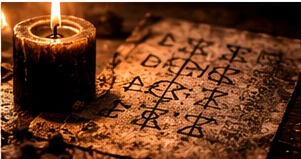
3. Greek and Roman Curse Tablets
Thin sheets of inscribed lead and other materials have been recovered from archaeological contexts. Some were written to influence competitions, legal disputes or personal relationships. Their wording is evidence of a wish or intention, not evidence that the intended effect occurred.
4. Protective Amulets
Amulets crossed boundaries between religious devotion, everyday protection and practices later described as magical. Their materials, inscriptions and archaeological contexts matter more than sensational claims attached to them online.
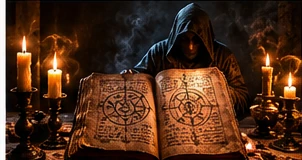
5. Grimoires and Manuscripts
Manuscripts associated with ceremonial magic often survive in copies made long after a text’s alleged origin. Scholars compare handwriting, paper, language and transmission histories to establish what can actually be dated. A dramatic title or legendary attribution is not reliable provenance.
6. Witch-Trial Records
Legal records reveal how suspicion could become accusation and, sometimes, execution. They must be read with care: confessions may have been shaped by fear, coercion or torture, and the allegations themselves are not proof of supernatural acts.
How Dark Page Will Caption These Images
Every historical illustration should identify its object, approximate date, place or culture, holding institution, source link and image rights. Reconstructions and AI-generated illustrations, if used, must be labelled as such. No staged photograph should be presented as evidence of an occult event.
Questions Worth Asking
What is the earliest securely dated source? Is the inscription translated by a qualified specialist? Is the story repeated because of independent evidence or because later writers copied one another? Could a more ordinary explanation fit the record?
These questions do not diminish the mystery. They give it a history worth reading.
Explore the series: Black Magic & Forbidden Mysteries.



