

What People Have Called Magic
Historical records describe many practices under the broad label of magic. Their meanings depend on language, place and period. The following are descriptions of documented traditions—not instructions or evidence that supernatural effects occur.
1. Spoken Charms and Written Incantations
People recited prayers, formulae and protective words, or wrote them on paper, clay and metal. Such practices often accompanied ordinary attempts to cope with illness, uncertainty or danger.
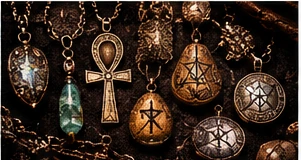
2. Amulets and Protective Symbols
Amulets were worn, carried or placed in buildings. Symbols could communicate religious identity, protection, memory or social status. A surviving object establishes the practice, not the supernatural power attributed to it.
3. Divination and Omens
Some practitioners interpreted dreams, stars, lots or patterns to seek guidance. These systems have rich cultural histories, but claims of reliable prediction require independent testing.
4. Curse Tablets and Binding Rituals
Ancient Greek and Roman archaeological finds include inscribed tablets intended by their makers to influence rivals, disputes or relationships. Museums study these as evidence of social conflict and belief, not proof that the intended harm took place.
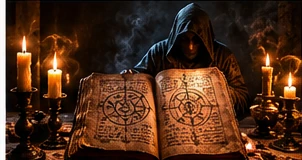
5. Grimoires and Secret Books
Medieval and early modern manuscripts sometimes combined prayers, diagrams, astrological ideas and ritual instructions. Their authorship and dates are frequently contested. A book’s existence should never be confused with confirmation of its extraordinary claims.
6. Spirit Communication and Séances
Accounts of mediums and séances became especially prominent in nineteenth-century spiritualist movements. Investigators documented both sincere belief and cases of deception. Reports should be examined individually.
7. Healing, Fear and the Placebo/Nocebo Effects
Belief and expectation can affect distress and symptom perception. The nocebo effect helps explain why a feared curse may feel physically consequential without establishing a supernatural cause. Persistent symptoms deserve qualified medical attention, not blame directed at another person.
Image note: The accompanying images are AI-generated editorial illustrations, not photographs of authenticated historical artefacts.
Next: Part III considers belief, skepticism, religion, psychology and the exploitation of fear.



