← Back to Lost Treasures & Ancient Maps
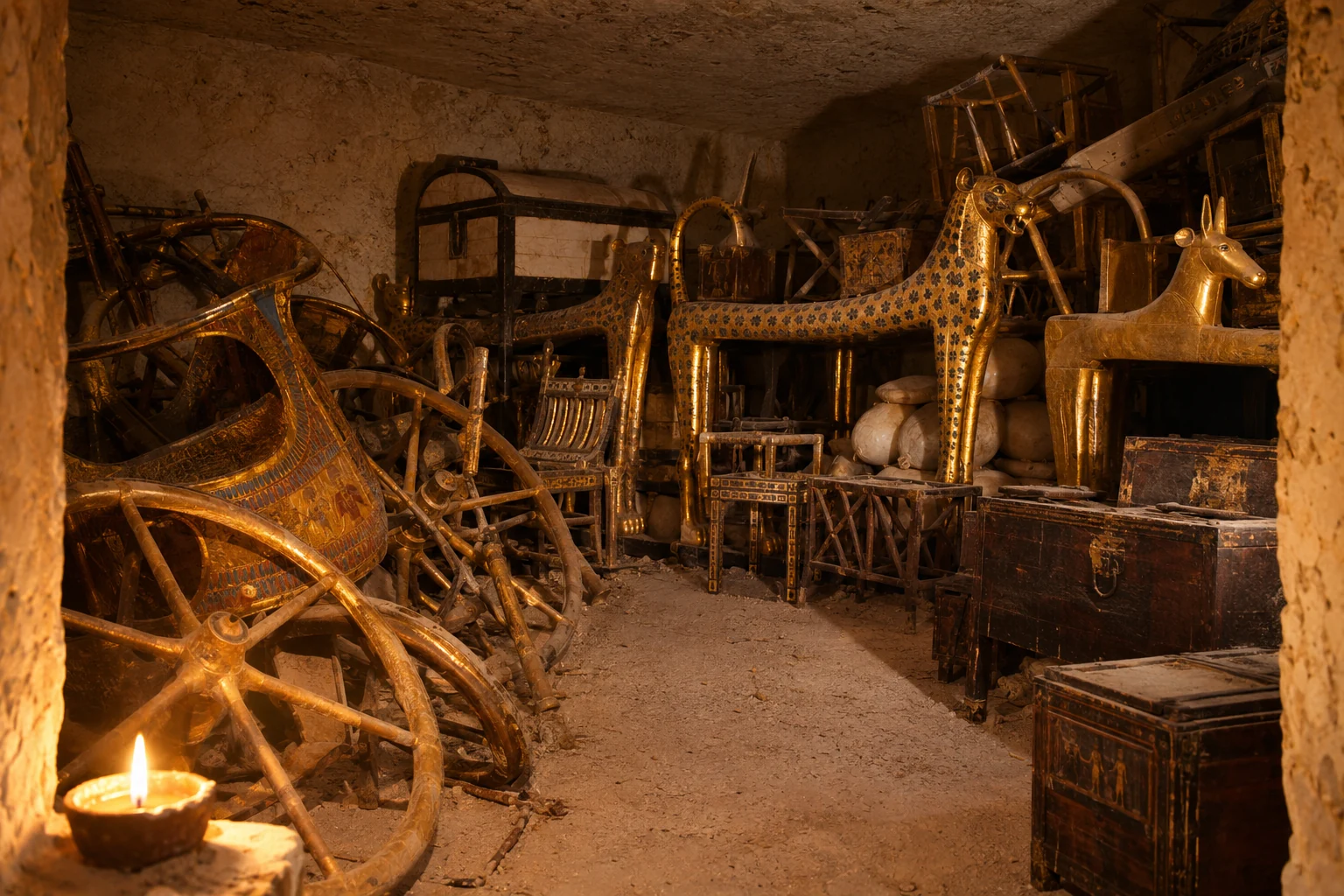
On 26 November 1922, Howard Carter made a small opening in a sealed doorway in Egypt’s Valley of the Kings. Holding a candle to the gap, he waited for his eyes to adjust. Shapes began to emerge: couches with animal heads, statues and, as the flame steadied, gold. Behind the doorway lay the antechamber of a pharaoh who had been buried more than three thousand years earlier.
The stairway beneath the rubble
Tutankhamun came to the throne as a child in the late Eighteenth Dynasty and died in his late teens. His reign followed the religious upheaval associated with Akhenaten. Under the young king, the court restored the worship of Amun and other traditional gods. His reign was brief, and much of what makes him familiar today came to light through the objects buried with him.
Carter’s search was financed by Lord Carnarvon. On 4 November 1922, the Egyptian excavation team uncovered a stone step beneath the debris of the valley. The staircase led to a sealed doorway. Carter sent word to Carnarvon, and once his patron arrived, the team cleared the passage to a second doorway. It was through this inner barrier that Carter first glimpsed the room. The scene is often remembered for the phrase “wonderful things”; the excavation record also shows how much patient work came before and after that moment.
The tomb, now known as KV62, had been entered and resealed in antiquity. What made it rare was how much had survived despite those early intrusions. More than five thousand objects filled its four principal rooms. Gilded chariots, furniture and jewellery were packed alongside clothing, food and musical instruments. A chair could tell an archaeologist about woodworking and royal ceremony. A container with traces of food could reveal what Egyptians thought a king ought to take into the next world.
Four shrines, three coffins and one face
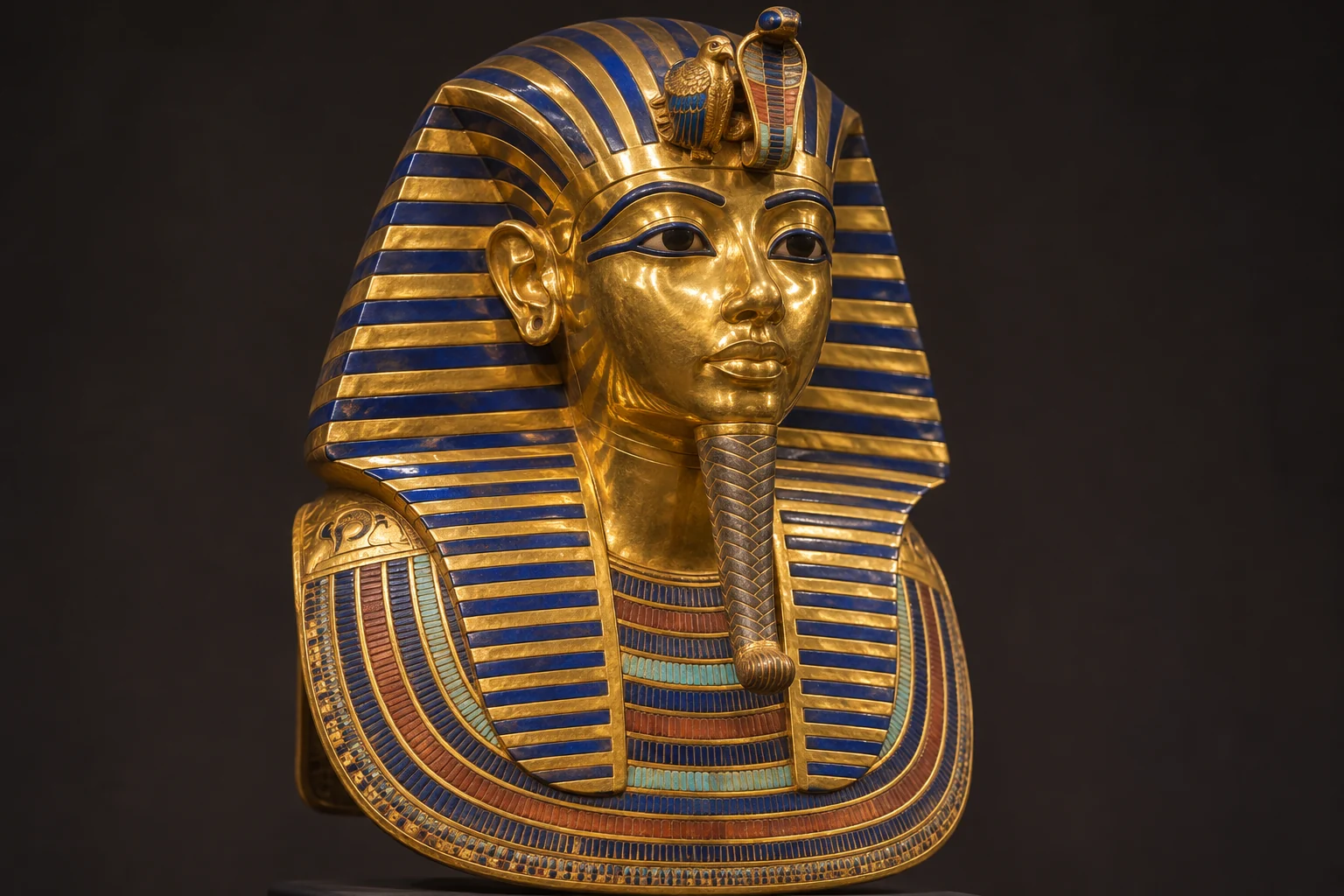
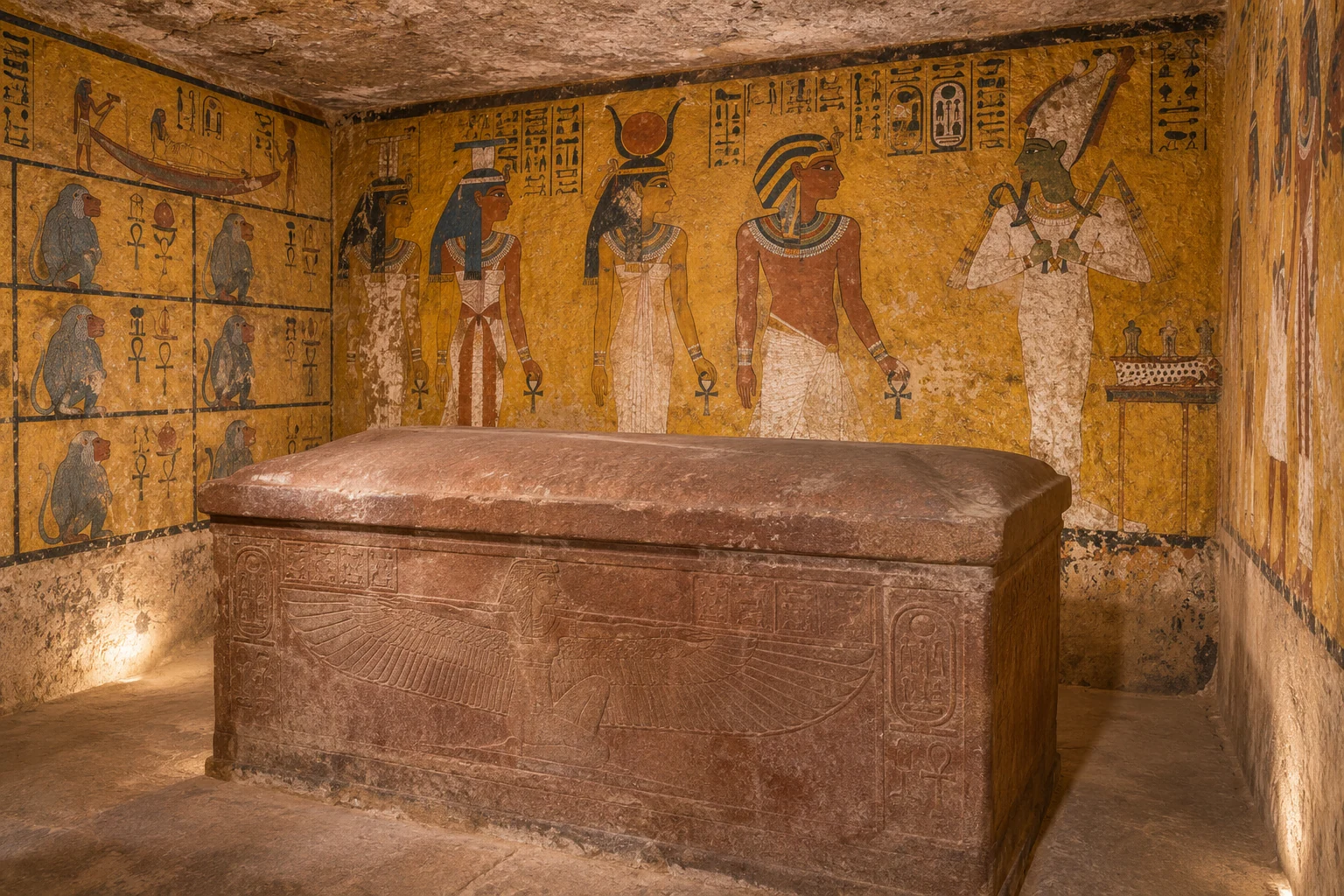
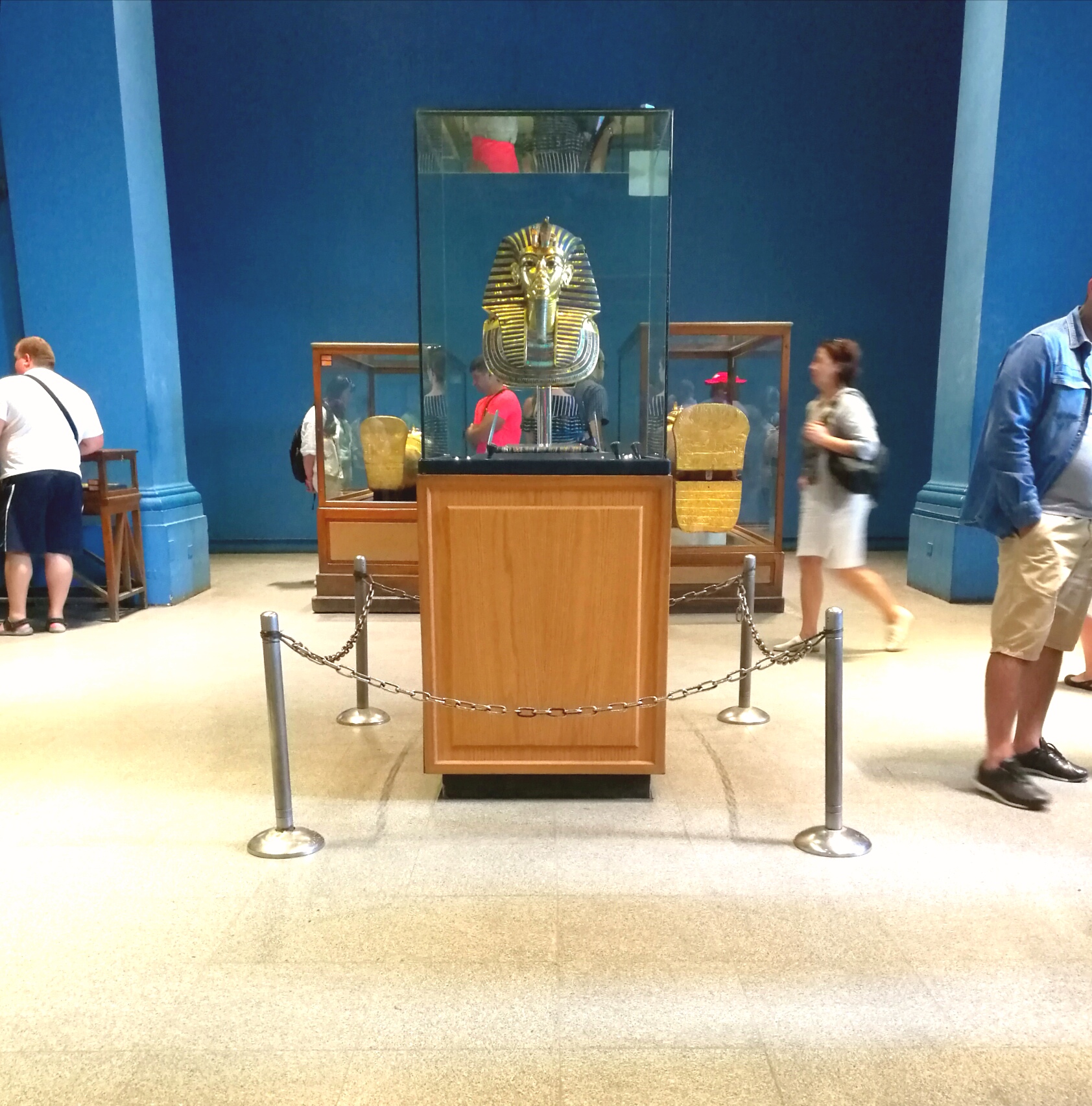
The burial chamber was formally opened in February 1923. Four gilded wooden shrines stood one inside the next, surrounding a stone sarcophagus. Inside it lay three nested coffins. The innermost, made of solid gold, weighed about 110 kilograms. Within it lay the king’s mummy, its head and shoulders covered by the funerary mask.
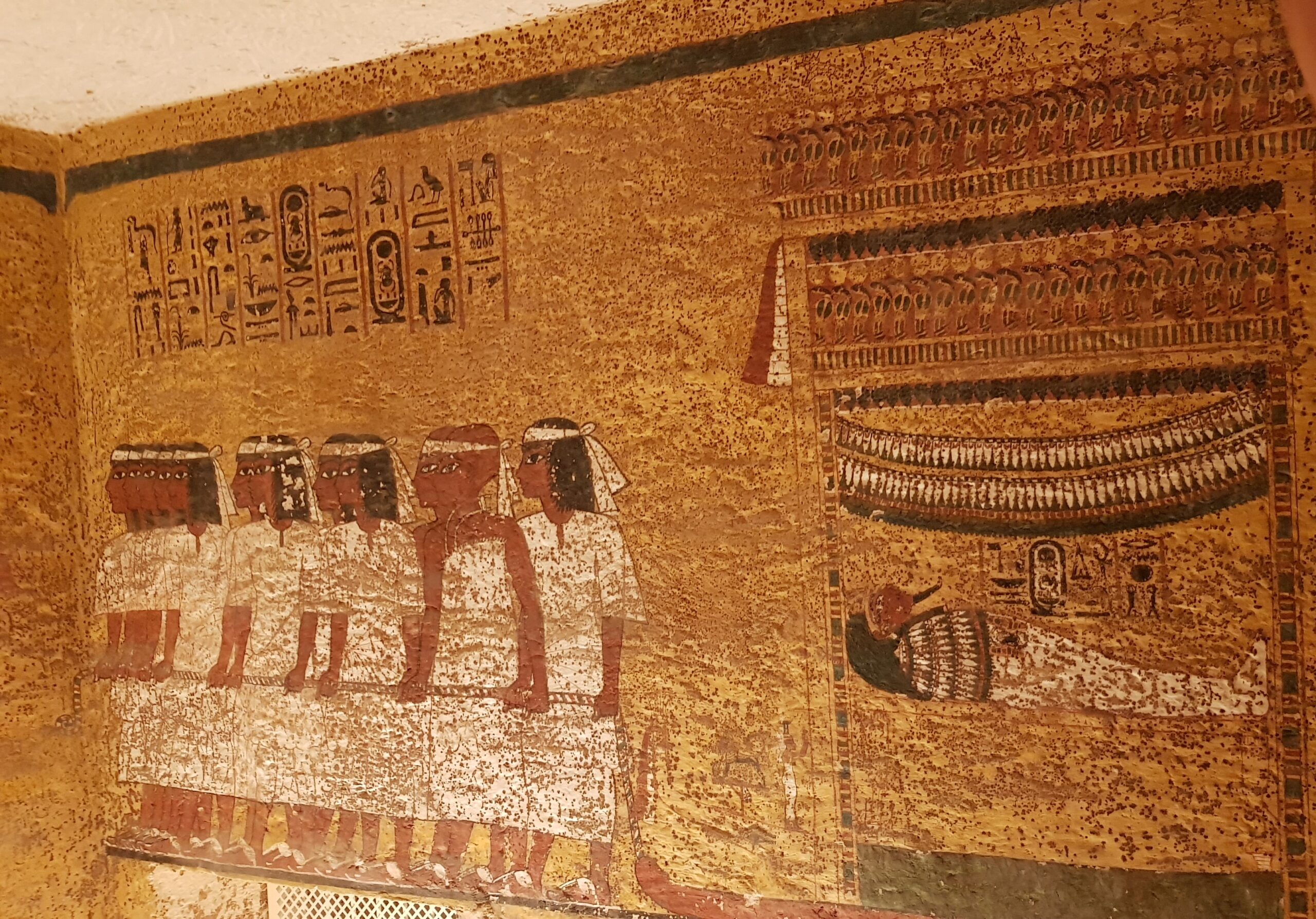
The mask gives the burial a face. Bands of blue frame the gold likeness, and the cobra and vulture on the brow carry the emblems of Egyptian kingship. The burial chamber’s painted walls show the king in the company of gods and in scenes that prepare him for passage into the afterlife. The mask and the paintings belong to the same undertaking: to protect the dead king and equip him for a life beyond the tomb.
A decade to bring the tomb to light
The first glimpse took seconds. Clearing and recording the tomb took about a decade. Egyptian workers, conservators and specialists helped lift objects that could break if handled without preparation. The excavation photographer, Harry Burton, recorded objects in place before they were moved. His photographs and the team’s drawings and object cards allow researchers to study where objects lay and how they related to one another.
Today, the Grand Egyptian Museum in Giza brings the collection together in its Tutankhamun Galleries. The gold mask still commands attention, but the quieter objects reward a longer look. A piece of furniture or a garment can bring us closer to the world of the boy who became king, while the chamber paintings show what his burial was intended to make possible.
Illustrated reconstructions