

Dark Page Kids · Original Wonder Story · Ages 7–12
A famous ship, an icy ocean, and an unanswered question waited inside an old book.
Dark Page Kids | History & Mystery | Ages 9–12 | Science-inspired fantasy

Twelve-year-old Lucas loved old things, especially objects that had disappeared beneath the sea. One rainy afternoon, he found a book in his grandfather’s library. On its cover stood a magnificent ship with four tall funnels: the RMS Titanic.

He read that Titanic was among the largest and most impressive passenger ships of its time. Some people had called it practically unsinkable. Yet on its maiden voyage in April 1912, it struck an iceberg in the North Atlantic and sank.
Pause and wonder: How could a giant steel ship float, yet sink after striking ice?
“How could a ship made of so much iron and steel float in the first place?” Lucas wondered. “And how could it sink?”
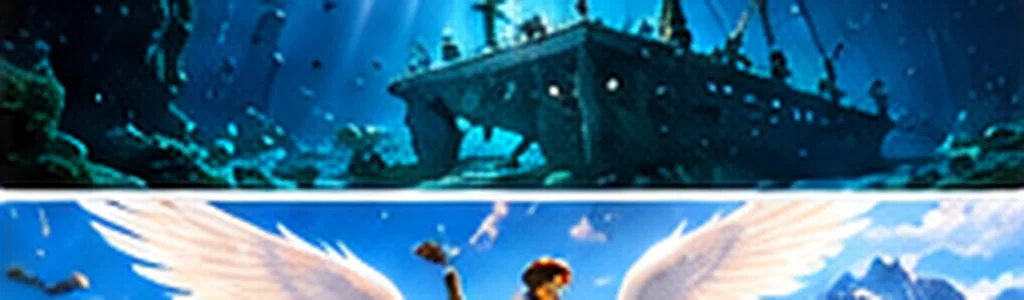
That night, he dreamed he was aboard a futuristic research submersible descending toward the Titanic’s wreck, roughly 3,800 metres beneath the ocean surface. A trained crew guided the craft. Its lights swept across the darkness until a huge, broken shape appeared: the wreck of Titanic, resting in two main sections on the seafloor.

Along its rusting surfaces hung strange formations like underwater icicles. The scientists called them rusticles. Communities of microbes play a role in their formation and in the corrosion of the wreck.
Then a blue light glimmered through a shattered window. In Lucas’s dream, a brass ship’s wheel seemed to float inside the glow. A deep voice sounded through the radio.
“Young explorer, what have you come to find?”
Lucas held the microphone. “Titanic was built of heavy metal, but its shape and the water it displaced helped it float. When the iceberg damaged the hull, seawater entered. But did something else sink that night too—people’s confidence that technology could conquer every danger? What can the wreck teach us about understanding nature instead of underestimating it?”
The blue light grew softer. “Strong machines still need careful design, good decisions and respect for the sea,” the voice replied. “Remember the people who were aboard, not only the ship they sailed in.”
Lucas looked once more at the great wreck. It was not just an engineering mystery. It was also the resting place of a tragedy that had changed thousands of lives.
He woke in the morning with the Titanic book on his chest. He opened a fresh notebook and wrote two questions: Why do ships float? and How can people make sea travel safer?
Grandfather found him reading at breakfast. “Still thinking about Titanic?” he asked.
“Yes,” Lucas said. “But now I want to learn about the people, too.”
What Do You Think?
- Why can a steel ship float while a small piece of solid steel sinks?
- What can rusticles tell scientists about the wreck?
- How can engineers and travellers learn from disasters without forgetting the people involved?
History & Science Note
Titanic sank in April 1912 after striking an iceberg. Its wreck lies at a depth of approximately 3,800 metres. Ships float because of buoyancy and the water they displace, not simply because they contain air. Rusticles are real corrosion formations associated with microbial activity. Lucas’s journey, the glowing wheel and the speaking voice are fictional.
Wonder Questions for Young Explorers
- How could a giant steel ship float, yet sink after striking ice?
- What clues can an underwater wreck preserve?
- How can we remember the people aboard while learning from engineering history?
Keep wondering: The best explorers do not always find an answer on the first try. They observe, ask, imagine, and ask again.
Continue exploring: Read Noah’s underwater discovery and William’s story of hope.



