

Elara Voss · Cosmos & Astronomy · Scholar of the Other World meets Baba Moos, the Sage from the Other World, for an extraordinary conversation spanning ancient civilisations, philosophers, lost kingdoms, destiny and artificial intelligence.
Explore the world of Baba Moos in the new Dark Page video.
Watch on YouTube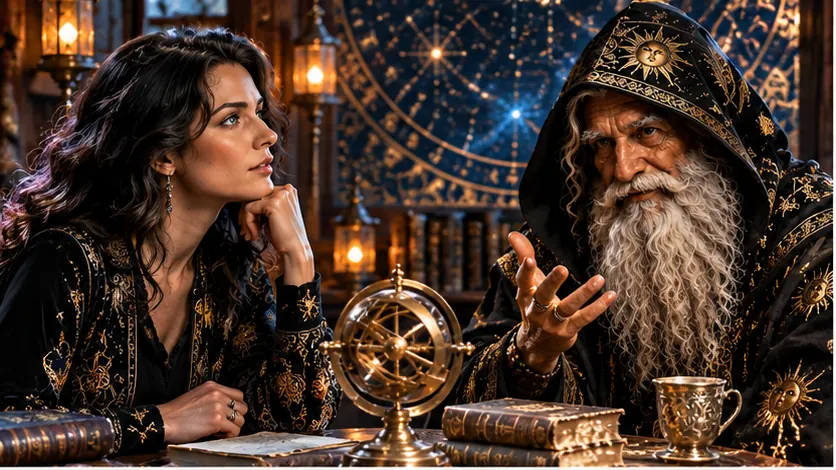
ELARA VOSS: Baba Moos, how old are you?
BABA MOOS: Old enough to know that this is always the first question. I remember the days when I lived in the cave of Chashma-e-Aab-e-Hayat, the Fountain of Eternal Life. The mountains were silent, and the stars seemed close enough to touch. I never counted my years. People who fear running out of time are usually the ones who count it.
ELARA VOSS: Did you drink from the Fountain of Eternal Life?
BABA MOOS: You ask what everyone asks. Almost nobody asks what it means to outlive everyone you love. Eternal life is not simply a gift. It is an enormous collection of farewells.
ELARA VOSS: What do you remember of the first human civilisations?
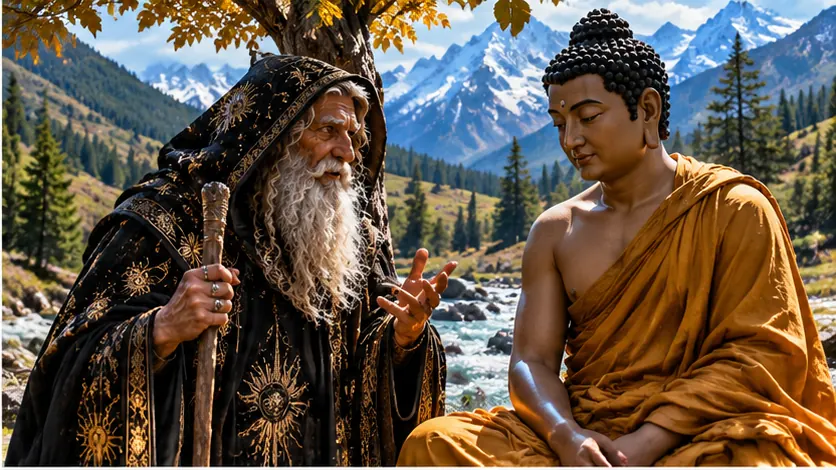
BABA MOOS: People drawing animals on cave walls. The first villages, the first kings, the first taxes. Especially the taxes. Ancient people knew less and wondered more. Modern people know more and often forget to wonder.
ELARA VOSS: You knew Gautama Buddha?
BABA MOOS: Very well. In those days my palace stood beside the Neelum River at Gurez, among the high mountains, where the river seemed to flow fourteen thousand feet above the world, through the clouds themselves. It was a place of mist, libraries and silence. Gautama came to talk. I asked him whether a world without desire would still produce poetry, love and travellers. He smiled and asked whether I had confused desire with attachment. We spoke until the mountains disappeared into darkness.
ELARA VOSS: A palace in the clouds?
BABA MOOS: Not every palace needs a throne, Elara. Mine had books, a garden and a terrace above the river. Kings came asking for advice. Poets came asking for silence. Gautama came asking questions. I preferred the questions.
ELARA VOSS: What about Moses and Pharaoh?
BABA MOOS: I was living on the banks of the Nile in those days. At night I could hear water moving through the reeds. Pharaoh invited me to dinner. Moses came to argue. Pharaoh wanted admiration; Moses wanted answers. I always preferred the man who argued.
ELARA VOSS: Did you challenge Pharaoh?
BABA MOOS: I told him that believing oneself to be a god was a terrible burden. Imagine listening to everyone’s complaints! He laughed. Powerful men often laugh when they have no intention of changing.
ELARA VOSS: And Socrates?
BABA MOOS: Exhausting! You could not ask him for directions without questioning the meaning of a road. Once I asked whether he knew anything for certain. He answered with another question. I told him that if wisdom was endless conversation, he owed Athens a great deal of tea.
ELARA VOSS: Plato and Aristotle?
BABA MOOS: Plato dreamed of an ideal republic. I suggested he first find an ideal human being. Aristotle tried to classify everything — plants, animals, politics, poetry. One afternoon he tried to classify me. I said, my boy, your categories are too small.
ELARA VOSS: Did Alexander the Great impress you?
BABA MOOS: He wanted to conquer the world. I asked what he would do afterwards. He said he would rest. I advised him to rest immediately and save everyone a great deal of trouble. Conquerors rarely appreciate economical solutions.
ELARA VOSS: Which spiritual teacher stayed in your memory?
BABA MOOS: I remember Jesus speaking of love in a world that understood punishment more easily. I asked whether kindness could survive hatred. His answer made my question seem smaller than the human heart. Confucius, meanwhile, could turn breakfast into an ethics lesson. Once he advised moderation while I was helping myself to rice. I told him morality deserved a lunch break.
ELARA VOSS: And Ibn Sina?
BABA MOOS: A brilliant mind. He examined my pulse and found no ordinary signs of ageing. I asked whether he could cure me of living too long. He said medicine had not prepared for such an unfortunate patient.
ELARA VOSS: Rumi?
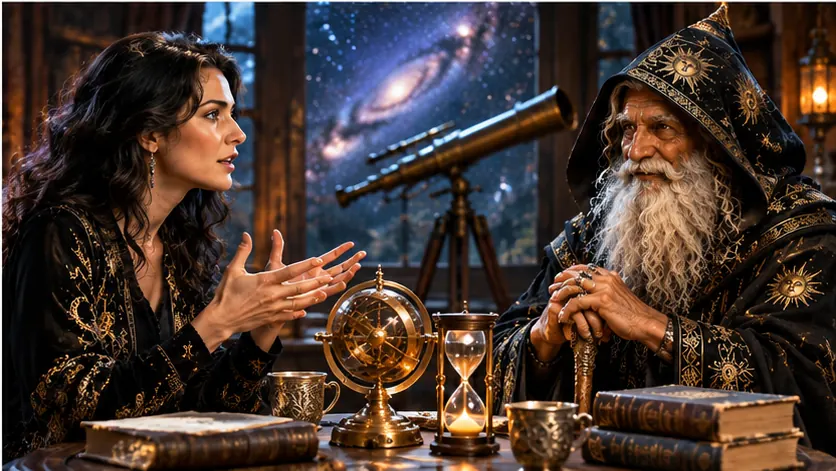
BABA MOOS: He turned questions into poetry and poetry into doorways. I asked why he spoke endlessly of love. He asked why I insisted on understanding what should sometimes simply be experienced.
ELARA VOSS: Did you meet Newton?
BABA MOOS: We sat beneath a tree. An apple fell. He began thinking. I began eating. History remembered his law and forgot my lunch. It has never been fair to practical men.
ELARA VOSS: What did Einstein teach you?
BABA MOOS: Albert understood that time is stranger than clocks suggest. I told him that a thousand years can pass like an afternoon, while five minutes waiting for someone you love can feel like eternity. He reminded me that physics and poetry are different. I reminded him that both begin with astonishment.
ELARA VOSS: You have watched empires fall. Why do civilisations collapse?
BABA MOOS: Often because they begin to believe they cannot collapse. Their rulers confuse obedience with loyalty, wealth with greatness, and fear with respect. Every ruler thinks the world cannot survive without him. Then he dies, and the following morning someone opens the market and complains about the weather.
ELARA VOSS: What has changed most?
BABA MOOS: Weapons. Once a man stood close enough to see the person he was killing. Now destruction can arrive from thousands of miles away. Technology has travelled astonishing distances. Compassion has struggled to keep pace.
ELARA VOSS: Do you believe the stars reveal destiny?
BABA MOOS: The stars reveal extraordinary things to astronomers. Human cultures have also used them as symbols for contemplating life. But a symbol is not a guarantee. The sky is magnificent enough without pretending it signed a contract with your future.
ELARA VOSS: People visit your court for lottery numbers. Can you predict the winning ticket?
BABA MOOS: I can give you numbers. So can a child, a computer or a sleepy parrot. Knowing the winning draw is another matter. Never build your survival upon a lottery ticket. Hope is precious; it should not be sold as certainty.
ELARA VOSS: What is luck, then?
BABA MOOS: Sometimes chance. Sometimes preparation meeting opportunity. Sometimes the name we give an event whose causes we do not understand. My court offers questions and perspective, not guaranteed fortunes.
ELARA VOSS: What have you learned about faith?
BABA MOOS: I have seen faith inspire beauty, compassion, architecture and poetry. I have also seen sacred words used to excuse cruelty. The mystery is not that people disagree about God. It is how easily they forget the person standing in front of them.
ELARA VOSS: And artificial intelligence?
BABA MOOS: Humanity has built machines capable of answering questions in seconds. Now it must learn which answers deserve trust. A wise mind knows when to say, I do not know. That is difficult for machines, politicians and interviewees.
ELARA VOSS: After all these centuries, what do you regret?
BABA MOOS: The conversations I did not finish. The people I assumed I would see again. Immortality does not protect you from loss. It simply gives loss more opportunities.
ELARA VOSS: What is humanity’s greatest invention?
BABA MOOS: The ability to imagine another person’s suffering. Without that, every invention can become a weapon. Intelligence does not automatically produce kindness.
ELARA VOSS: What question would you ask our audience?
BABA MOOS: When was the last time you changed your mind because somebody else was right?
ELARA VOSS: Will you ever die?
BABA MOOS: Certainly. On the day humanity stops asking questions.
ELARA VOSS: But surely humanity will never stop asking questions.
BABA MOOS: Then I fear I shall be here for a very long time.
ELARA VOSS: Has anyone interviewed you before?
BABA MOOS: An Egyptian scribe once interviewed me. He carved it on a stone tablet. A king later used the stone to build his tomb. My answers are still there, beneath the king’s name. That, dear Elara, is the history of human civilisation. And now, would you care for some tea?
Explore Lottery Secrets · Meet the Scholars of the Other World · Films & Reels



